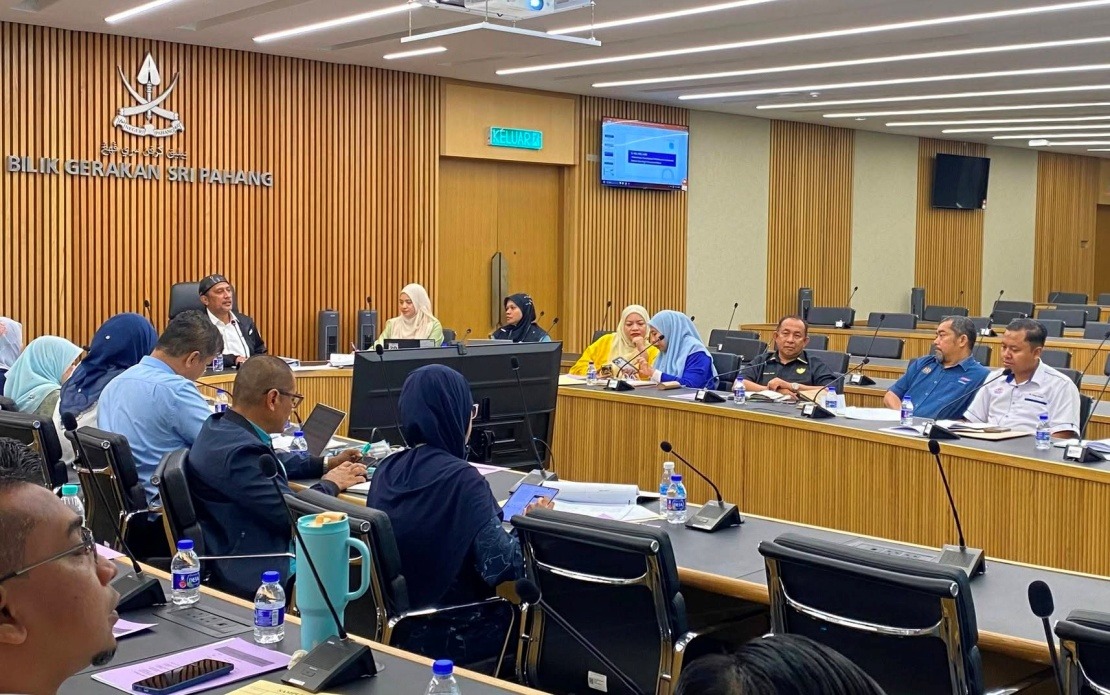
The Pahang state government has directed the Department of Orang Asli Development (JAKOA), the state Land and Mines Office (PTG), and local land authorities to conduct a thorough examination of land dispute issues affecting the Orang Asli population in Kampung Sungai Cot within Maran district. Datuk Seri Syed Ibrahim Syed Ahmad, who chairs the state committee overseeing Islamic religious affairs, rural development, and indigenous matters, announced this decision while emphasizing that the administration intends to address the conflict through careful legal analysis and inclusive consultation aimed at benefiting all stakeholders involved.
The core of the dispute centres on overlapping land claims in the area. According to Syed Ibrahim's statement, twelve members of the Orang Asli community had submitted written documentation to JAKOA asserting their cultivation rights and traditional connection to the land. However, the same parcel was simultaneously granted to a private company following approval by the state executive council on November 4, 2015, creating a direct conflict between indigenous claims and corporate entitlements granted through formal government procedure.
Syed Ibrahim sought to contextualize the situation by clarifying that certain public portrayals of the dispute did not accurately reflect the complexities involved. He emphasized that the state government recognizes the seriousness of indigenous land rights while acknowledging that formal approval processes had already been completed for the corporate entity. This balancing act suggests the administration's desire to address legitimate indigenous concerns without retrospectively invalidating bureaucratic decisions made years earlier.
Progress in resolving the dispute has been modest thus far. JAKOA officials have engaged in preliminary discussions with representatives of the affected Orang Asli community to explore potential solutions. These conversations have identified that of the original twelve individuals claiming rights, only six continue to actively pursue their cases through official channels. During these discussions, the six remaining claimants contended that the territory represented ancestral lands passed down through their families. However, government authorities have been unable to corroborate these ancestral claims using existing official records and documented evidence, a significant obstacle in a legal framework that increasingly prioritizes paper documentation over oral tradition or customary knowledge.
The broader context of Orang Asli land recognition in Pahang demonstrates considerable administrative activity in recent years. The state is home to 264 registered Orang Asli villages with a combined population exceeding 90,000 residents. Among these communities, thirty villages have achieved formal recognition under Section 6 and Section 7 of the Orang Asli Act 1954 as well as Section 62 of the National Land Code, providing these settlements with legal protection for their territorial claims. Additionally, the state government has approved outright land ownership transfers to the Orang Asli community in sixteen villages operating under Section 76 of the National Land Code, demonstrating willingness to formalize indigenous property rights through legal instruments.
The state administration's processing pipeline for additional land recognition requests reveals the magnitude of pending claims seeking formalization. Currently, seventy-five applications requesting gazettement status—the formal designation that grants legal protection to indigenous land—are advancing through the system. Of these, thirty-one have completed the technical assessment stage and now await final consideration by the state executive council. A separate group of forty-four applications remain in limbo because the requested land parcels overlap with other recognized claims or existing allocations, requiring resolution of competing interests before proceeding.
Beyond the most advanced applications, the system contains an additional backlog of 143 requests that have not yet progressed beyond the initial measurement and surveying phase conducted by JAKOA. This substantial queue indicates that land recognition for Orang Asli communities, while actively pursued, faces significant bottlenecks in both the technical assessment process and in resolving overlapping claims that create legal conflicts.
The Kampung Sungai Cot situation exemplifies the complications that arise when indigenous land claims intersect with pre-existing corporate approvals. The November 2015 state executive council decision that granted the company rights preceded or occurred without full documentation of the Orang Asli community's formal claims, illustrating how procedural timelines and documentation completeness can disadvantage communities relying on less formalized assertions of traditional rights. Moving forward, JAKOA and PTG face the challenge of determining whether exceptions or alternative arrangements might accommodate both the corporate interest and indigenous claims, or whether one interest must ultimately prevail.
For Malaysia's broader indigenous rights framework, the Pahang case underscores ongoing tensions between modernized land administration systems and the territorial knowledge systems of Orang Asli communities. While the state government has expanded formal recognition of indigenous land rights through legal instruments in recent years, cases involving competing claims against established corporate interests reveal the limits of administrative solutions when documentation of traditional ownership proves difficult within conventional evidentiary standards.
The stated commitment to handle the matter through "consultative approach" signals that Pahang may seek negotiated outcomes rather than purely adversarial legal determinations. Such an approach could potentially involve alternative land allocations, joint-use arrangements, benefit-sharing agreements, or financial compensation—mechanisms that various Southeast Asian jurisdictions have employed when indigenous and corporate claims collide. The success of this consultative process may depend significantly on whether JAKOA and PTG officials can identify creative solutions that address indigenous concerns about land access and cultural preservation while respecting the legal position of the company that received prior formal approval.
The resolution of this dispute carries significance beyond the immediate parties involved. How Pahang addresses the Kampung Sungai Cot situation will signal the state's willingness to revisit earlier decisions when indigenous claims emerge, potentially influencing similar cases throughout the state. Moreover, given that numerous other applications for Orang Asli land recognition remain pending, establishing clear precedent regarding how overlapping claims should be resolved may affect the processing timeline and outcomes for many other communities seeking formal land protection.

