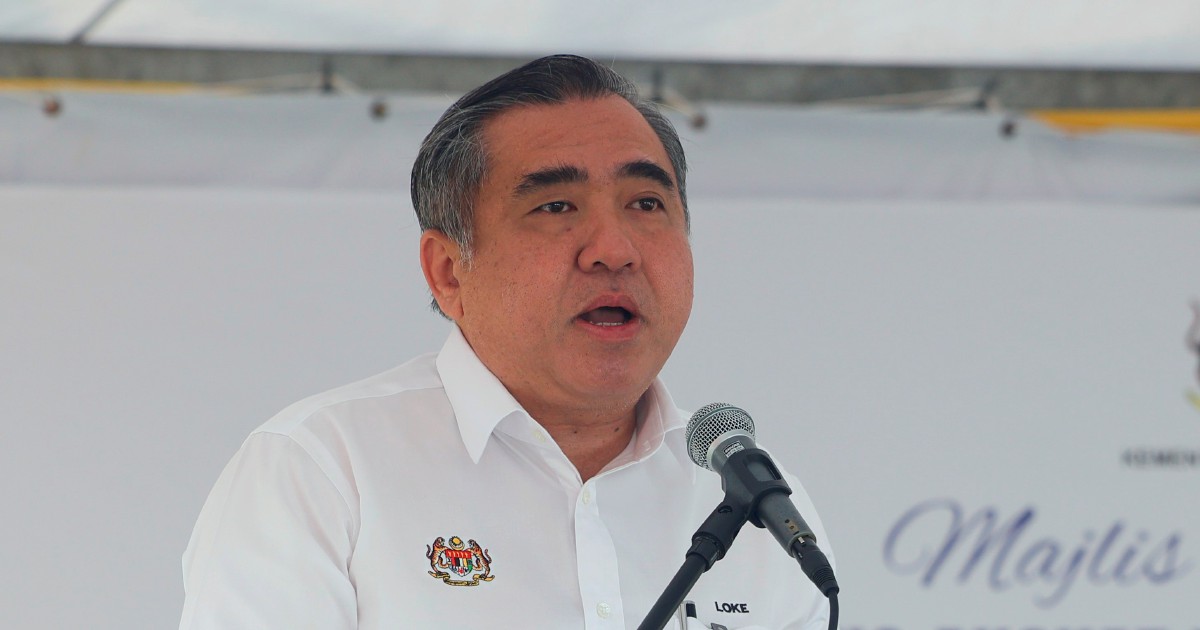
Pakatan Harapan has signalled its readiness to engage with whatever political configuration its opponents might construct in the lead-up to Negri Sembilan's state election, including the prospect of a united front between Barisan Nasional and Perikatan Nasional. The coalition's message underscores the increasingly fluid nature of Malaysian electoral politics at the state level, where pragmatic alliances have repeatedly reshaped traditional power dynamics.
The statement carries particular weight given the trajectory of recent state contests across the peninsula. Negri Sembilan, historically a BN stronghold before the 2018 political realignment, represents contested terrain where multiple coalitions harbour genuine ambitions. The prospect of BN and PN joining forces would fundamentally alter the calculus that has governed state politics since Pakatan Harapan assumed control. Such an alliance would concentrate considerable resources and machinery against the ruling coalition, potentially nullifying its incumbency advantages.
For Malaysian observers, the significance extends beyond Negri Sembilan's borders. The state election functions as a bellwether for broader coalition dynamics across the federation. Peninsular state politics have witnessed mounting instability, with Selangor, Perak, and Pahang all experiencing shifts in recent years that defied conventional predictions. Should PN successfully coordinate with BN—historically difficult given their distinct ideological constituencies—it would signal a maturation of opposition cooperation that has eluded Malaysian politics since 2020.
The BN-PN axis presents peculiar complications that regional observers should appreciate. Perikatan Nasional derives legitimacy partly from positioning itself against the so-called "establishment" represented by BN. A formal electoral pact risks undermining PN's populist appeal, particularly among younger voters and Bumiputera constituencies sceptical of traditional power structures. Conversely, Barisan Nasional requires PN's Malay-Muslim mobilization capacity to recapture states where its organisational decay has accelerated. These tensions render cooperation contingent rather than inevitable.
Pakatan Harapan's preparedness reflects lessons absorbed from unexpected reversals at the federal level and in Melaka's 2021 snap election. The coalition has invested considerably in grassroots infrastructure renewal and candidate quality improvements across Negri Sembilan. Unlike previous contests where overconfidence proved costly, the current posture suggests a calculated acknowledgement of genuine competitive threat. This defensive positioning also protects against accusations of arrogance that historically plague governing coalitions.
Negri Sembilan occupies strategic significance within Pakatan Harapan's broader architecture. The state assembly comprises just 36 seats, meaning mathematical control remains achievable for coalitions with discipline and resources. The composition of potential opposition configurations determines electoral mathematics fundamentally. A two-sided contest between PH and a unified opposition differs dramatically from a three-way split where BN, PN, and PH compete independently. Current uncertainty surrounding opposition alignment thus remains consequential for all parties' seat projections.
The statement from Pakatan Harapan's leadership also carries messaging functions beyond electoral strategy. By publicly acknowledging opposition possibilities, the coalition inoculates itself against surprises while demonstrating confidence in its organisational capabilities. The framing suggests PH views such scenarios as manageable challenges rather than existential threats—a rhetorical posture designed to maintain coalition morale and supporter enthusiasm heading toward campaign season.
Regional dynamics merit consideration in this context. Neighbouring states and federal developments exert spillover effects on Negri Sembilan's political trajectory. Should opposition alliances prove successful elsewhere, momentum and resource allocation may shift toward those victories. Conversely, if Pakatan Harapan consolidates support in other contests, it could establish positive momentum preceding Negri Sembilan's election. The state does not exist as an isolated electoral arena but rather as part of an interconnected political ecosystem.
The economic dimension underpins electoral dynamics often overlooked in pure political analysis. Negri Sembilan's economy, anchored by palm oil, manufacturing, and tourism sectors, faces pressures from commodity fluctuations and labour market transformations. Voters' receptiveness to either coalition frequently reflects material conditions and government delivery records in these sectors. Pakatan Harapan's preparedness messaging implicitly extends to demonstrating economic competence and continued development investment.
Looking forward, the coalition's stated readiness requires conversion into tangible campaign mechanics. Ground organisation, candidate selection, and messaging discipline will determine whether rhetorical confidence translates into electoral performance. Opposition uncertainty regarding formal alliance structures paradoxically provides PH temporary advantage—the ruling coalition can simultaneously prepare for multiple scenarios while opposition movements negotiate internal compromises.
The unfolding situation in Negri Sembilan encapsulates broader patterns in contemporary Malaysian federalism. State elections have become laboratories where national coalitions test strategies, build candidates, and recalibrate messaging. Pakatan Harapan's declaration that it stands prepared for any opposition configuration represents acknowledgement of this reality—that Malaysian electoral politics has become contest among coalitions whose composition remains perpetually negotiable, requiring constant strategic adjustment and renewed organisational commitment.

