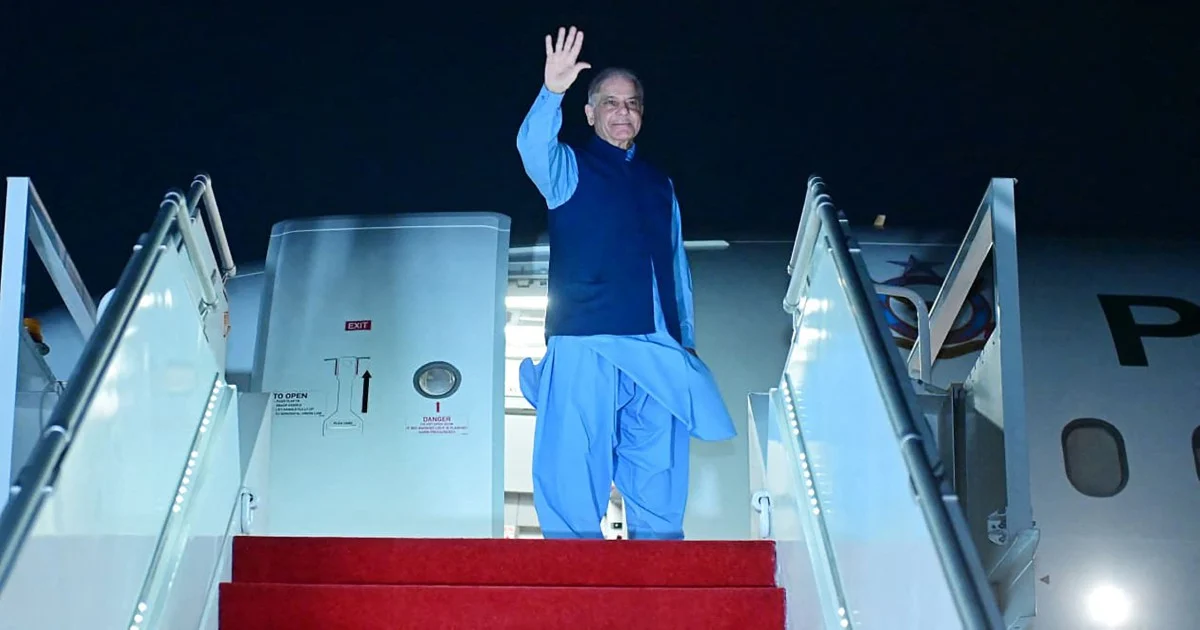
Pakistan's Prime Minister Shehbaz Sharif touched down in Switzerland on Sunday as part of a diplomatic initiative bringing technical representatives from the United States and Iran to the negotiating table. The visit underscores Pakistan's commitment to mediating regional tensions, even as the nuclear-armed nation grapples with its own economic and security challenges at home.
The timing of Sharif's arrival reflects Pakistan's traditional role as a diplomatic bridge in South and West Asian affairs. Islamabad has long positioned itself as a neutral interlocutor capable of facilitating dialogue between major powers, particularly given its geographic proximity to Iran and its strategic alliance with the United States. By attending these technical-level discussions, Pakistan signals its investment in achieving a sustainable resolution to the protracted Middle East tensions that threaten global stability and economic activity.
These technical-level talks represent a significant diplomatic opening, focusing on practical mechanisms rather than high-level political negotiations. Such discussions typically address confidence-building measures, verification protocols, and procedural frameworks that can precede broader political settlements. For Pakistan, participation in these dialogues offers an opportunity to shape outcomes that affect its own security interests and broader regional equilibrium.
The Middle East conflict has reverberated across South Asia, impacting Pakistan's economy and security landscape. Rising oil prices resulting from regional instability place additional strain on Pakistan's already precarious fiscal position. Sharif's government has been working to stabilise the economy after years of crisis, making regional peace a genuine national priority rather than merely a diplomatic courtesy.
Pakistan's involvement also reflects the country's relationship with Iran, a neighbour with which it shares a 959-kilometre border and deep historical ties. Simultaneously, Pakistan maintains critical defence and economic partnerships with the United States. This dual engagement positions Islamabad as a country with genuine stakes in US-Iran relations stabilising, rather than deteriorating further.
The diplomatic engagement comes amid broader international efforts to contain Middle East volatility. Multiple regional and international actors have attempted various mediation approaches, with mixed results. Switzerland's neutral status makes it a natural venue for such technical discussions, as the country has hosted sensitive negotiations between adversarial powers on numerous occasions throughout its modern history.
For Malaysian readers and the broader Southeast Asian community, Pakistan's diplomatic engagement carries implications for the region's security and economic trajectory. Instability in the Middle East directly affects Southeast Asia through oil prices, maritime security concerns in strategic waterways, and the potential for spillover effects involving extremist elements. Pakistan's efforts to reduce tensions thus indirectly benefit regional stability across the Indian Ocean and beyond.
Sharf's participation sends a message that smaller and medium-sized powers retain agency in facilitating dialogue between major powers. Rather than being passive observers of great power competition, countries like Pakistan actively shape diplomatic outcomes that affect their interests. This approach reflects a recognition that multilateral engagement often produces more durable settlements than bilateral confrontations.
The technical nature of these discussions suggests that both the United States and Iran may be moving toward practical problem-solving rather than remaining locked in rhetorical disputes. Technical experts can often find common ground on implementation mechanisms even when political leaders remain publicly distant. Such progress, however modest, can eventually create conditions for higher-level political negotiations.
Pakistan's investment in this diplomatic initiative also demonstrates a pragmatic recalibration of its foreign policy priorities. With domestic economic reforms taking centre stage, Sharif's administration recognises that regional peace serves national interest more effectively than prolonged brinkmanship. This reflects a maturation in Pakistan's approach to its role in regional affairs.
The success of these technical-level talks remains uncertain, particularly given the depth of US-Iran antagonism accumulated over decades. However, the mere fact that both nations are engaging in serious negotiations through willing intermediaries represents progress. Pakistan's presence lends credibility to the process and may provide additional channels for communication should direct negotiations face obstacles.
Longer-term implications of Pakistan's diplomatic engagement extend beyond immediate Middle East concerns. The country's performance in facilitating dialogue between major powers could enhance its international standing and influence in subsequent regional disputes. In an era of great power competition and multipolar jostling, countries that position themselves as reliable mediators gain significant diplomatic leverage and soft power.
As these technical-level discussions unfold in Switzerland, Pakistan's leadership will be closely monitoring outcomes that could reshape the regional security environment. For a nation balancing multiple strategic relationships and facing domestic economic pressures, success in facilitating US-Iran engagement represents a valuable diplomatic achievement that transcends conventional great power politics.
%22%2F%3E%3C%2Fpattern%3E%3C%2Fdefs%3E%3Crect%20width%3D%22100%25%22%20height%3D%22100%25%22%20fill%3D%22url(%23phxmxkg)%22%2F%3E%3Crect%20width%3D%22100%25%22%20height%3D%22100%25%22%20fill%3D%22url(%23phxmxkp)%22%2F%3E%3Ctext%20x%3D%2250%25%22%20y%3D%2250%25%22%20text-anchor%3D%22middle%22%20dominant-baseline%3D%22central%22%20fill%3D%22rgba(255%2C255%2C255%2C0.95)%22%20font-family%3D%22Georgia%2C%20'Times%20New%20Roman'%2C%20serif%22%20font-weight%3D%22700%22%20font-size%3D%22194%22%20letter-spacing%3D%22-0.02em%22%3ESarawak%3C%2Ftext%3E%3C%2Fsvg%3E)
%22%2F%3E%3C%2Fpattern%3E%3C%2Fdefs%3E%3Crect%20width%3D%22100%25%22%20height%3D%22100%25%22%20fill%3D%22url(%23ph8gs4g)%22%2F%3E%3Crect%20width%3D%22100%25%22%20height%3D%22100%25%22%20fill%3D%22url(%23ph8gs4p)%22%2F%3E%3Ctext%20x%3D%2250%25%22%20y%3D%2250%25%22%20text-anchor%3D%22middle%22%20dominant-baseline%3D%22central%22%20fill%3D%22rgba(255%2C255%2C255%2C0.95)%22%20font-family%3D%22Georgia%2C%20'Times%20New%20Roman'%2C%20serif%22%20font-weight%3D%22700%22%20font-size%3D%22194%22%20letter-spacing%3D%22-0.02em%22%3EBintulu%3C%2Ftext%3E%3C%2Fsvg%3E)