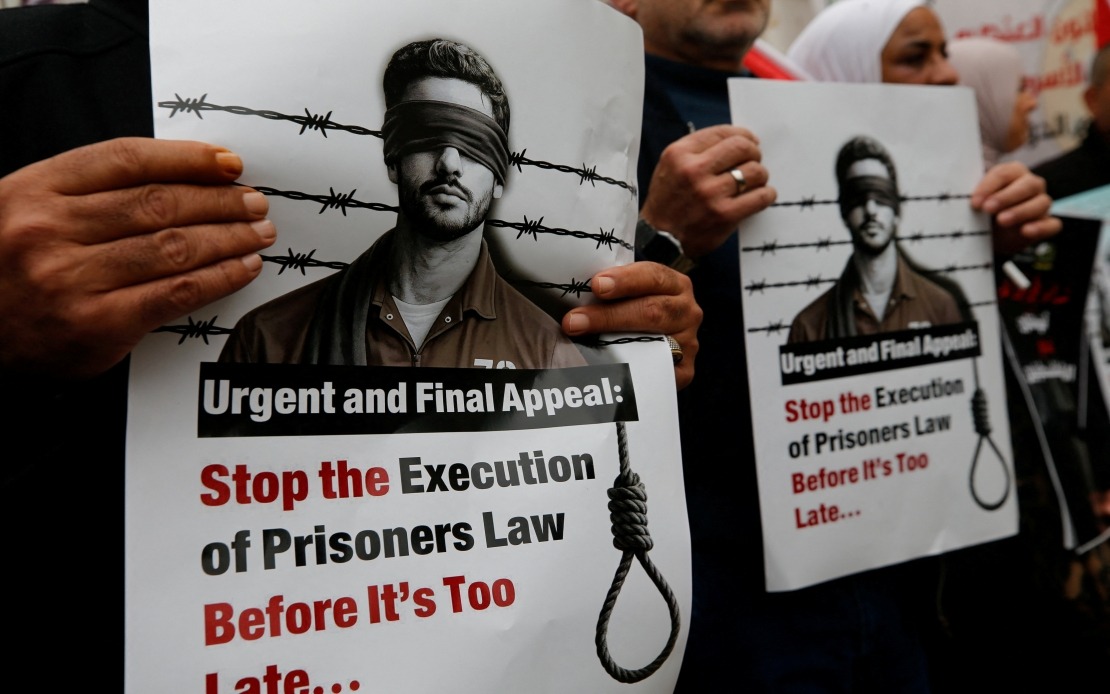
The Palestinian government released a comprehensive situation report this week detailing what it characterises as widespread and systematic human rights violations being perpetrated against Palestinian detainees held in Israeli prisons. The findings, contained in Situation Report #92 from the Prime Minister's Office covering late June, paint a picture of alleged abuses that include torture, denial of medical care, and inhumane detention conditions that Palestinian authorities argue constitute violations of international humanitarian law.
According to the report, Palestinian prisoners' institutions have documented an extensive catalogue of abuse methods employed against detainees by Israeli occupation authorities. These allegations encompass beatings, prolonged stress positions, electrocutions, sleep deprivation, starvation, and sexual violence. Beyond these immediate physical abuses, the report emphasises that detention conditions themselves are fundamentally inhumane, citing inadequate provision of food and water, deliberate disease transmission, and systematic denial of essential healthcare services. The cumulative effect of these conditions, Palestinian authorities argue, constitutes torture under international law.
The scale of detention raises particular concern within Palestinian governance circles. The report indicates that more than 3,376 Palestinian administrative detainees are being held without formal charges or trial, a status that leaves detainees in legal limbo. This figure excludes 360 Palestinian children currently in detention, whose presence raises additional concerns about juvenile justice standards and safeguarding obligations. The report specifically highlights the situation of three pregnant Palestinian women in detention, asserting they face starvation, humiliation, harsh interrogations, strip searches, and denial of adequate prenatal healthcare—conditions that risk the health of both mother and unborn child.
When viewed within the broader context of Palestinian detention across occupied territories, the numbers become more substantial. The report documents that more than 9,500 Palestinian detainees have been recorded in the West Bank, including occupied Jerusalem, suggesting that the administrative detainees without trial represent a significant portion of the total detained population. This distinction is important for understanding Palestinian claims, as administrative detention—detention without trial or formal charges—differs from standard criminal detention and raises distinct legal questions regarding due process rights.
Beyond the immediate detention period, the report documents serious long-term consequences for released detainees. Hundreds of Palestinians released from detention reportedly suffer severe physical and psychological trauma, with some dying shortly after release as a result of abuse endured during incarceration. These claims, if accurate, would indicate that detention practices have life-altering or life-ending consequences extending well beyond the period of confinement itself. Such allegations warrant international scrutiny, particularly regarding medical follow-up and rehabilitation support for traumatised former detainees.
The detention documentation is framed within the Palestinian government's broader casualty accounting since early October 2023. According to figures released alongside the report, at least 73,054 Palestinians have been killed in Gaza, including 21,638 children, while 173,480 others have been injured. An additional 11,200 Palestinians remain missing, while the conflict has claimed the lives of more than 1,700 health workers and 262 journalists and media workers. In the West Bank, including occupied Jerusalem, 1,175 Palestinians have been killed, including 246 children, with 12,919 others injured as of late June. These figures underscore the scale of Palestinian casualties across all forms of Israeli military and security operations.
Measuring the intensity of ongoing military operations, the Palestinian report documents 362 military assaults by the Israeli army during a single week in late June, alongside 47 shooting incidents—figures that exclude airstrikes. Additionally, 114 incidents of settler terror attacks were recorded in the West Bank and occupied Jerusalem during the same period. This operational tempo indicates sustained military and security activity across Palestinian territories, with implications for civilian safety and movement.
Beyond the immediate security situation, the Palestinian Cabinet has simultaneously advanced a governance reform agenda designed to strengthen institutional capacity and public administration. During its weekly session, the government reaffirmed commitment to enhancing governance structures and public financial management, with explicit focus on improving transparency, accountability, and fiscal sustainability. These priorities suggest Palestinian leadership is attempting to build stronger state institutions even amid the security crisis, recognising that governance quality directly affects public confidence and service delivery.
A significant component of this reform involves financial administration modernisation. President Mahmoud Abbas approved amendments to the Value Added Tax law, enabling establishment of a Higher Council for Public Revenues and comprehensive institutional development within the Ministry of Finance. The Palestinian government framed these changes as necessary to align financial systems with international standards, combat tax evasion and smuggling, and ensure reliable funding for essential public services. Such reforms require sustained administrative capacity and face obvious challenges in a context of military occupation and restricted territorial sovereignty.
The government has also prioritised digital transformation as a development pathway. The Palestinian Cabinet approved a comprehensive General Policy for the Telecommunications and Information Technology Sector covering 2026 through 2028, designed to accelerate digital transformation, enhance government digital service delivery, and strengthen digital governance. These initiatives reflect recognition that technological advancement can improve service quality and government efficiency, even in constrained circumstances.
Healthcare modernisation forms another element of Palestinian institutional development. The government endorsed replacement of paper health insurance cards with smart cards, a transition aimed at improving data security while supporting future expansion of digital health services. This shift toward digital health infrastructure addresses both immediate efficiency concerns and longer-term capacity building, though implementation faces practical challenges in a fragmented territory.
For Malaysian observers and policymakers, the Palestinian situation illustrates the persistent tension between humanitarian concerns and institutional development in conflict-affected contexts. Malaysia, as a Muslim-majority democracy with active involvement in regional and international affairs, maintains significant interest in Palestinian issues. The convergence of severe security allegations and administrative reform efforts within Palestinian governance reflects both the acute humanitarian crisis and the Palestinian Authority's attempt to build functional state institutions despite extraordinary constraints.
The documentation of detention practices by Palestinian authorities through formal reporting mechanisms suggests engagement with international accountability standards, even as the government contests Israeli practices. For Southeast Asian nations engaged with both Israeli and Palestinian actors, these reports represent one element of a complex humanitarian landscape requiring balanced policy approaches that acknowledge both Palestinian civilian protection concerns and the realities of governance challenges in occupied territories.

