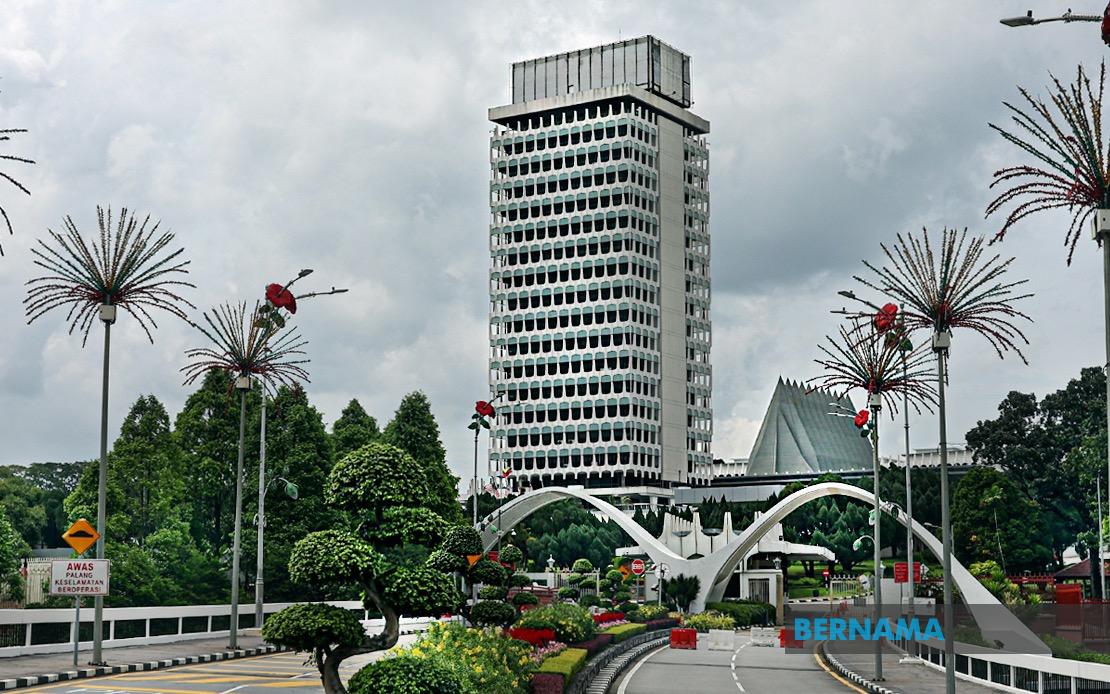
Parliament resumed its sitting on July 1 with a diverse agenda spanning institutional reform and economic concerns that resonate deeply with Malaysian households. The 16-day sitting of the Dewan Rakyat, which runs through July 16, signals lawmakers' intent to tackle structural governance issues alongside the tangible financial pressures confronting ordinary citizens. The prominence of these topics on the parliamentary order paper reflects mounting public concern about both the effectiveness of national institutions and the adequacy of economic measures in capturing real-world hardship.
The proposed amendments to the Human Rights Commission of Malaysia (SUHAKAM) Act 1999 represent a significant shift in how the nation's flagship human rights body operates. Teresa Kok Suh Sim, representing the Petaling Jaya-aligned Seputeh constituency, has tabled a question to the Prime Minister enquiring whether the government intends to enable SUHAKAM to diversify its revenue streams through training initiatives and educational programmes. The rationale underpinning this inquiry points to a chronic institutional vulnerability: SUHAKAM's complete reliance on annual government budget allocations, which can constrain its operational independence and flexibility. By generating supplementary income through commercial training services, the commission could theoretically insulate itself from budgetary pressures and strengthen its ability to function as an autonomous watchdog. This represents a pragmatic solution to a governance challenge that has long concerned human rights advocates who argue that financial dependence on the executive undermines investigative impartiality.
The fiscal autonomy question takes on heightened significance within Malaysia's current governance context. Independent human rights commissions worldwide have increasingly adopted mixed-funding models to ensure operational freedom. SUHAKAM's capacity to develop training programmes in human rights law, institutional accountability, and corporate governance could serve dual purposes: generating revenue while simultaneously elevating national standards in these critical areas. For Malaysia's standing within the international human rights community, demonstrating tangible steps toward institutional independence carries substantial weight, particularly as regional peers strengthen similar mechanisms.
Equally pressing is the economic disconnect that Mohd Syahir Che Sulaiman, the Bachok representative from the opposition bloc, has raised with the Economy Minister. His question directly confronts a persistent gap between headline inflation statistics and the experienced cost-of-living squeeze that millions of Malaysians endure monthly. Official inflation figures, typically hovering in single digits, provide an incomplete picture when citizens face double-digit percentage increases in essential food items, transportation, and housing. This disparity has become a source of public frustration, with many questioning whether government economic policies adequately address their reality. The question specifically demands clarity on what government indicators are employed to ensure that macroeconomic growth actually translates into expanded household purchasing power—a critical distinction often obscured in policy discussions.
This cost-of-living challenge carries particular relevance for Southeast Asia's broader economic landscape. Malaysia, as a relatively developed economy within the region, faces pressure to demonstrate that its middle-income status genuinely improves living standards. When official metrics diverge sharply from household experience, it erodes public confidence in government competence and creates space for criticism that economic policies disproportionately benefit corporations and wealthy segments. The parliamentary interrogation signals recognition that current economic communication strategies lack credibility among voters, necessitating either genuine policy recalibration or more transparent acknowledgment of whose circumstances different measures actually reflect.
Additional parliamentary business reflects concerns extending beyond immediate economic hardship into infrastructure and human capital planning. V. Ganabatirau's inquiry regarding flood retention ponds and land-use conversions in Kuala Lumpur addresses immediate urban resilience challenges exacerbated by climate variability and rapid development pressures. The question implies systematic review concerns—whether existing safeguards prevent inappropriate conversions of critical flood management infrastructure. For a capital city increasingly vulnerable to inundation, this oversight function represents essential parliamentary vigilance.
Education and workforce development concerns also feature prominently through questions about STEM field participation in Malaysian higher education. Datuk Dr Ku Abd Rahman Ku Ismail seeks specific ratios comparing science and technology enrolments against humanities and social science cohorts, alongside strategic targets for engineering disciplines. This inquiry reflects broader anxiety about whether Malaysia's educational pipeline adequately supplies technical expertise required for competitive high-technology industries. The question implicitly asks whether current student distribution patterns align with actual labour market requirements, a perennial challenge in educational planning where institutional inertia often prevents rapid adjustment to evolving employer needs.
The parliamentary schedule also includes the Cybercrime Bill 2026, scheduled for second reading during this sitting. This legislation addresses the increasingly complex intersection of digital security, criminal law, and privacy rights—domains where Malaysia has previously experienced contentious legislative battles. The timing of this bill's advancement reflects government recognition that cybersecurity threats constitute an urgent policy frontier, though civil society organisations will likely scrutinize provisions regarding government surveillance authorities and definitions of criminal digital conduct.
Collectively, these parliamentary priorities reveal lawmakers grappling with interconnected governance challenges: ensuring institutional independence, closing policy-to-reality gaps, managing urban resilience, building future economic competitiveness, and regulating emerging technological domains. The breadth of this agenda underscores the complexity of governing a middle-income nation navigating digital transformation, climate adaptation, and persistent inequality simultaneously. For Malaysian citizens and regional observers, this parliamentary sitting will test whether legislative scrutiny actually produces meaningful policy adjustments or remains largely performative. The government's responses to questions about SUHAKAM autonomy, cost-of-living measurement, and skills pipeline adequacy will substantially shape public assessment of institutional responsiveness to genuine grievances.

