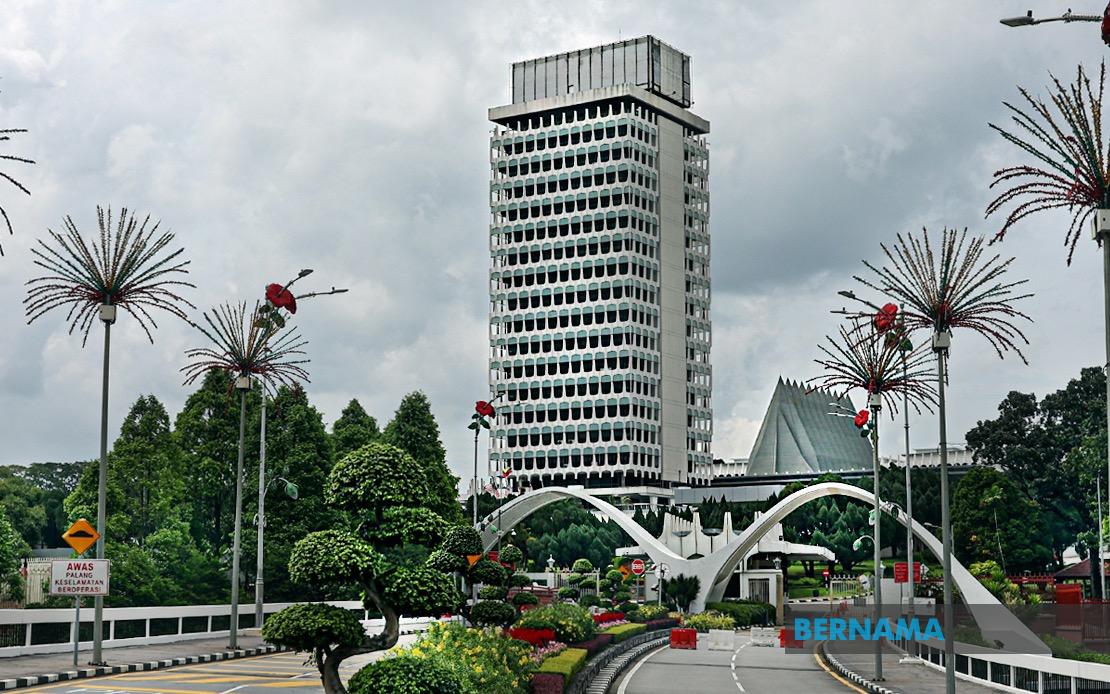
Prime Minister Datuk Seri Anwar Ibrahim defended the Federal Government's funding distribution strategy during the second week of parliament, asserting that the vast majority of Malaysian states actually receive allocations that substantially exceed the tax revenue they generate locally. His remarks came during Ministers' Question Time on Tuesday, directly addressing concerns from lawmakers about resource disparities across the country. Anwar characterised the allocation methodology as merit-based rather than politically motivated, emphasising that funds flow according to regional development priorities and the quality of life needs of residents, not arbitrary formulas that might favour certain constituencies over others.
The Prime Minister's intervention proved timely, as debates over resource distribution between prosperous and developing states have long been a flashpoint in Malaysia's federal structure. His clarification touched on a fundamental tension in Malaysian federalism—the balance between equalisation transfers that support poorer states and the principle that funding should reflect actual economic contribution. By demonstrating that most states gain financially from the federal system, Anwar sought to reduce political friction between Kuala Lumpur and state capitals while reinforcing the legitimacy of centrally managed allocation frameworks.
Beyond the allocation discussion, Anwar also outlined procedural requirements for state governments seeking additional development funds. Any request involving a Notice of Change, which typically signals a modification to an existing project's scope or parameters, must enter a fresh negotiation phase before the Federal Government commits additional resources or approves loan facilities. This procedural guardrail reflects growing scrutiny of project cost overruns and scope creep that have plagued infrastructure development across the country.
The Prime Minister additionally reminded members that election campaign periods carry strict legal constraints under Section 24B of the Election Offences Act 1954, prohibiting the announcement of new projects or policies during such windows. This reminder appeared aimed at preventing politically motivated project launches designed to influence voter behaviour, a practice that has historically tested the boundaries between legitimate governance communication and electoral manipulation.
Parliament made substantial headway on three major legislative fronts during the week. Members passed the Sexual Offences Against Children (Amendment) Bill 2026, strengthening legal frameworks protecting minors from exploitation. Simultaneously, lawmakers approved amendments to the Employment Insurance System (Amendment) Bill 2025, modernising worker protections. Most significantly, the Cybercrime Bill 2026 received final approval, introducing comprehensive provisions addressing digital forgery, particularly deepfake technology, and criminalising the distribution of manipulated intimate images via computer systems. The deepfake provisions carry particular weight for Malaysia, where doctored videos and synthetic media have increasingly featured in political disinformation campaigns and defamation incidents.
Minister in the Prime Minister's Department (Law and Institutional Reform) Datuk Seri Azalina Othman Said revealed that the government is developing a new contract law framework designed to recognise third-party rights and modernise regulations governing commercial agencies. The initiative reflects Malaysia's effort to keep commercial law aligned with contemporary business practices. Azalina noted that the Study of Contract Law Reform in Malaysia has been completed, with the comprehensive final report—featuring policy recommendations, international comparative analysis and draft legislation—already circulated to parliament members. This overhaul will incorporate considerations around artificial intelligence applications in commercial transactions, addressing jurisdictional gaps that have emerged as businesses increasingly rely on AI systems for contract management and negotiation.
Economy Minister Akmal Nasrullah Mohd Nasir outlined government efforts to stabilise the supply and pricing of essential commodities, a persistent concern for Malaysian households struggling with cost-of-living pressures. His ministry conducts daily monitoring of both availability and prices for basic goods while coordinating with Petroliam Nasional Berhad (Petronas) and private sector players to ensure energy supply remains stable and sufficient for consumer needs and major industrial users. This coordination underscores the government's recognition that price stability depends on supply chain resilience and strategic partnerships rather than price controls alone.
Deputy Education Minister Wong Kah Woh announced details of the MADANI Book Voucher programme 2026, which targets over 2.2 million students under the Education Ministry's jurisdiction with a RM221.6 million budget allocation. The programme distributes RM100 e-vouchers per student, redeemable for educational materials from participating retailers. Redemption began last Wednesday and continues through October 31, providing families with supplementary resources for student learning while supporting the publishing and educational materials sector.
Communications Minister Datuk Fahmi Fadzil detailed government progress on implementing the Online Safety Act 2025, confirming that regulatory frameworks are being finalised alongside an additional instrument specifically addressing private messaging features. This second regulatory tool aims to clarify platform obligations regarding harmful content dissemination through direct messaging channels, closing loopholes where abusive material might otherwise circulate without effective moderation. Fahmi also disclosed that the Malaysian Communications and Multimedia Commission is exploring agentic artificial intelligence—autonomous AI systems that perform tasks independently—to streamline complaint management and reduce administrative burden on officers investigating violations.
The government is simultaneously encouraging social media platforms to deploy AI technology internally for rapid detection and removal of content breaching community standards. This two-pronged approach—regulatory oversight coupled with industry self-regulation—reflects contemporary thinking about digital governance, where public authorities set boundaries while platforms leverage their technical capabilities to police content at scale. For Malaysia, where online harassment, false information and hate speech remain serious challenges, this framework represents an attempt to balance free expression with community safety.
The current parliamentary sitting, spanning sixteen days from June 22 through July 16, has thus far demonstrated the government's commitment to advancing protection legislation, modernising regulatory frameworks and addressing cost-of-living concerns through both supply management and direct support programmes. These initiatives collectively signal an agenda focused on strengthening institutional frameworks while responding to immediate household economic pressures that have become politically salient across the region.

