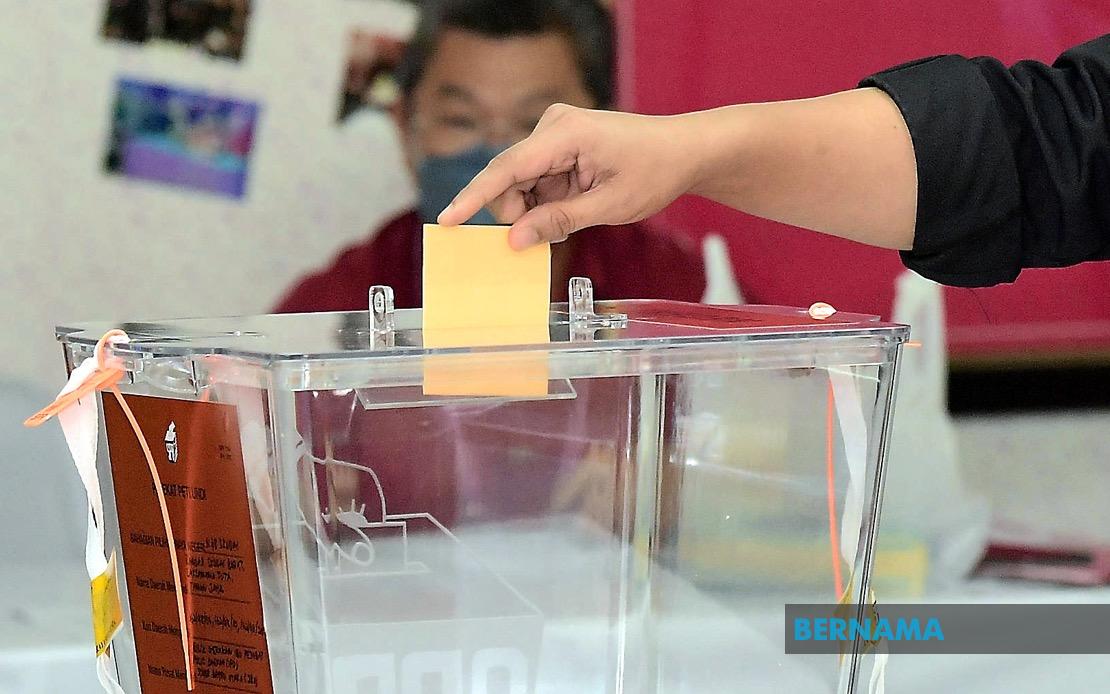
The Johor state election has concluded with Barisan Nasional securing a clear mandate, and the political landscape is now settling as coalition partners respond to the results. PAS, a key component of the Perikatan Nasional alliance, has formally acknowledged the electorate's choice, signalling acceptance of the outcome and a commitment to consolidating its position within the broader opposition framework.
PAS commissioner for Johor, Datuk Dr Mahfodz Mohamed, issued a gracious statement recognising Menteri Besar Datuk Onn Hafiz Ghazi's ability to command a sufficient majority and form government. Rather than dwelling on what PAS did not achieve in this particular contest, the party has pivoted toward framing the election as a stepping stone toward larger ambitions. The statement emphasised that PAS, operating within the Perikatan Nasional structure, intends to remain committed to advancing Islamic principles, communal interests, and welfare objectives—messaging clearly calibrated for its traditional voter base ahead of the forthcoming 16th General Election.
The broader context here is significant for understanding Malaysian politics. While Barisan Nasional's dominance in Johor is not surprising given its historical stronghold in the state and the fractured opposition vote, the performance of various political entities reveals deeper structural shifts within the opposition ecosystem. Barisan Nasional's win of 29 seats out of 56 provides a workable mandate, though not commanding the supermajorities once routine in such contests, reflecting the competitive pressure from multiple opposition formations vying for voter attention.
Bersatu, another Perikatan Nasional partner, has adopted a more methodical posture. Secretary-General Datuk Seri Mohamed Azmin Ali indicated the party would undertake comprehensive analysis of the election outcomes to identify areas for refinement and strategic recalibration. This language suggests internal soul-searching rather than crisis, though Bersatu's performance in Johor—like many of its recent electoral outings—appears to have been underwhelming. For a party born from political turmoil and rebranding efforts, each election serves as a diagnostic tool, revealing whether its reorganisation and repositioning strategies are resonating with voters.
Perhaps most dramatically, Parti Bersama Malaysia confirmed a complete wipeout. All fifteen of the party's candidates forfeited their election deposits, a humbling result for any political formation. Led by Datuk Seri Rafizi Ramli, a figure with considerable political pedigree and visibility, Bersama contested the Johor election as a barely two-month-old entity. The party's founder cast the outcome in pragmatic terms, characterising the experience as a learning opportunity for an organisation still in its infancy. This framing—treating electoral defeat as an educational exercise—may reflect both genuine confidence in long-term viability and a realistic acknowledgment that building a new political brand requires patience and sustained effort beyond a single election cycle.
The broader opposition landscape remains fractionalised. Pakatan Harapan managed two seats, continuing its struggle to maintain relevance in Johor despite considerable national profile. Smaller entities including MUDA, Parti Orang Asli Malaysia, and Parti Sosialis Malaysia drew blanks, as did independent candidates. This fragmentation benefits ruling coalitions enormously, as vote-splitting among opposition formations allows plurality victories in individual constituencies. For Malaysian voters concerned about opposition competitiveness, the Johor results underscore a persistent vulnerability: the inability of anti-BN forces to present a unified alternative has catastrophic electoral consequences.
The implications for the 16th General Election are already being processed by political strategists. PAS has explicitly identified the coming national polls as its next major focus, suggesting that parties will use the intervening months to reorganise and prepare ground campaigns. For Bersatu and Bersama, Johor provides early data about voter receptivity and coalition dynamics that will inform how they allocate resources and messaging nationally. These reviews are unlikely to produce dramatic strategic shifts immediately, but they will inform incremental adjustments to candidate selection, campaign themes, and coalition architecture.
For Malaysian and Southeast Asian observers, the Johor election demonstrates several enduring truths about contemporary Malaysian politics. First, Barisan Nasional retains structural advantages in Johor that competitors find difficult to overcome, even as its margins narrow compared to previous decades. Second, opposition fragmentation remains a critical vulnerability that undermines the prospect of genuine two-coalition competition. Third, new political formations face monumental challenges in establishing credibility and support, as Bersama's experience illustrates vividly. Fourth, established opposition parties like PAS navigate complex incentives between maintaining their distinct identity and collaborating within broader alliances, a tension visible in how they frame their commitments.
Looking forward, the responses from PAS, Bersatu, and Bersama suggest that all three intend to persist with their current strategic directions rather than undertake fundamental repositioning. PAS will continue operating as an Islamic-focused party within Perikatan Nasional. Bersatu will refine its approach while remaining aligned with PN and potentially broader anti-Anwar Ibrahim coalitions. Bersama will attempt to build on nascent organisational foundations despite this electoral setback. None have signalled imminent crisis or dramatic realignment, suggesting a period of consolidation and preparation ahead of the national contest that will ultimately determine whether their calculations have merit.

