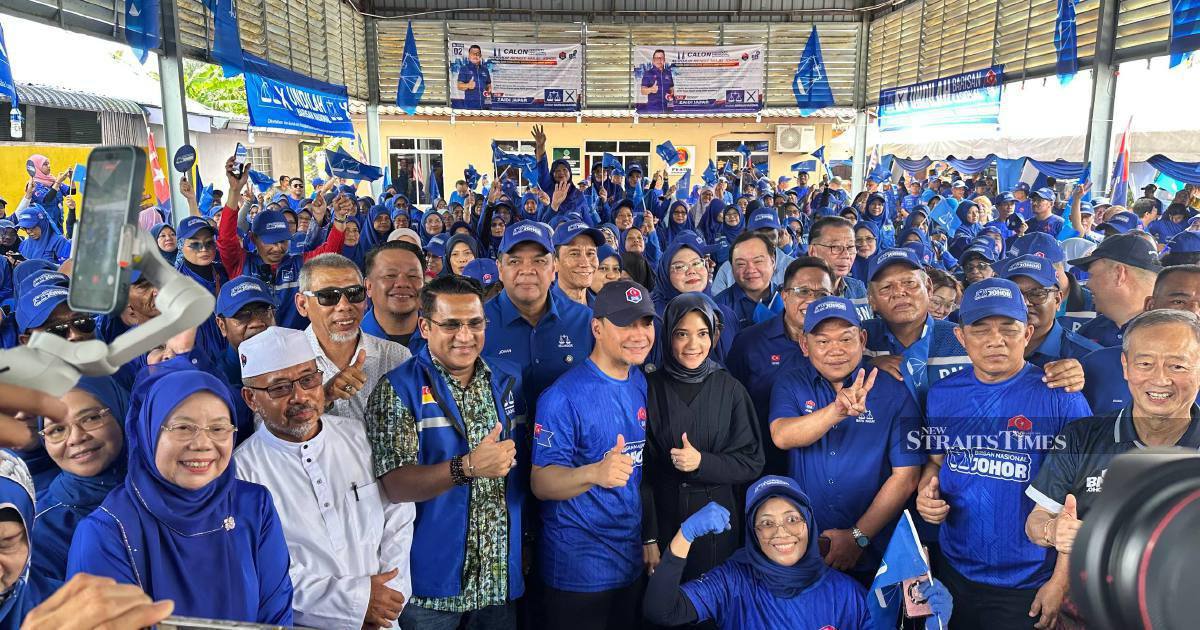
The appearance of two prominent PAS division chiefs at a Barisan Nasional gathering in Batu Pahat underscores deepening efforts to consolidate cooperation among Umno and other Malay-Muslim political parties as the Johor state election approaches within the coming month. The attendance marks a visible display of unity between the two traditionally competing political organisations, hinting at possible electoral collaboration or at minimum, reduced tensions that have characterised their relationship in recent years.
The significance of such cross-party attendance lies in the fractured landscape of Malay-Muslim politics in Malaysia. PAS has oscillated between alignment with Umno's Barisan Nasional and independence through Perikatan Nasional, a coalition that proved successful in securing federal power in 2020 before its collapse. The party's participation in BN events suggests a recalibration of its political strategy, particularly at the state level where electoral mathematics may dictate pragmatic cooperation rather than ideological purity.
Johor remains a critical political battleground for both Umno and PAS. The state has traditionally been a Umno stronghold, but PAS has steadily increased its electoral footprint across Malaysia, capturing constituencies even in Umno's traditional base. The forthcoming state election will determine which coalition can better mobilise the Malay-Muslim electorate, making any sign of coordination noteworthy for political analysts and grassroots observers. The division leaders' presence suggests that discussions between party hierarchies have progressed beyond mere platitudes.
For Umno, the attraction of PAS cooperation is straightforward: pooling votes and preventing three-way contests that could splinter the Malay vote. In competitive constituencies, an additional candidate from a rival Malay party can fatally divide the bloc that has traditionally underpinned Barisan Nasional's electoral dominance. Conversely, PAS gains visibility and potential ministerial positions in a BN state government, along with opportunities to implement policies aligned with its Islamic agenda through legislative and executive influence.
The Batu Pahat locality itself carries particular weight in Johor politics. The district encompasses multiple state assembly constituencies and has seen competitive contests between Umno and PAS in recent electoral cycles. A show of unity in this specific area sends a message to party members, undecided voters, and opposition coalition supporters that Malay-Muslim parties are presenting a united front. This could either consolidate support among traditional BN voters or dampen the enthusiasm of those who view PAS as an alternative voice.
However, such visible cooperation comes with complications for both parties. Within PAS, conservative factions have long viewed collaboration with Umno as a compromise of the party's independent Islamic mission. Umno members, particularly in regions where PAS has made electoral inroads, may perceive such arrangements as unnecessary surrender of hard-won territories or a sign of weakness in negotiating position. The leadership's ability to manage internal dissent over such alliances will be crucial in the coming weeks.
The timing of this event also reflects the compressed electoral calendar facing Malaysian politics. With state elections following federal elections within relatively short timeframes, political parties must move rapidly to consolidate coalitions and prepare campaign machinery. Any delays in resolving cooperation frameworks between BN components could disadvantage them against more unified opposition coalitions, whether Perikatan Nasional or other groupings.
Regional observers will be monitoring whether this gesture in Batu Pahat escalates into formal seat arrangements or electoral pacts across Johor's state assembly constituencies. Should PAS and Umno agree to avoid contesting identical seats, it would represent a significant shift in Malaysian electoral politics and could provide a template for other state elections. Alternatively, the appearance could be merely symbolic, with both parties maintaining competitive stances while presenting a facade of unity to voters.
The implications extend beyond Johor's borders. Malaysia's political system remains intensely competitive at the state level, with several states scheduled for elections in coming months. Any successful cooperation model between Umno and PAS in Johor could influence negotiations and electoral arrangements in other states where both parties contest. Conversely, if cooperation breaks down or produces disappointing results, it may reinforce perceptions that such alliances lack genuine conviction.
For Malaysian voters, particularly those in Johor, the presence of PAS leaders at BN events raises fundamental questions about political allegiances and electoral choices. Many voters supporting either party have done so partly because of their distinct identities and policy positions. Increased cooperation might be strategically sensible for party leaders but could perplex or disappoint grassroots supporters who see such moves as political opportunism rather than principled governance.

