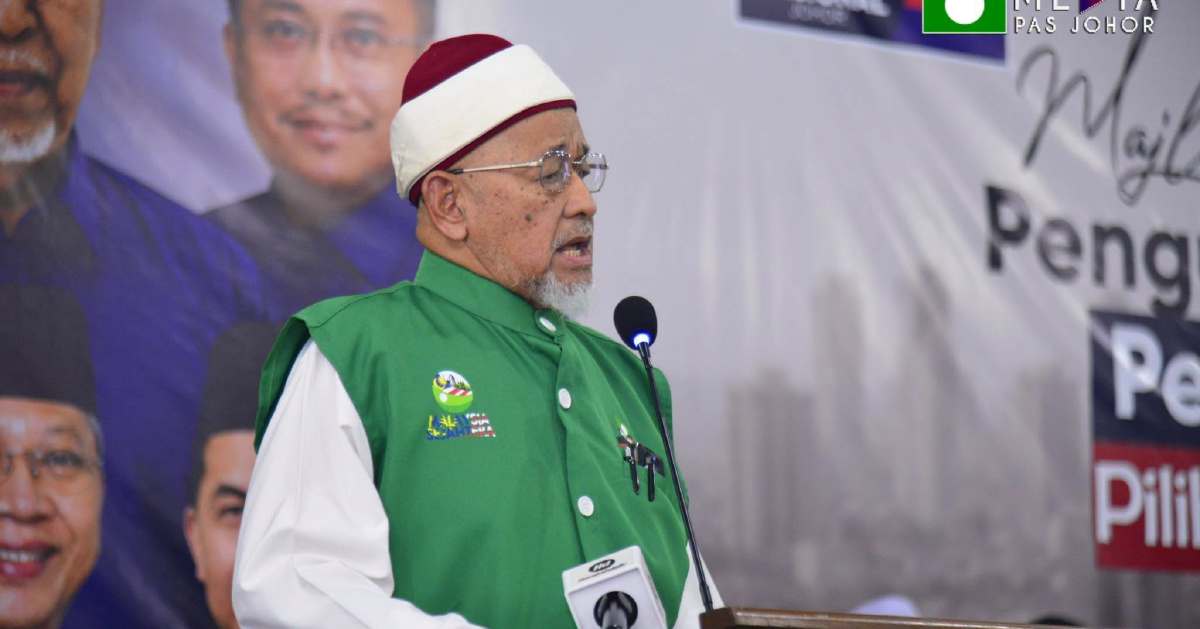
The Perikatan Nasional coalition, with Pas as a principal component, has formally acknowledged the results of Johor's 16th state election, which delivered a decisive triumph for Barisan Nasional. Speaking in Muar, party representatives stated that the coalition has received the electoral outcome with grace, underscoring their commitment to honouring the democratic process and the clear preferences expressed by voters across the state.
The scale of Barisan Nasional's victory in Johor marks a significant moment in the state's recent political trajectory. Having previously governed the state, the coalition's resurgence at the ballot box demonstrates renewed electoral confidence among the Johor electorate. Perikatan Nasional, which had mounted its own campaign to reclaim political ground in the state, now faces the reality of consolidating its position and regrouping for future contests.
Pas, which fields candidates across multiple states and has served as kingmaker in federal politics following the 2022 general election, has chosen a measured approach to the setback. The Islamic party's decision to publicly affirm respect for voters' choices reflects an attempt to maintain its political reputation and institutional standing, particularly important given its coalition responsibilities at the national level and governance commitments in states where it holds executive power.
For Malaysian observers tracking coalition dynamics, the Johor outcome illuminates the shifting landscape of state-level politics. Barisan Nasional's performance suggests that despite fluctuations in federal politics and the rise of rival coalitions, the venerable partnership of MCA, MIC, and Umno retains considerable appeal among certain voter demographics, particularly in traditionally Malay-Muslim states. Johor, as one of the largest and most economically significant states, carries outsize importance in Malaysia's political calculations.
The election result also carries implications for Perikatan Nasional's broader positioning. The coalition, which has governed Kedah and commands influence in several other states, must demonstrate that electoral reverses do not destabilize the partnership or undermine its capacity to govern effectively in territories where it holds power. Pas's measured response suggests internal discipline within the coalition structure.
From a constitutional standpoint, respecting election outcomes and transferring power smoothly represents a cornerstone of Malaysia's democratic practice. The peaceful acceptance of results, regardless of party identity or magnitude of defeat, reinforces institutional norms that protect the integrity of electoral systems. When major political actors honour democratic mandates without contention, they strengthen faith in democratic institutions among the broader populace.
For Southeast Asia more broadly, Malaysia's handling of electoral transitions continues to draw attention from regional observers. In a geopolitical context where democratic backsliding and contested elections have become increasingly common across the region, Malaysia's general adherence to electoral norms—despite occasional tensions—provides a stabilizing counterweight. Political maturity in accepting defeat, as demonstrated here by Perikatan Nasional, contributes to this reputation.
The Johor election reflects broader patterns in Malaysian electoral behaviour that regional analysts monitor. State elections in Malaysia frequently serve as barometers of national sentiment and testing grounds for coalition messaging. Johor's outcome suggests that Barisan Nasional has successfully repositioned itself as a viable governing option, potentially reversing the narrative that emerged from the 2018 general election when the coalition suffered historic defeat at the federal level.
Pas's graceful acceptance also reflects pragmatic political calculation. The party maintains substantial parliamentary representation and continues to govern Kelantan and Terengganu, contexts where its Islamic platform resonates strongly. Focusing energy on consolidating existing strongholds and pursuing expansion in sympathetic constituencies represents a more sustainable strategy than contentious post-election disputes that deplete political capital and invite public criticism.
Moving forward, the Johor result will likely influence campaign strategies for upcoming electoral contests across Malaysia. Political parties will analyse voter behaviour patterns to refine messaging and coalition arrangements. For Perikatan Nasional specifically, maintaining unity within the coalition while regrouping after electoral setbacks will be critical to credibility and longevity.
The acceptance of electoral outcomes, though sometimes appearing routine in established democracies, requires genuine commitment from political actors in competitive environments. Perikatan Nasional and Pas have signalled that commitment through their public statements and posture. This approach protects both democratic institutions and the parties' own long-term political interests, demonstrating that short-term electoral losses need not translate into systemic political instability.

