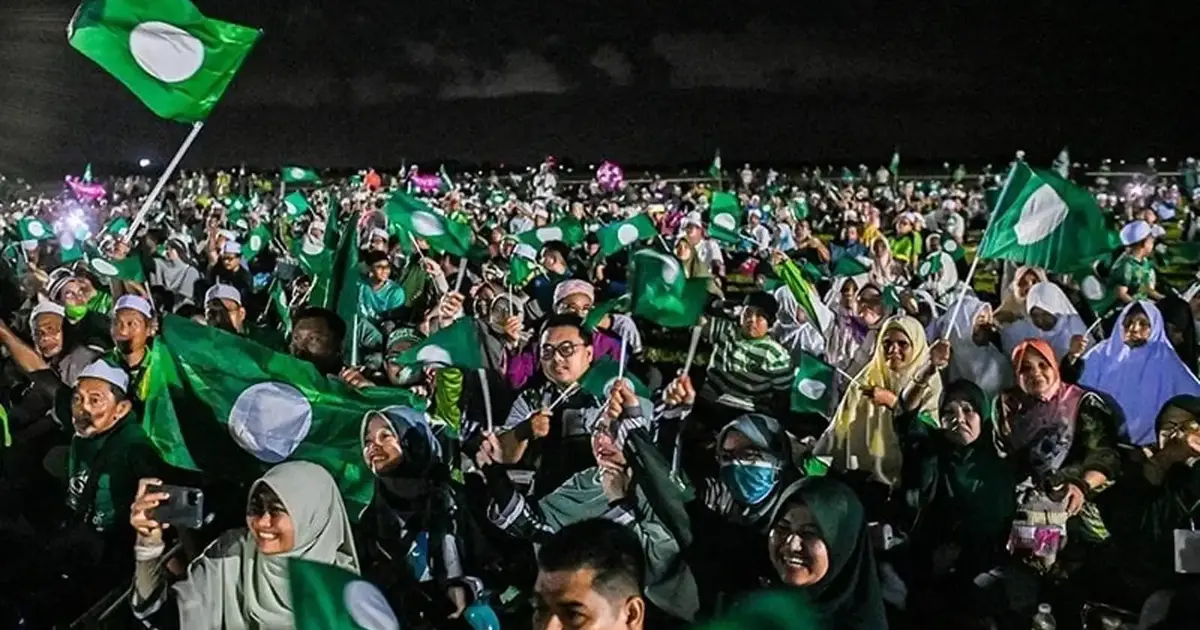
PAS President Hadi Awang has levelled accusations that Pakatan Harapan and the Democratic Action Party pursued a deliberate strategy of amplifying Islamophobic messaging during recent electoral campaigning, deliberately employing religious imagery to stigmatise his organisation and instil anxiety among Muslim voters. The charges represent a significant escalation in the political rhetoric between the Islamist party and its former coalition partners, marking a fundamental breakdown in the cooperative framework that briefly united Malaysia's fractious opposition movement.
At the heart of Hadi's complaint lies the pervasive use of the phrase 'green wave' throughout the electoral period. He contends that this terminology, inextricably linked to Islamic identity and PAS's characteristic political branding, was weaponised as a tool of fear-mongering. The strategic deployment of this loaded language, according to Hadi's interpretation, deliberately constructed a narrative positioning Islamic political mobilisation as a threat requiring containment, thereby appealing to anxieties among non-Muslim and secular-minded voters. The invocation of religious anxiety as an electoral tactic represents, in his view, a cynical manipulation of communal sensitivities for competitive advantage.
The allegation fundamentally challenges the self-presentation of Pakatan Harapan's leadership as progressive and inclusive political stewards committed to multi-communal harmony. By characterising the coalition's campaign strategy as Islamophobic, Hadi reframes the narrative surrounding tensions within the opposition bloc, shifting responsibility from PAS's governance record or ideological positioning onto the alleged religious prejudice of rival political actors. This rhetorical manoeuvre seeks to reclaim moral authority within Islamic constituencies, positioning PAS as the authentic defender of Muslim interests against denigration by secular rivals.
The grievance articulated by Hadi reflects deeper structural tensions within Malaysian politics regarding the relationship between religious identity and political mobilisation. Malaysia's constitutional framework grants Islam a special position, and political parties have historically sought to establish credentials as defenders of Muslim interests. However, the deployment of Islamic symbolism as an electoral tool remains contentious, with critics arguing that such mobilisation risks polarising the electorate along religious lines while proponents contend it represents legitimate political expression within a Muslim-majority democracy. The disagreement between PAS and its former coalition partners thus encapsulates a broader unresolved question about the appropriate role of religious messaging in Malaysian electoral competition.
For Malaysian voters and political observers, the implications of this dispute extend beyond factional positioning within the opposition. The fragmentation of Pakatan Harapan reflected both the ideological incompatibility between secular-liberal and Islamist visions of governance and tactical disagreements about campaign strategy. PAS's withdrawal from the coalition and its repositioning toward UMNO-led arrangements shifted the entire landscape of Malaysian politics, contributing to the political instability that has characterised recent years. Understanding the grievances articulated by major political actors thus provides essential context for comprehending the mechanics of coalition collapse.
Hadi's characterisation of his opponents' tactics simultaneously reveals the profound challenge facing Malaysian political parties in navigating religious and communal sensitivities. Campaigns that emphasise particular religious or ethnic appeals risk exacerbating existing fractures within an increasingly polarised electorate. Conversely, efforts to transcend communal identity in favour of programmatic or policy-based competition struggle to gain traction in a context where historical grievances and constitutional provisions establish religion and ethnicity as legitimate political categories. The tension between these imperatives shapes the strategic choices available to all major Malaysian political actors.
The accusation of Islamophobia deployed by Hadi also serves to challenge the legitimacy of non-Muslim and secular critique directed toward PAS's governance philosophy or policy preferences. By framing such criticism as rooted in religious prejudice rather than substantive policy disagreement, he attempts to delegitimise alternative viewpoints and position PAS as a persecuted victim of discriminatory treatment. This defensive posture reflects the vulnerability of Islamic parties when confronted with electoral losses or declining support, creating incentives to attribute defeat to external prejudice rather than internal deficiencies.
Regional dynamics further complicate this Malaysian political dispute. Concerns about Islamic political movements resonate across Southeast Asia, where multiple governments and opposition blocs grapple with questions about the role of religion in public life and governance. The outcome of Malaysian electoral competition and coalition-building thus carries implications for broader regional conversations about secularism, religious pluralism, and the viability of multi-communal democratic governance. How major Malaysian parties navigate these tensions influences the broader Southeast Asian political environment.
Moving forward, the willingness of PAS and Pakatan Harapan to engage in substantive dialogue about the legitimate boundaries of electoral messaging and campaign strategy will significantly impact Malaysian political stability. The current trajectory, characterised by escalating accusations and deepening divisions, suggests limited prospects for reconciliation or the reconstruction of opposition unity. Instead, the Malaysian political landscape appears increasingly fractured along ideological and identity-based lines, with religious symbolism and Islamophobic rhetoric emerging as central battlegrounds in electoral competition, complicating efforts to build the cross-communal coalitions necessary for stable governance.

