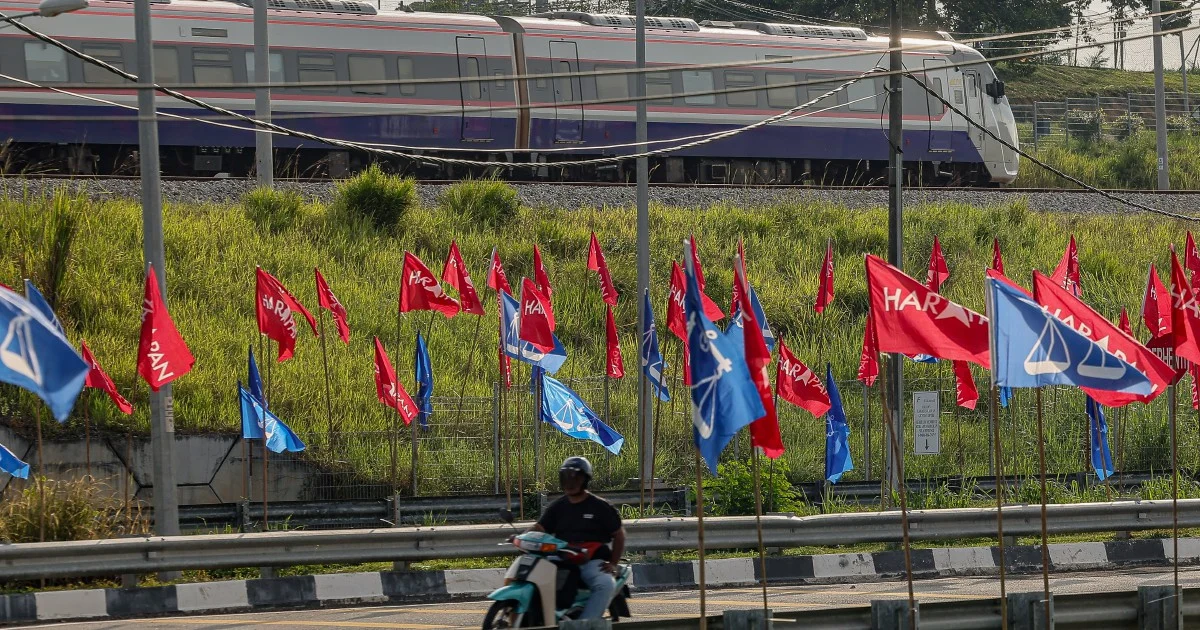
PAS Youth leadership in Johor Baru has moved to clarify the party's electoral positioning, revealing that its willingness to back Barisan Nasional candidates in selected parliamentary and state assembly seats where Perikatan Nasional has opted not to contest forms part of a deliberate strategy to constrain Pakatan Harapan's capacity to secure electoral victories. This articulation of the youth wing's political calculus underscores the intricate and multidimensional nature of Malaysia's contemporary coalition politics, where alliances shift based on local context and perceived common adversaries.
The readiness to channel youth support toward BN-endorsed candidates in such circumstances reveals how opposition parties at both federal and state levels have increasingly focused their efforts on preventing their ideological opponents from consolidating power, even when this necessitates cooperating with former political rivals. For Malaysian observers, this dynamic illustrates a broader shift in electoral behaviour, where blocking rival coalitions has become as significant a motivation as promoting a party's own legislative agenda.
PAS Youth's clarification addresses perceptions that the party might be diluting its political independence by endorsing candidates outside its own organisational structure. By framing this collaboration as fundamentally anti-PH in character rather than pro-BN, the youth wing attempts to maintain its political identity and credibility with its grassroots supporters while simultaneously acknowledging that certain electoral configurations demand pragmatic cross-coalition partnerships. This rhetorical positioning allows party cadres to explain their actions to constituencies that might otherwise view such cooperation as betrayal.
The emergence of this electoral arrangement reflects the fractured state of Malaysian opposition politics, where PN and PAS initially positioned themselves as alternatives to the PH government that administered federal affairs from 2018 to 2022. However, subsequent developments, including internal PN tensions and shifting regional power balances, have created scenarios where these parties find their interests better served through selective cooperation with BN in specific constituencies rather than maintaining unified opposition fronts.
For Johor, the state where this announcement was made, the implications prove particularly significant given the region's electoral competitiveness and historical oscillation between ruling coalitions. The state has served as a critical battleground in recent general elections, with results often foreshadowing broader national trends. Any electoral arrangement involving major coalition partners therefore carries ramifications extending well beyond Johor's borders.
PAS Youth's strategic statement also highlights generational divisions within Malaysian politics, as the youth wing exercises considerable autonomy in articulating party positions on tactical matters. This autonomy reflects broader patterns within PAS, where younger party members have sometimes adopted more flexible approaches to inter-party cooperation than senior leadership figures. The youth wing's willingness to publicly explain and defend electoral arrangements suggests confidence in the party's organisational stability and the rationality of its strategic choices.
From a broader Southeast Asian perspective, Malaysia's coalition politics demonstrates patterns familiar to the region, where electoral outcomes frequently depend on how opposition and ruling forces navigate complex arrangements involving multiple parties with overlapping constituencies and competing ideological positions. The PAS-BN positioning mirrors comparable situations in other democracies where former adversaries find temporary common cause against mutual opponents.
The anti-PH dimension of this strategy deserves particular attention, as it suggests that concerns about Pakatan Harapan's potential resurgence remain paramount among both PN and certain BN constituencies. Whether such cooperation proves sufficient to meaningfully impact PH's electoral prospects depends on numerous factors, including the specific demographics of targeted constituencies, the intensity of PH's grassroots mobilisation efforts, and the evolving preferences of younger Malaysian voters who may regard older coalition divisions as less relevant than contemporary policy disagreements.
PAS Youth's clarification also implies recognition that Malaysian voters increasingly scrutinise electoral arrangements and coalition behaviour, making transparency about political motivations more strategically valuable than opacity. By explicitly connecting the BN-support decision to anti-PH objectives rather than positive endorsement of BN policies, the youth wing adopts a defensive but honest posture that acknowledges the pragmatism increasingly evident in Malaysian electoral politics.
Looking forward, such arrangements may become more common as Malaysian politics continues fracturing along multiple dimensions simultaneously—ideological, generational, regional, and personality-driven. The capacity of parties to execute selective cooperation while maintaining distinct political identities will likely prove crucial to electoral success in coming contests, particularly in closely contested states and federal constituencies where coalition choices can determine outcomes.

