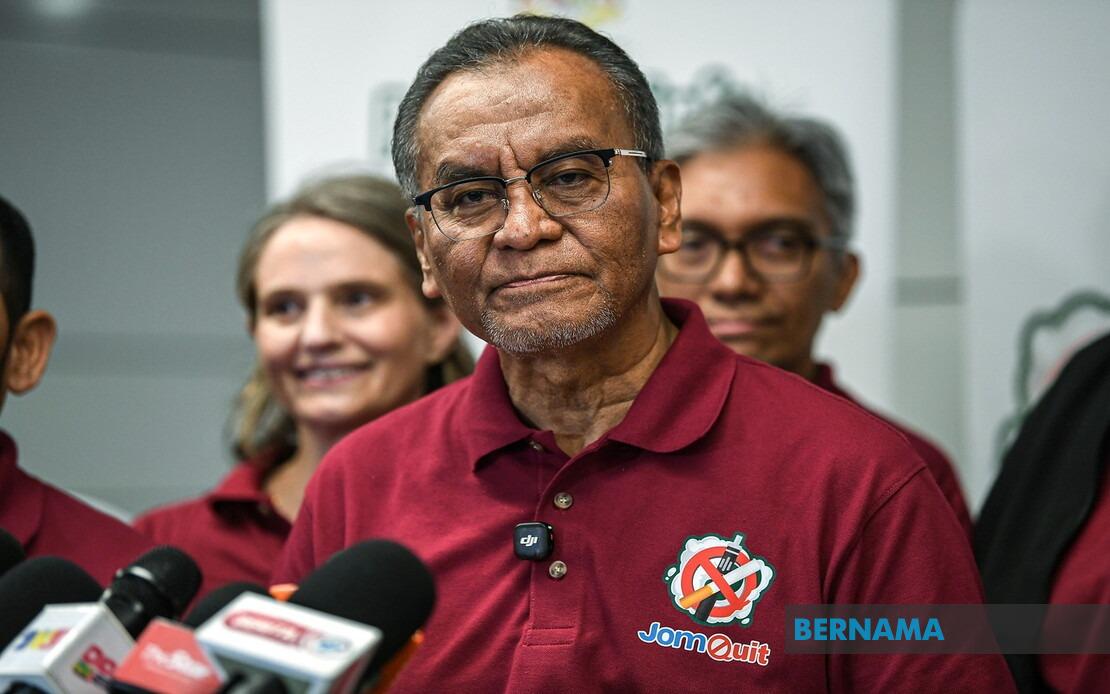
The newly commissioned Pasir Gudang Hospital in Johor is operating well below full strength, with staffing currently sitting at 48 percent of its target establishment, Health Minister Datuk Seri Dr Dzulkefly Ahmad disclosed this week. Since commencing operations in August last year, the facility has deployed 1,075 personnel across its various departments and services, but a deliberate, staged recruitment strategy means the hospital will not reach complete operational readiness until the final quarter of the year. This timeline reflects the ministry's cautious approach to scaling up a major healthcare facility, balancing the urgent demand for expanded medical services in the southern corridor against the practical realities of recruiting and onboarding qualified professionals.
The phased staffing roadmap reveals the differing urgency across medical disciplines. Medical officers represent the most advanced recruitment category, with 176 of the budgeted 206 positions already filled, translating to 85.4 percent occupancy. The ministry has opened permanent appointment pathways for the remainder of 2024, signalling an intention to close this gap swiftly. By contrast, specialists present a more protracted challenge, currently filling only 36.36 percent of authorised slots. However, nine pre-gazetted specialists are expected to arrive in tranches between now and February 2027, lifting specialist representation to just under 48 percent. This staggered arrival pattern underscores the extended pipeline required to produce qualified specialists through Malaysia's training and credentialling systems.
Nursing shortages constitute perhaps the most acute difficulty facing the hospital's expansion. Currently, nursing staffing languishes at 32.24 percent of target, a deficit that carries immediate operational implications given the centrality of nursing to hospital functioning. The ministry plans to inject 70 additional nurses in September, which would boost the nursing workforce to 40.42 percent. A further influx of 80 assistant medical officers arrives in early October, pushing that category from 68 to 91 percent. These specific recruitment milestones suggest the ministry has identified September and October as critical junctures for workforce augmentation, after which the hospital's service delivery capacity should improve markedly. The alignment of these recruitment waves across different professional categories indicates coordinated planning, yet the gaps remain substantial for several months to come.
The facility's clinical service offerings will also expand incrementally alongside staffing increases. Presently, Pasir Gudang Hospital delivers ten basic specialist services, with ophthalmology earmarked for introduction within six months. The hospital's infrastructure includes 16 delivery rooms and 304 beds once fully operational, figures that position it as a substantial secondary care facility for the greater Johor Bahru region and surrounding districts. The staged introduction of specialties mirrors the staffing trajectory, ensuring that new services do not launch without adequate personnel to sustain them safely. This measured approach contrasts with the occasional political pressure to inaugurate facilities prematurely, a tension exemplified by Johor Menteri Besar Datuk Onn Hafiz Ghazi's recent call for accelerated position-filling to optimise the hospital's service to local populations.
Support functions remain notably underdeveloped. The staffing level for allied professions—encompassing radiographers, medical laboratory technologists, dietitians, and physiotherapists—stands at merely 45 percent. The ministry is undertaking progressive recruitment across these categories, roles that prove essential to modern hospital operations yet often receive secondary attention in workforce planning. Addressing these gaps requires sustained effort and represents a category where many health systems struggle to attract and retain qualified personnel, particularly in provincial locations where career advancement and salary competitiveness may lag metropolitan institutions.
To mitigate current shortfalls, the Ministry of Health is deploying an interim cluster and visiting specialist model. This mechanism permits specialists from neighbouring or better-resourced facilities to service Pasir Gudang on a peripatetic basis, ensuring that patients receive clinically appropriate assessment and treatment, particularly for emergency presentations. While such arrangements provide essential continuity of care during the transition period, they cannot serve as a permanent solution and place additional strain on specialists obligated to travel between hospitals. This workaround highlights the systemic tension between demand for expanded services and the slow pace at which the healthcare workforce can be expanded.
Addressing staffing scarcity over the longer term requires structural intervention, a reality the ministry has begun to acknowledge through several reform initiatives. The Specialist Training Pathway is being strengthened through expanded "parallel pathway" sponsorship slots, with targets rising to 600 annually. These sponsorship arrangements essentially commit the ministry to financing specialist training for medical practitioners who undertake to remain in government service, creating a sustainable pipeline for future specialist recruitment. Financial incentives including Specialist Incentive Payments and Pre-Gazetted Specialist Incentive Payments are being deployed to retain eligible officers in post, acknowledging that competitive salary and allowance structures now form essential elements of workforce retention strategies.
Capacity building at the Ministry of Health's training institutes constitutes another critical lever. The number of trainees accepted annually has been expanded from prior baselines to 3,000, with the ambition to reach 5,000 trainees by October 2027 as four new colleges commence operations. This represents a substantial investment in workforce development infrastructure and indicates recognition that the healthcare sector faces a generational shortfall in qualified personnel. Successfully executing this expansion requires not only capital investment in training facilities but also securing sufficient supervising clinicians, academic staff, and practical placement opportunities across the health system.
The minister's characterisation of Pasir Gudang's staffing challenge as one that cannot be resolved "drastically for a particular facility alone" reveals important constraints in healthcare workforce management. Accelerating recruitment to a single hospital risks destabilising other facilities, particularly smaller or more remote institutions that already struggle to attract personnel. This zero-sum dynamic has long plagued Malaysian healthcare planning, where the creation of prestigious new facilities in urban centres can inadvertently drain experienced staff from established hospitals elsewhere. The ministry's stated commitment to "strategic" implementation reflects awareness of these system-wide interdependencies, though enforcement of such caution against political pressure to deliver results remains perpetually challenging.
For Johor residents and the broader Southeast Asian region monitoring Malaysian health system developments, the Pasir Gudang experience offers instructive lessons about the gap between infrastructure investment and human resource capacity. The hospital represents a significant capital commitment to expanding secondary care delivery in a populous state, yet its inability to operate at full strength for months after opening illustrates how physical facilities remain inert without adequate trained personnel. The phased staffing timeline and interim specialist services represent pragmatic accommodations to workforce reality, but they also constrain the facility's ability to absorb demand that likely exceeds current capacity. As the facility approaches full operational status by year end, attention will shift to whether the recruitment commitments materialise and whether specialist training pipeline reforms generate measurable outcomes in future years.

