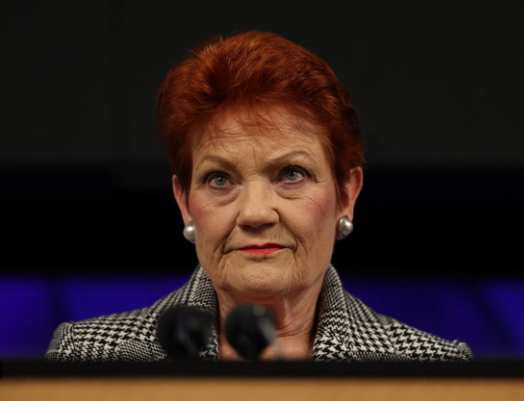
Australian far-right Senator Pauline Hanson has suffered a significant legal setback after failing to overturn a racial vilification finding in a case that has drawn attention to the limits of free speech protections in the country. The Federal Court of Australia dismissed her appeal on Monday, upholding an earlier 2024 determination that her remarks towards a fellow parliamentarian constituted a "strong form of racism". The decision represents a notable moment in Australian legal jurisprudence, where the courts have clearly delineated boundaries between protected speech and conduct that crosses into racial vilification.
The controversy stems from a heated exchange in 2022 between Hanson and Mehreen Faruqi, a Pakistan-born Australian senator representing the left-leaning Greens party. The dispute erupted following Faruqi's critical comments about Queen Elizabeth II's death, in which she characterised the late monarch as the leader of "a racist empire built on stolen lives, land and wealth of colonised people". Faruqi's statement, which touched on historical grievances regarding British colonial rule and its impacts on Indigenous populations, proved inflammatory to conservative sensibilities in Australia.
Hanson's response came swiftly on social media, where she enumerated what she characterised as the advantages Faruqi had gained from living in Australia—citizenship, property ownership, and parliamentary office. The One Nation leader then issued a pointed directive, telling Faruqi to "pack your bags and piss off back to Pakistan" if she was unhappy with the country. The comment effectively weaponised Faruqi's immigrant background as a basis for questioning her belonging and loyalty to Australia, a rhetorical strategy commonly associated with nativist political movements globally.
When the Federal Court originally examined Faruqi's complaint in 2024, the judiciary concluded that Hanson's remarks crossed the threshold into racial vilification rather than constituting protected political commentary or criticism. The court's language—describing the comments as a "strong form of racism"—signalled a firm judicial stance on the matter. Hanson then mounted an appeal, framing her position as a free speech issue and arguing that the original judgment infringed upon her right to express political views. This appeal, which was heard on Monday, has now been rejected by the court.
Following the court's dismissal of her appeal, Hanson released a statement reframing her original remarks as a response to what she perceived as disrespect towards the British monarchy. She claimed she had been "incensed" by the "incredible disrespect" that Faruqi's comments represented, and maintained that she had merely wanted to "call that out". This characterisation attempts to reposition her subsequent comments as a proportionate and justified response to perceived disrespect, rather than engaging substantively with the court's findings regarding racial vilification.
Despite this legal defeat, Hanson's political fortunes have strengthened considerably in recent times. Her One Nation party has surged in public support, according to contemporary opinion polling, establishing itself as one of Australia's most popular political entities. This electoral momentum reflects broader shifts within the Australian electorate, where anti-establishment sentiment and scepticism towards institutional elites have created fertile ground for parties positioning themselves as outsiders challenging the mainstream political consensus. The rise occurs even as Hanson faces legal consequences for her rhetoric, suggesting that at least a significant portion of the Australian voting public does not penalise her for the conduct the courts have censured.
Hanson's policy platform encompasses several elements designed to appeal to voters frustrated with government spending and international arrangements. She has advocated for sweeping cuts to public expenditure, employing language reminiscent of Elon Musk's "Department of Government Efficiency" concept in the United States. Additionally, Hanson has challenged Australia's participation in international organisations, suggesting that the country should reassess these commitments. These policy positions, combined with her tough immigration stance featuring calls for strict immigration restrictions and mass deportation of undocumented migrants, constitute a political package that has proven attractive to a meaningful segment of the Australian electorate.
The broader implications of Hanson's legal loss extend beyond the immediate case, touching on questions of where democratic societies draw boundaries between protected speech and harmful expression. Australian racial vilification laws attempt to protect vulnerable communities from targeted attacks based on ethnicity or national origin, yet these protections intersect with competing values around free expression and political debate. The court's decision affirms that even political figures cannot use inflammatory language targeting someone's immigrant status or national origin without legal consequence, establishing a precedent that contrasts with jurisdictions with more expansive free speech protections.
For Malaysia and the broader Southeast Asian region, the Australian case offers relevant lessons regarding the intersection of immigration politics, identity discourse, and legal frameworks protecting minorities. Several Southeast Asian nations host significant immigrant and expatriate communities, and patterns of nativist rhetoric targeting foreign-born residents have emerged in various countries throughout the region. The Australian court's willingness to enforce racial vilification standards against a prominent politician suggests one approach democracies might employ to check dehumanising discourse, though questions remain about the effectiveness of legal remedies in combating underlying prejudices that fuel the popularity of figures like Hanson.
The contrast between Hanson's legal defeat and her continued political ascendancy illustrates a contemporary paradox in democratic politics: legal accountability for inflammatory speech does not necessarily translate into electoral punishment. Supporters of Hanson may interpret the court's decision as evidence of judicial overreach or political correctness, further reinforcing their identification with her anti-establishment positioning. This dynamic raises complex questions about how democracies can effectively address racial vilification while maintaining legitimacy with constituencies that view such protections with suspicion or hostility.

