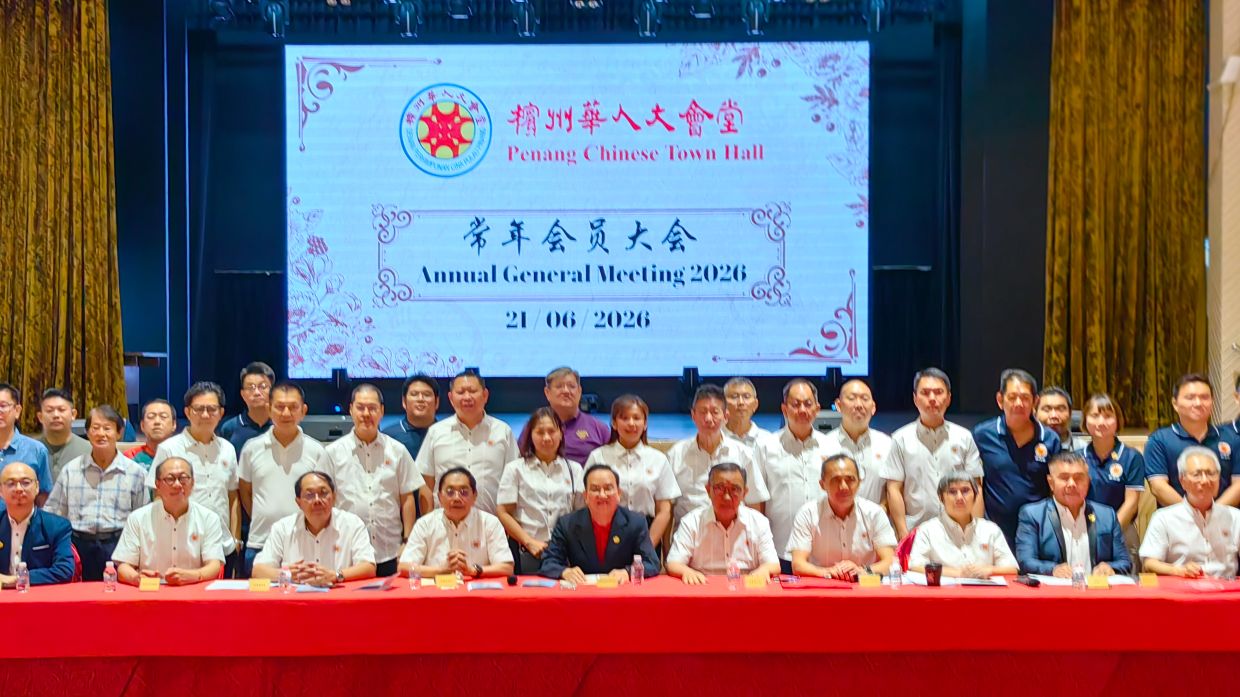
Penang Chinese Town Hall achieved financial stability in 2025, collecting RM12.61 million in total income while maintaining expenditure at RM12.55 million, culminating in a small surplus of RM59,191 for the financial year ended December 31. The organisation's financial position reflects steady operations across its diverse revenue streams, though the modest surplus underscores the tight balance required to sustain such community institutions in the contemporary operating environment.
Donations constituted the overwhelming majority of PCTH's incoming funds, reaching RM11.24 million and accounting for approximately 89% of total revenue. This heavy reliance on philanthropic support demonstrates the organisation's entrenchment within Penang's Chinese business and community networks, where charitable contributions remain a cornerstone of civic engagement. Beyond donations, the organisation generated RM439,671 from rental and maintenance fees associated with its facilities, RM361,245 from auditorium rentals, and RM222,498 from anniversary-related functions and events. This diversified income base provides some insulation against fluctuations in any single revenue category.
Expenditures mirrored income patterns, with charitable disbursements dominating the spending ledger at RM11.12 million, representing 88.6% of total outgoings. This figure declined from RM12.35 million in 2024, suggesting either reduced philanthropic commitments or a strategic shift in donation allocation during the year. Concurrently, operational costs increased in certain areas, most notably salaries and allowances which rose to RM502,625 from RM452,761 in the previous year—a jump of approximately 11% that reflects either expanded staffing or wage adjustments across the organisation.
During its annual general meeting on June 21, attended by approximately 200 members, Tan Sri Prof Tan Khoon Hai, PCTH's chairman, pivoted discussion toward Malaysia's electoral landscape and civic participation. With Johor and Negri Sembilan scheduled to conduct state elections during 2025, Tan emphasised the importance of informed voting behaviour, urging participants to evaluate candidates and party platforms with critical scrutiny rather than partisan loyalty. His remarks positioned elections beyond localized infrastructure concerns, framing them instead as pivotal moments determining the nation's broader trajectory across economic development, social cohesion and institutional stability.
Tan's electoral messaging carries particular weight given PCTH's standing as a respected voice within Penang's business and community circles. His call for rational assessment of competing political manifestos and candidates' competence reflects institutional concerns about governance quality and effective administration. This emphasis on electoral responsibility aligns with broader business community sentiment across Southeast Asia regarding the nexus between sound political leadership and sustained economic prosperity—a connection Malaysian enterprises understand intimately as they navigate regional competition.
Beyond financial reporting, PCTH unveiled substantial capital improvements to its physical infrastructure, completing extensive renovation and modernisation of Ping Zhang Hall. The upgraded venue now features contemporary sound, lighting and LED systems alongside enhanced spatial comfort, positioning it as a competitive facility for corporate functions, association gatherings, charity events and diverse community occasions. Such facility investments are critical for organisations seeking to remain relevant to evolving client expectations and competitive market dynamics within Malaysia's events and hospitality sector.
More significantly, PCTH announced plans to co-organise the 2026 China-Asean Artificial Intelligence Cooperation Forum in Penang during November, partnering with technology and business organisations spanning China and other Asean nations. This strategic initiative reflects both Penang's established credentials as a technology hub and PCTH's ambitions to position itself at the intersection of regional economic cooperation and technological advancement. Penang's reputation as the Silicon Valley of the East, built upon decades of electrical and electronics manufacturing excellence, provides genuine foundation for such aspirations.
The proposed AI forum represents a calculated effort to leverage Penang's existing industrial ecosystem and infrastructure as springboards for next-generation technological collaboration. By hosting high-level discussions on artificial intelligence technologies, industrial applications and cross-border cooperation mechanisms, the forum would create networking opportunities for regional business leaders, academic experts and industry practitioners. Such platforms carry particular importance for Southeast Asian economies seeking to participate meaningfully in the global AI revolution rather than remaining passive consumers of foreign technology.
Tan's framing of the forum as a vehicle for strengthening Penang's regional role in AI development reflects strategic thinking about the state's economic future. As manufacturing cost advantages erode across Southeast Asia, technology-intensive sectors become increasingly critical for sustaining competitive advantage and attracting investment. PCTH's willingness to mobilise its networks and convening capacity toward this objective demonstrates how traditional community organisations are adapting to contemporary economic imperatives, blending cultural and commercial missions.
The organisation's invitation for members possessing relevant expertise to participate underscores recognition that such forums succeed through authentic engagement of qualified participants rather than ceremonial attendance alone. For Malaysian technology professionals, academics and entrepreneurs, such regional platforms offer invaluable channels for knowledge exchange, partnership development and market exposure across Asean markets—dimensions increasingly vital as companies pursue regional expansion strategies amid heightened global competition.
PCTH's trajectory across 2025 thus reflects broader patterns visible throughout Southeast Asia's business landscape: established institutions maintaining financial viability through diversified operations, upgrading physical and service offerings to meet contemporary standards, and strategically positioning themselves within emerging technological and economic trends. The organisation's modest financial surplus, facility investments and ambitious AI forum initiative collectively suggest an institution consciously modernising its role while anchoring itself within Penang's evolving innovation economy.


%22%2F%3E%3C%2Fpattern%3E%3C%2Fdefs%3E%3Crect%20width%3D%22100%25%22%20height%3D%22100%25%22%20fill%3D%22url(%23phxmxkg)%22%2F%3E%3Crect%20width%3D%22100%25%22%20height%3D%22100%25%22%20fill%3D%22url(%23phxmxkp)%22%2F%3E%3Ctext%20x%3D%2250%25%22%20y%3D%2250%25%22%20text-anchor%3D%22middle%22%20dominant-baseline%3D%22central%22%20fill%3D%22rgba(255%2C255%2C255%2C0.95)%22%20font-family%3D%22Georgia%2C%20'Times%20New%20Roman'%2C%20serif%22%20font-weight%3D%22700%22%20font-size%3D%22194%22%20letter-spacing%3D%22-0.02em%22%3ESarawak%3C%2Ftext%3E%3C%2Fsvg%3E)