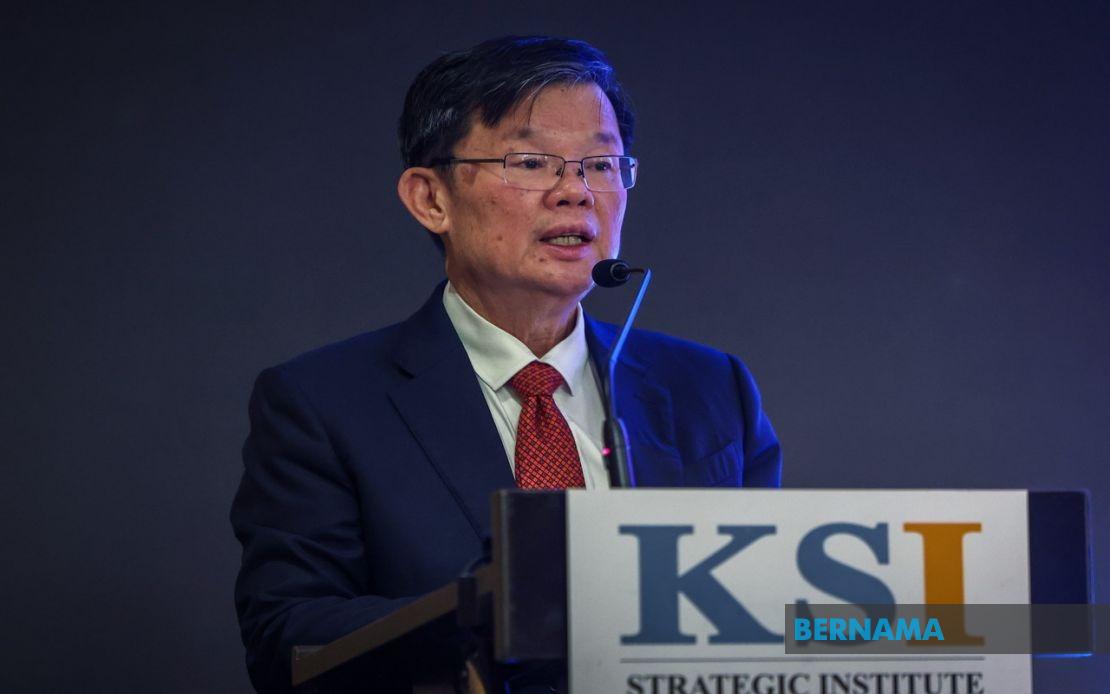
Penang Pakatan Harapan remains committed to increasing female representation in its candidate slate for the forthcoming state election, though the coalition continues grappling with a fundamental shortage of women prepared to enter the political arena. Chow Kon Yeow, the state chairman and Chief Minister, made these remarks after opening the World Women Economic and Business Summit 2026 in George Town on June 15, underscoring that while the aspiration to field more female candidates is genuine, the practical challenge of recruitment cannot be overlooked.
The 30 per cent women participation target, which has become a benchmark for gender inclusivity within Malaysian politics, remains frustratingly distant from realisation. Currently, women occupy just 13.5 per cent of parliamentary seats nationally and represent 12 per cent of state assembly members—figures that highlight the stubborn resistance to gender-balanced representation across the country's political landscape. This persistent gap has prompted calls for a fundamental rethink of how political parties approach candidate selection and the structures that support female politicians.
Chow articulated a nuanced position that distinguishes between ideological commitment and operational reality. The party genuinely wishes to nominate more women, he explained, yet the pool of suitable candidates willing to contest remains constrained. This constraint appears to stem not merely from supply-side factors—the availability of qualified women—but equally from demand-side reluctance, as prospective female candidates weigh the considerable burdens of political participation against potential rewards. Understanding this dynamic is critical for any serious effort to achieve gender parity in Malaysian politics.
The Chief Minister's observation that women have achieved substantial progress in education, business, engineering, and public service yet remain underrepresented in politics points to a troubling paradox. Despite demonstrable competence and advancement across multiple professional sectors, cultural norms, institutional barriers, and the inherent pressures of electoral politics appear to discourage capable women from pursuing political candidacy. This divergence suggests that the problem lies not with female qualifications but with the political ecosystem itself.
Penang PH has positioned itself as a progressive force on this issue, actively supporting the 30 per cent target in principle. However, translating this support into concrete outcomes requires confronting why women hesitate to step forward during candidate selection. The pressures and challenges Chow referenced—likely encompassing concerns about work-life balance, family expectations, security risks, and the often-toxic nature of political discourse—clearly weigh heavily on prospective female candidates' decision-making.
Chow's prescription for systemic change offers a roadmap that extends beyond Penang. Political parties should institutionalise the 30 per cent target within their formal candidate selection processes, moving gender parity from aspirational rhetoric to binding procedure. This institutionalisation would create accountability and remove discretion that might otherwise allow parties to default to male candidates when female applicants are scarce. Such mechanisms have proven effective in other democracies and corporate sectors.
Equally important is ensuring balanced female representation on party decision-making committees, where strategic and policy choices originate. Women who occupy leadership positions within party structures can influence culture, priorities, and resource allocation in ways that support emerging female politicians. This requires deliberate efforts to mentor and develop women for senior party roles, not merely candidate positions, building a sustainable pipeline of female political talent.
Access to resources and mentoring for aspiring women leaders constitutes another critical lever. Female candidates often operate under disadvantages regarding fundraising networks, media access, and political mentorship compared to male counterparts. Targeted programmes that provide training in campaign management, public speaking, policy development, and media engagement can substantially enhance women's readiness for electoral competition and their confidence in contesting seats.
The Malaysian context adds particular dimensions to this challenge. Balancing traditional cultural values with gender inclusivity in politics requires messaging that frames female political participation not as a Western import but as aligned with Islamic principles of justice and consultation, or as consistent with Malaysia's own constitutional guarantees of equal citizenship. Different communities may respond to different framing, and political parties sensitive to these variations can broaden appeal for female candidates among their bases.
For Penang specifically, the state's relatively progressive political culture positions it well to lead nationally on female representation. A successful model in Penang—one that genuinely increases the proportion of female candidates and sees them win meaningful seats—would demonstrate feasibility to other state chapters and create pressure on the national party to adopt similar practices. Conversely, failure to move beyond rhetoric risks eroding credibility among voters increasingly conscious of gender equity issues.
The challenge ahead for Penang PH involves both supply and demand interventions. On the supply side, the party must actively recruit, train, and develop female candidates rather than waiting for them to volunteer. On the demand side, the party must reshape perceptions of political participation to make it more attractive to capable women by addressing security, harassment, and work-life balance concerns through concrete policies and cultural change.
Chow's acknowledgment that candidate selection remains dependent on available applicants is honest but potentially limiting. If few women step forward, the bottleneck may require more proactive recruitment strategies—approaching accomplished women in business, civil society, and public service directly, addressing their specific concerns, and providing support structures tailored to their needs. Waiting for candidates to emerge from existing pipelines has plainly not achieved the desired results.