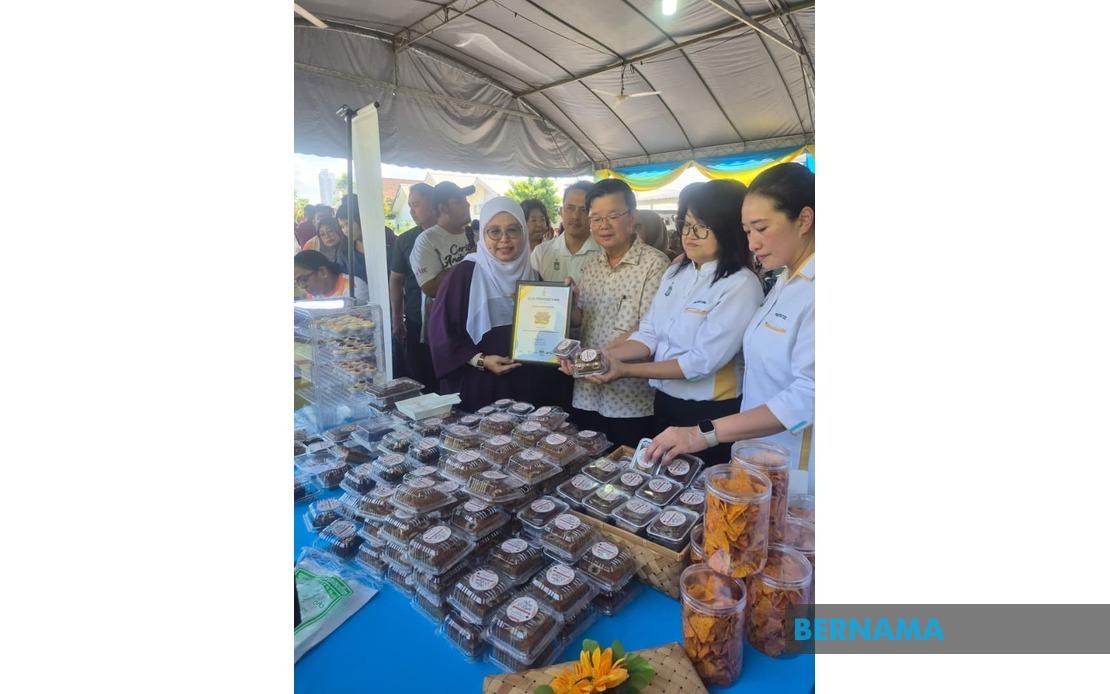
Penang Chief Minister Chow Kon Yeow has drawn a line in the sand over the troubled RM1 billion Jelutong landfill rehabilitation project, declaring that the state will make a decisive move if the contracted developer fails to obtain the required Environmental Impact Assessment approval within a specified timeframe. Speaking at an event in Bukit Mertajam on July 12, Chow signalled the government's growing impatience with delays that have now stretched across multiple administrations, hinting that the concession company's window of opportunity is rapidly closing.
The project, awarded to PLB Engineering Bhd through a joint development agreement signed in 2020 involving the Penang Development Corporation and state government, encompasses two interrelated components: the rehabilitation of the closed 34-hectare Jelutong landfill site and the reclamation of adjacent sea areas fronting Persiaran Karpal Singh in George Town. What was conceived as a flagship urban renewal initiative has instead become emblematic of the challenges that government-backed infrastructure projects face when regulatory approval processes prove more stringent than initially anticipated.
Chow's comments come after the Department of Environment rejected the initial EIA submission, effectively freezing the project's progression. This setback represents a critical juncture, as the developer now faces the prospect of losing its concession rights if it cannot navigate the regulatory hurdles within the newly imposed deadline. The Chief Minister emphasized that while the state government remains committed to finalizing the matter, it will not indefinitely extend timelines for a single contractor. His statement carries implicit weight: failure to deliver will result in termination and a reassessment of alternatives.
The previous state government had already granted five separate extensions to PLB Engineering, attempting to accommodate the company's efforts to satisfy successive rounds of Department of Environment conditions. This pattern of repeated deferrals, while understandable from a project continuity perspective, reflects the complexity of environmental compliance in an urban coastal setting where multiple stakeholders and regulatory frameworks intersect. Chow acknowledged that additional conditions imposed over time have genuinely complicated the company's position, yet suggested that five extensions represent a reasonable window within which reasonable progress should have been achieved.
Communications between the state and the developer are ongoing, with PLB Engineering having submitted responses to the government's previously conveyed position. However, Chow declined to announce the specific extension period, stating only that details would be disclosed at a later date. This measured approach suggests the government is still negotiating final terms, yet the public signalling of imminent deadlines indicates patience is exhausted. The announcement serves as both a deadline and a negotiating tool, signalling seriousness while maintaining diplomatic channels with the developer.
From a development perspective, the 34-hectare Jelutong site remains a pressing concern regardless of the current contractor situation. The closed landfill requires systematic rehabilitation to prevent environmental contamination and make the land available for productive reuse. This is particularly significant given Penang's land constraints and the value of centrally located urban sites. The state government has consistently emphasized that rehabilitation work must proceed, underscoring that the issue at stake is not whether the project should happen, but under whose stewardship and within what timeframe.
Should PLB Engineering fail to secure Environmental Impact Assessment approval, Chow indicated the state would explore alternative arrangements with other qualified entities. This contingency planning reflects the government's determination to move forward rather than permit indefinite paralysis. However, appointing a replacement contractor would likely introduce fresh delays as new entities familiarize themselves with the site's complexities and navigate their own regulatory pathways. The transition would reset timelines and potentially require resubmission of environmental documentation.
The Jelutong project's struggles highlight broader challenges in Malaysia's environmental governance. While rigorous environmental assessment is essential for coastal and waste management projects, the iterative nature of the approval process—where conditions accumulate rather than being clarified upfront—can create uncertainty that discourages private sector participation in public-private partnerships. Developers require clarity regarding the final set of requirements rather than discovering new conditions at each submission stage, yet environmental authorities must also retain flexibility to impose additional safeguards when detailed analysis reveals previously unforeseen concerns.
For Penang specifically, this project carries economic and spatial implications beyond the immediate 34 hectares. Successful reclamation and redevelopment of the Jelutong site would unlock valuable waterfront real estate in central George Town, potentially attracting mixed-use development that could enhance the state's economic profile. Conversely, continued delays or project abandonment would leave a significant tract of rehabilitated land underutilized, representing a lost opportunity for urban intensification and economic activity generation in an already densely populated metropolitan area.
The state government's firmness in setting a final deadline also signals to other potential developers that Penang remains serious about infrastructure projects and environmental compliance simultaneously. This dual commitment—neither indefinite delays nor environmental corners cut—is essential for maintaining investor confidence while upholding regulatory standards. The message is clear: the state will work with willing, capable partners who respect environmental requirements, but will not subsidize contractors' regulatory failures through endless extensions.
As negotiations continue between the state and PLB Engineering, the broader question remains whether the firm can navigate the Department of Environment's requirements within the coming months. The stakes are substantial for all parties: the developer faces loss of concession rights, the state loses development momentum, and Penang residents continue waiting for the resolution of a site that has sat largely dormant for years. The new deadline, once formally announced, will indicate whether the government's patience has reached its genuine limit.

