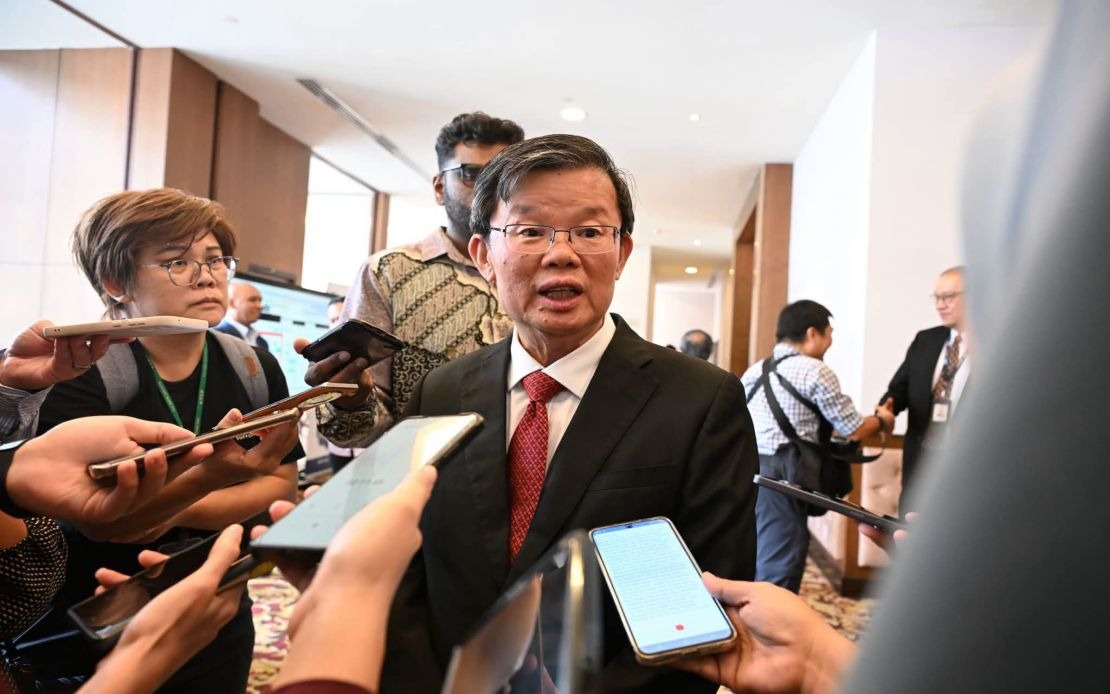
Penang's development agency has opted to take the reins of a major industrial park expansion after multiple unsuccessful attempts to attract private developers through open tender processes. The Penang Development Corporation (PDC) formally decided on July 20 to self-execute the development of Batu Kawan Industrial Park 2 (BKIP 2) at Ladang Byram, with Chief Minister Chow Kon Yeow announcing the shift in approach at the Malaysian International Chamber of Commerce and Industry luncheon dialogue in George Town.
The change in strategy marks a significant pivot for state-level infrastructure policy in Malaysia's northern corridor. Rather than relying on private sector partners through competitive requests for proposal, the PDC will now oversee all aspects of the sprawling 1,003-acre project, a decision driven by the disappointing outcomes of three separate tender and RFP cycles. Chow indicated that the state agency deemed full public control necessary to protect strategic interests and maintain development continuity in this critical industrial zone.
The Ladang Byram site, fully owned by PDC following recent land consolidation efforts, represents one of Penang's most significant expansion opportunities for manufacturing and industrial operations. The industrial park's strategic location positions it to attract regional investment in electronics, semiconductor, and advanced manufacturing sectors—areas where the state faces rising competition from neighbouring Selangor and Johor. By retaining ownership and development authority, the state government eliminates the middleman arrangements that earlier RFP processes would have required, potentially accelerating decision-making around land allocation and facility specifications.
Critical infrastructure work now forms the immediate priority, with PDC focusing on comprehensive site preparation before marketing begins to prospective investors and operators. The current timeline envisions infrastructure readiness by approximately 2030, a decade-long development horizon that underscores the scale of preparation required. Chow acknowledged that the undeveloped state of the land necessitates substantial groundwork, extending beyond conventional grading and utility installation to include major connectivity improvements essential for commercial viability.
A cornerstone infrastructure component involves constructing a dedicated bridge to link Ladang Byram with existing transport networks and the broader Penang economy. While alternative access via Changkat remains available, the new bridge crossing is considered essential for accommodating the volume of industrial traffic and supporting modern supply chain logistics that anchor manufacturing operations. This transportation gateway will fundamentally reshape accessibility for companies considering relocation or expansion in the park, addressing one of the primary constraints that may have deterred bidders during earlier tender phases.
The decision to pursue public development rather than private partnership reflects broader lessons emerging across Southeast Asia regarding large-scale industrial projects. Previous RFP failures likely stemmed from unresolved queries concerning land readiness, infrastructure timelines, regulatory approval pathways, or financial terms that private developers deemed untenable given execution risks. By assuming direct control, PDC gains flexibility to phase development according to actual market absorption rates, avoiding the rigid commitments that characterised earlier tender conditions.
For Malaysian policymakers, the shift signals growing confidence in state capacity to execute complex infrastructure projects without private consortium intermediation. This model positions Penang alongside other subnational entities pursuing directly-managed industrial development zones, though it also concentrates execution risk within PDC's organisational capabilities and funding streams. The agency will need to demonstrate agile project management across a multi-year delivery cycle while maintaining competitive lease and facility rates relative to private industrial parks operated by competitors like Kulim Hi-Tech Park in Kedah.
The delayed market entry timeline extending to 2030 gives PDC substantial opportunity to refine the park's competitive positioning and respond to evolving manufacturing trends in semiconductor packaging, renewable energy components, and precision engineering. Early infrastructure decisions made today will shape the facility's ultimate appeal to multinational corporations and regional manufacturers throughout the next decade. The phased development approach allows adjustment based on sector performance and global supply chain dynamics, contrasting with the fixed commitments binding private developers who bid in earlier unsuccessful RFP rounds.
Separately, Chow outlined progress on the Pulau Jerejak development initiative, a complementary project involving UDA Holdings Bhd that demonstrates Penang's diversified approach to generating industrial and commercial space. The 80-acre Pulau Jerejak scheme remains contingent on completion of the Queensbay bridge connection, expected in 2029. While the island project operates under separate private sector leadership, its timeline roughly aligns with BKIP 2 infrastructure readiness, potentially creating a coordinated supply of developed industrial and commercial capacity entering the market simultaneously.
The Pulau Jerejak venture represents a hybrid model wherein PDC has exited direct ownership while private partners undertake development subject to infrastructure provisioning by government or connected entities. The island's geographical separation and distinct development character—occupying roughly 80 acres of what is a much larger landmass—indicates careful zoning to preserve environmental and conservation values while enabling strategic economic activity. This arrangement mirrors approaches in other Malaysian states where public agencies enable development without directly executing projects, though here the infrastructure bottleneck of bridge access creates hard dependencies beyond developers' control.
For Penang's industrial strategy, the convergence of BKIP 2 and Pulau Jerejak timelines around 2029-2030 presents opportunities to coordinate investor attraction campaigns and position the state as a unified destination for diversified industrial, commercial, and technology enterprises. The approximately 1,083 acres of combined developable space across both projects provides substantial pipeline for absorbing regional manufacturing demand over the subsequent three to four years of construction phasing. Chow's messaging emphasises methodical infrastructure preparation rather than aggressive marketing, reflecting prudent project risk management and recognition that premature investor commitments to underdeveloped sites contributed to earlier RFP failures.
The strategic pivot also acknowledges that industrial park development increasingly requires long-term patient capital and tolerance for extended pre-revenue phases, characteristics more readily found in state agencies than private developers operating under equity return expectations. PDC's self-development pathway shifts financial burden and execution risk onto public balance sheets while eliminating profit-margin requirements that might have inflated costs within private partnership structures. For Malaysian states emulating this model, success will ultimately depend on PDC's organisational agility, sustained political commitment across electoral cycles, and ability to deliver facilities competitive with regionally-managed industrial parks that rival Penang's offerings.

