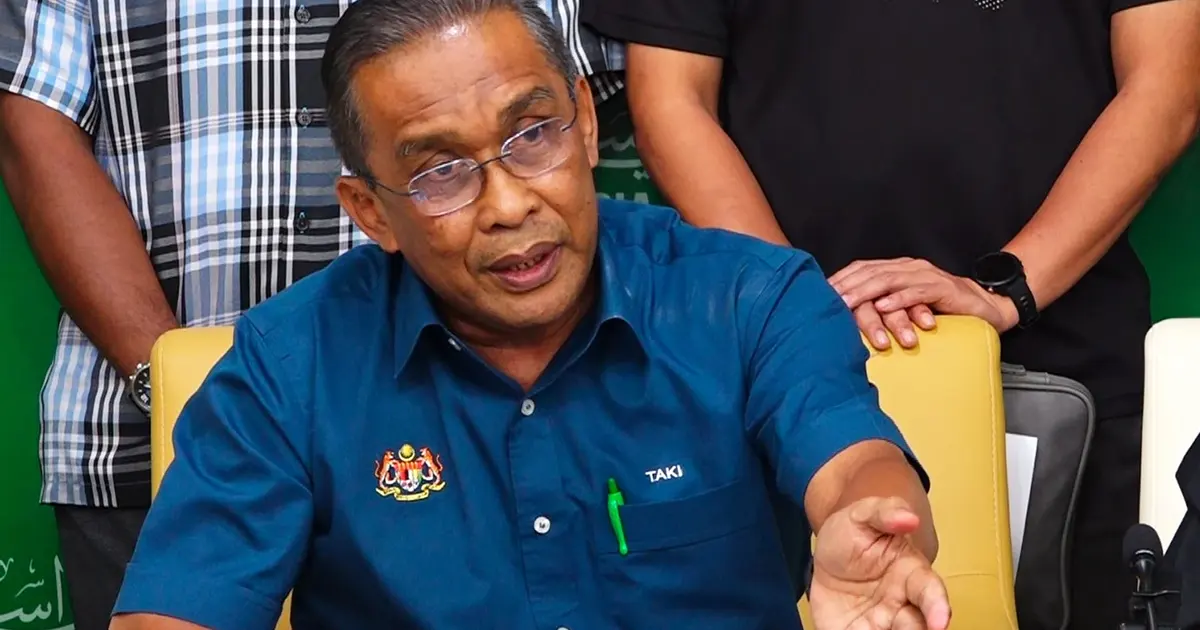
Perikatan Nasional and Barisan Nasional are preparing to engage in coalition-level discussions concerning the forthcoming Melaka state election, but the talks will notably exclude Bersatu from the negotiating table, according to PN secretary-general Takiyuddin Hassan. While no formal dialogue has taken place to date, Takiyuddin indicated that such conversations are anticipated to unfold in the immediate future, signalling the two coalitions' intent to explore potential arrangements ahead of electoral competition in the state.
The exclusion of Bersatu from these inter-coalition discussions represents a significant development in Malaysia's complex political landscape, where coalition membership and electoral cooperation remain fluid and contentious matters. Bersatu, which has historically positioned itself within both coalitions at different junctures, finds itself sidelined as the senior components of PN and BN contemplate their respective strategies for Melaka. This move underscores the ongoing fragmentation within Malaysia's political ecosystem, where party allegiances shift according to state-level electoral calculations and national coalition realignments.
For Malaysian observers, the impending PN-BN dialogue carries substantial implications for how these blocs approach multi-party competition across states with mixed political demographics. Melaka, as a peninsula state with historically contested electoral outcomes, represents significant symbolic and practical value for both coalitions. The decision to exclude Bersatu suggests that negotiations may focus on direct bilateral cooperation between PN's core components and BN's established machinery, potentially simplifying talks but also limiting the range of coalition permutations available to both sides.
Takiyuddin's announcement reflects the broader strategic calculus within Perikatan Nasional, where leadership decisions regarding coalition partnerships increasingly centralise around major components whilst peripheral or nominally affiliated parties face marginalisation. Bersatu's absence from negotiations does not necessarily preclude its eventual participation in electoral arrangements, but it indicates that foundational discussions will occur without its input, potentially constraining its negotiating leverage in subsequent discussions should it seek involvement in candidate allocation or seat distribution.
The timing of these preliminary discussions aligns with the broader Malaysian electoral calendar and the imperatives facing both coalitions to maintain or improve their territorial footprint. For PN, which has consolidated significant state-level support particularly in Peninsular Malaysia, Melaka represents an opportunity to either solidify existing positions or contest territory held by BN. Conversely, BN seeks to leverage its continued federal dominance and residual state machinery to defend territory or reclaim losses from previous cycles.
Regional observers note that such coalition negotiations have become standard practice in Malaysian politics, particularly following the 2022 general election which produced a fragmented parliament and necessitated multi-bloc cooperation at the federal level. Melaka's status as a compact, urbanised state with distinct demographic characteristics makes it a bellwether for broader coalition viability and messaging resonance in populated areas where swing voting remains pronounced.
The substance of forthcoming PN-BN discussions will likely revolve around seat arrangements, campaign resource allocation, and possibly candidate selection protocols to prevent intra-coalition competition in key marginal constituencies. Such conversations typically involve intensive bilateral negotiations between party secretariats before broader coalition bodies ratify agreements, explaining why Takiyuddin could confirm the framework of discussions whilst noting that actual talks have not yet commenced.
For Malaysian politics more broadly, the exclusion of Bersatu highlights the precarious position of parties that lack singular or decisive state-level strongholds. Whereas PAS within PN maintains formidable support bases in several states, and BN components like UMNO retain substantial machinery across multiple states, Bersatu's membership base remains comparatively diffuse and concentrated within specific constituencies or demographic segments. This structural weakness translates into reduced influence when larger coalition partners determine negotiating parameters.
The upcoming dialogue also reflects calculation regarding electoral mathematics in Melaka specifically. If preliminary analysis suggests that three-way or multi-party competition would disadvantage both PN and BN relative to each other, then bilateral negotiations make strategic sense. Conversely, if particular constituencies or demographics favour fragmented candidacy, exclusionary frameworks might ultimately prove counterproductive, necessitating recalibration.
Stakeholders in Melaka politics—including civil society, business communities, and local constituencies—now anticipate that PN-BN negotiations will substantially shape the electoral battlefield before formal nomination and campaign periods begin. The clarity which Takiyuddin provided regarding Bersatu's exclusion offers only limited transparency into substantive negotiating positions that each coalition will advance.
Moving forward, observers should monitor whether Bersatu subsequently seeks to negotiate separate bilateral arrangements with either PN or BN, or whether it contests independently in Melaka constituencies. The coalition's response to its exclusion will provide insight into its perceived bargaining position within Malaysia's multi-coalition ecosystem and its willingness to operate outside established frameworks when marginalised by larger partners.

