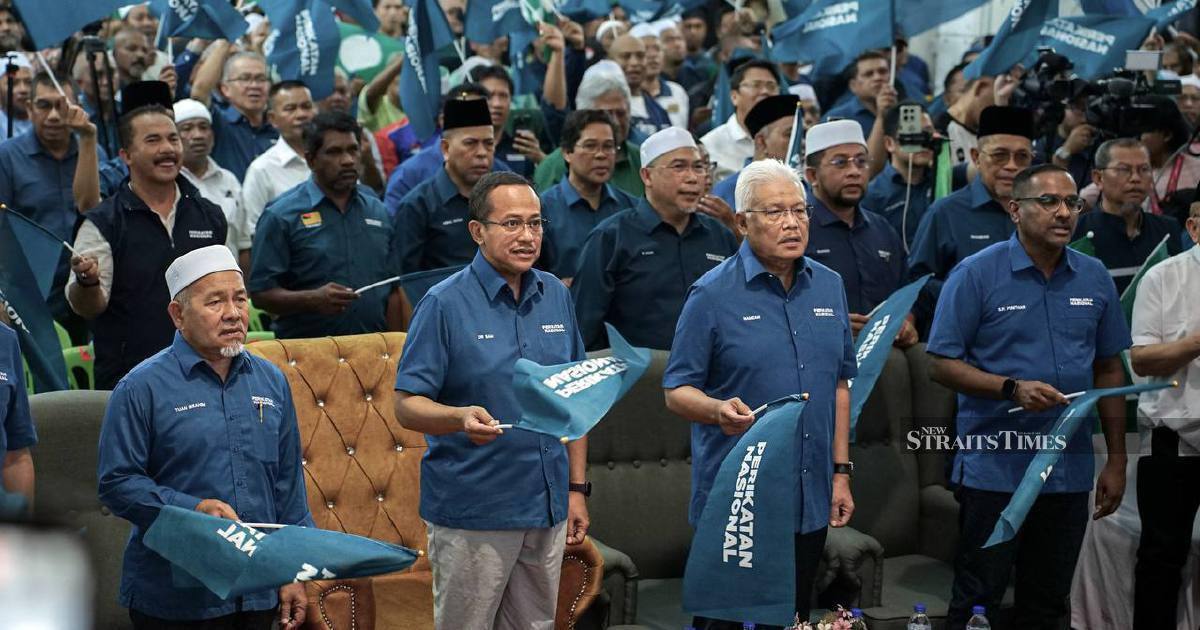
Perikatan Nasional formally introduced its slate of 11 candidates for the Negri Sembilan state election on August 1, maintaining a carefully structured non-aggression pact with Barisan Nasional that prevents the two coalitions from fielding candidates against each other in any of the contested seats. The announcement made in Seremban underscores the strategic alliance that both political blocs have maintained at the state level, despite their more combative relationship in peninsular politics nationally.
This electoral arrangement represents a significant shift from the increasingly fragmented landscape that characterised Malaysian politics following the 2022 general election. Negri Sembilan has become a model for coalition cooperation, allowing Perikatan Nasional to participate meaningfully in the state's democratic process while respecting what appears to be an agreed division of electoral territory between the two major coalitions. Such pacts are not uncommon in Malaysian state politics, where pragmatic alliances often supersede national-level rivalries.
The decision to field exactly 11 candidates reflects careful calibration of Perikatan Nasional's electoral ambitions in the state. Rather than contesting every available seat, the coalition has chosen a focused approach that targets specific constituencies where it believes it has stronger support or organisational capacity. This selective strategy suggests that Perikatan Nasional views this election as an opportunity to consolidate its presence in Negri Sembilan without overextending its resources or capabilities across the entire state.
Barisan Nasional's acceptance of this arrangement indicates that the traditional ruling coalition recognises the political realities of contemporary Malaysian politics. The coalition, which has governed Negri Sembilan for decades, faces pressure from multiple directions and may have calculated that accommodating Perikatan Nasional in specific constituencies is preferable to contested battles that could fragment the vote and potentially allow other parties to gain ground. This demonstrates sophisticated political management rather than weakness.
The absence of direct competition between these two major coalitions creates space for other political players in the state. Democratic Action Party representation and independent candidates become more competitive in constituencies where neither Perikatan Nasional nor Barisan Nasional fields a nominee. This fragmentation of the political contest could produce unexpected outcomes, particularly in urban-centred constituencies where opposition politics maintains traditional strength.
For Perikatan Nasional, the Negri Sembilan election provides a platform to assess its electoral viability in states outside its traditional strongholds in Kedah, Perlis, and Terengganu. The results will offer valuable indicators of voter sentiment towards the coalition in diverse, mixed-constituency environments that mirror the demographic complexity of more developed Malaysian states. Strong performance could validate Perikatan Nasional's claims to be a viable national alternative.
Barisan Nasional, meanwhile, faces the more challenging task of defending its entrenched position. Even with reduced competition, voter fatigue and the desire for political change that has characterised recent Malaysian elections could affect the coalition's performance. Negri Sembilan voters have indicated in previous contests that they are not automatically loyal to any single bloc, and competitive dynamics within the state remain fluid.
The electoral pact also reflects broader calculations about resource allocation and political strategy in an economically constrained environment. Both coalitions face demands from candidates, supporters, and party machinery, and agreeing to non-compete arrangements allows them to concentrate campaign expenditure and organisational effort more efficiently. In the contemporary context of rising political costs and increasing scrutiny of campaign financing, such pragmatism has become more pronounced.
For Malaysian voters and observers, the Negri Sembilan election serves as a significant barometer of political sentiment. The state's diverse population, comprising urban professionals, industrial workers, and rural communities, reflects broader demographic patterns found across Peninsular Malaysia. Election results here could presage shifts in voter preferences that may influence calculations in other states and eventually national politics.
The specific composition of Perikatan Nasional's 11 candidates will reveal the coalition's strategic priorities within Negri Sembilan. Selections typically reflect negotiations between the coalition's component parties—primarily Bersatu, the Malaysian Islamic Party, and others—about seat allocation and candidate preference. The candidates chosen will serve as indicators of which constituencies the coalition considers winnable and which demographics or geographic regions Perikatan Nasional believes it can effectively mobilise.
This non-compete framework between Perikatan Nasional and Barisan Nasional at the state level contrasts sharply with the increasingly adversarial relationship between the coalitions in parliamentary politics and in some other state elections. Negri Sembilan's arrangement appears to reflect either a formal agreement or at minimum a clear understanding between leadership figures that mutual accommodation serves both parties' interests more effectively than open conflict.
The August 1 election will ultimately test whether this electoral pact holds, and whether voters respect the divisions negotiated by political elites. Malaysian voters have historically shown willingness to support various coalitions at different electoral levels, and Negri Sembilan's contest will provide fresh evidence of whether such compartmentalised political strategies effectively shape electoral outcomes or whether voter sentiment increasingly operates independently of elite agreements.

