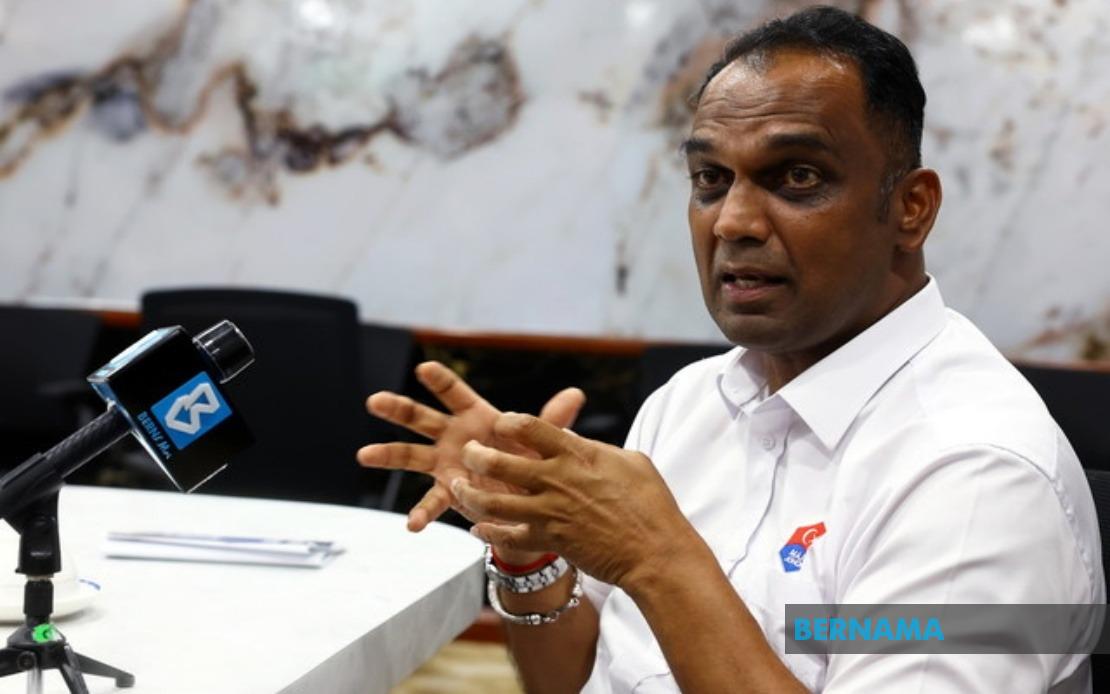
Pannir Selvam, the Barisan Nasional nominee for Perling, is charting an unconventional path in the 16th Johor State Election by eschewing traditional campaign methods in favour of intimate community engagement. The former Johor Bahru City Council member is banking on a series of small-group discussion sessions—what he terms "pocket talks"—as his primary vehicle for connecting with the constituency's 109,992 registered voters. This grassroots-oriented approach represents a deliberate choice to prioritise direct human interaction, a strategy that reflects evolving perceptions about how electoral messages resonate most effectively in contemporary Malaysian politics.
While conceding that social media platforms have become indispensable tools in modern political communication, Pannir Selvam has identified what he perceives as a critical limitation in digital-first campaigning: the inability to forge the personal connections that genuinely influence voting behaviour. His conviction that face-to-face dialogues in neighbourhood settings create more lasting impressions than broadcast messaging suggests a calculated recalibration of political strategy. Rather than competing in the crowded digital space where numerous candidates vie for attention through increasingly elaborate content strategies, he has opted to invest campaign resources in the granular work of meeting voters individually and in small groups across the constituency.
The pocket talk methodology serves multiple strategic purposes beyond the immediate goal of voter persuasion. By engaging constituents in intimate settings, Pannir Selvam creates opportunities to present himself as genuinely accessible and responsive to local concerns. These sessions function as bidirectional communication channels, allowing him not merely to articulate his vision but to absorb the substantive grievances that animate neighbourhood discourse. This intelligence-gathering dimension of grassroots campaigning provides him with real-time feedback about which issues demand immediate attention in his policy commitments, theoretically enabling him to align his electoral promises more closely with authentic community priorities.
The candidate has already fielded encouraging responses from early pocket talk sessions conducted throughout the Perling district, feedback that he characterises as validating his strategic instinct. This positive reception suggests that segments of the electorate appreciate the implicit message of such engagement: that a prospective representative regards their concerns sufficiently important to merit personalised attention rather than standardised stump speeches. In a political environment increasingly marked by voter cynicism about establishment credibility, this demonstration of what appears to be genuine interest in neighbourhood-level issues carries tangible campaign value.
Pannir Selvam's positioning within Perling politics is significantly enhanced by the presence and endorsement of his father, Datuk KS Balakrishnan, himself a significant figure in Johor's political architecture. The elder Balakrishnan's career encompassed five terms as Permas Assemblyman and service as a Johor state executive council member, accumulating the kind of institutional knowledge and political relationships that constitute invaluable assets in navigating state-level governance. At 84 years of age, the former politician's continued commitment to his son's campaign—physically attending events despite weather and terrain challenges—serves as both practical support and implicit character endorsement. The generational aspect of this political succession narrative carries cultural resonance, particularly among older voters who remember Balakrishnan's earlier tenure.
The mentorship dimension of their relationship warrants particular attention. Pannir Selvam credits his father with imparting fundamental lessons about ethical governance: the importance of serving constituents without regard for ethnic or religious background, the necessity of accepting public criticism with equanimity rather than defensiveness, and the non-negotiable foundations of sincerity, honesty, and institutional integrity. These principles, presented as paternal wisdom distilled through decades of public service, function within the campaign narrative as a framework for distinguishing his candidacy from potential opponents. By anchoring his political identity to such classical civic virtues, he positions himself as representing continuity with a more principled mode of governance.
Perling presents a complex electoral battleground with three substantive candidates competing for voter allegiance. Beyond Pannir Selvam's Barisan Nasional candidacy, Alan Tee Boon Tsong represents Pakatan Harapan's interests whilst Boo Wei Han carries the banner of Parti Bersama Malaysia. This three-way contest prevents any automatic assumption regarding vote distribution, suggesting that the constituency's outcome remains genuinely competitive. The presence of a third-force candidate further complicates traditional binary opposition dynamics, potentially fragmenting opposition votes and creating scenarios where plurality victories become achievable without commanding majority support.
Regarding his specific policy commitments, Pannir Selvam has identified traffic congestion and inadequate parking infrastructure around Taman Perling Public Market as priority concerns demanding urgent intervention. His emphasis on these mundane but genuinely consequential quality-of-life issues reflects sophisticated understanding of electoral motivation: whilst grand policy pronouncements capture media attention, voters frequently decide on representatives based on their capacity to resolve recurrent practical inconveniences. His background in municipal administration provides a potentially credible platform for addressing such infrastructure challenges, though translating local government experience into state-level effectiveness requires navigating substantially more complex political environments and limited budgetary resources.
The broader electoral context encompasses 56 state assembly constituencies across Johor with a total candidate contingent of 172 contesting for legislative seats. This substantial engagement reflects the significant political stakes of the election, scheduled for July 11 with early voting occurring on July 7. The distribution of candidates across multiple constituencies and competing parties indicates that Johor politics continues to fragment beyond the traditional two-coalition binary, requiring voters to navigate increasingly complex electoral choices. For the Perling constituency specifically, the intensity of competition and diversity of candidates suggest that mobilisation strategies and voter turnout mechanics may prove determinative of final outcomes.
Pannir Selvam's decision to build his campaign architecture around sustained grassroots engagement rather than capital-intensive mass media strategies reflects both practical resource constraints and strategic calculation about which campaign methodologies generate superior electoral returns. In constituencies with highly mobile populations and diminishing newspaper readership, traditional broadcast mechanisms often generate limited returns on invested resources. By contrast, the cumulative impact of hundreds of individually conducted pocket talks, each spreading through participants' social networks via organic word-of-mouth propagation, creates distributed amplification without requiring substantial financial expenditure. This approach may prove particularly effective in constituencies where significant demographic segments remain sceptical of conventional political messaging.
The Perling election ultimately represents a microcosm of broader transformations occurring within Malaysian electoral politics. The candidate's strategy of privileging direct voter engagement over media-dominant approaches reflects broader technological and social changes reshaping how political persuasion occurs. Whether such grassroots methods prove superior to competing strategic approaches will provide instructive lessons for other candidates across the state and region. The outcome on July 11 will indicate whether the personal touch and inherited political credibility constitute sufficient advantages to secure electoral victory in an increasingly crowded and competitive political marketplace.

