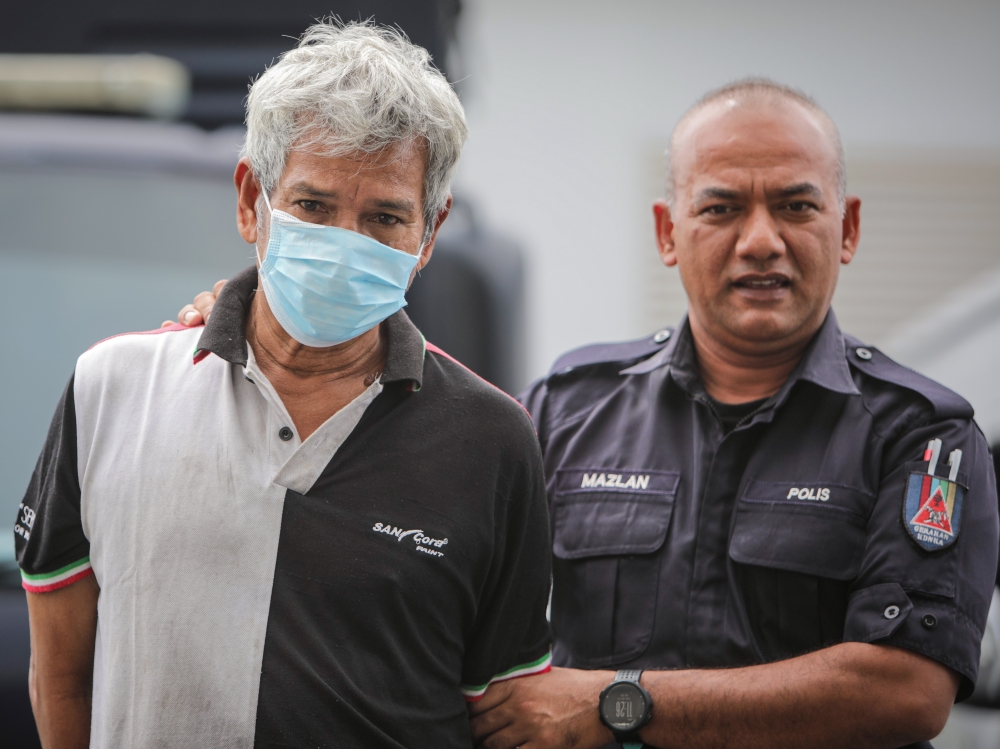
A 65-year-old resident of Perlis appeared before the Magistrate's Court in Kangar on Monday, July 14, to face charges related to the trafficking of 39.9 litres of fentanyl. The case underscores Malaysia's persistent battle against synthetic opioids, which have become increasingly prevalent in the region's illicit drug networks over recent years.
Fentanyl trafficking cases have become a growing concern for Malaysian law enforcement agencies. The potency of fentanyl—a synthetic opioid far more dangerous than heroin—means that even small quantities can pose severe public health risks. A batch of nearly 40 litres represents an exceptionally large seizure, suggesting operations aimed at wholesale distribution rather than personal consumption. The charge carries serious legal consequences under Malaysia's drug trafficking legislation, which mandates stringent penalties for large-quantity offences.
The arrest in Perlis, situated in Malaysia's northern region bordering Thailand, reflects the strategic importance law enforcement agencies place on border states. These areas have historically served as transit points for drug trafficking networks operating across Southeast Asia. The proximity to Thailand, where precursor chemicals and finished synthetic drugs are sometimes manufactured or transshipped, makes Perlis a critical focus area for anti-narcotics operations. Intelligence agencies consider northern states particularly vulnerable to trafficking networks exploiting porous borders and less densely populated transport routes.
Fentanyl's emergence as a major trafficking concern represents a troubling evolution in Malaysia's drug landscape. Previously, the country's drug enforcement efforts centred primarily on heroin and methamphetamine. The shift towards synthetic opioids reflects global trends where criminal organisations capitalise on pharmaceutical supply chains and illicit manufacturing capabilities. Fentanyl's extreme potency—between 50 and 100 times stronger than morphine—means users face catastrophically high overdose risks, particularly when the substance is adulterated or mixed with other drugs.
The scale of this particular seizure invites speculation about the intended distribution network and market value. Nearly 40 litres, if distributed in typical street quantities, could serve thousands of users or generate millions in black-market revenue. Such volumes typically indicate connections to larger trafficking organisations rather than independent operators. Malaysian authorities have increasingly emphasised dismantling these distribution networks by pursuing upstream arrests that target mid-to-high level traffickers rather than street-level dealers.
This case arrives amid Malaysia's broader national drug control strategy, which prioritises enforcement, rehabilitation, and harm reduction. The government has invested significantly in detection capabilities at borders and ports, improved inter-agency coordination, and international cooperation with regional partners including Thailand, Indonesia, and Singapore. However, the persistence of major seizures suggests that trafficking networks continue adapting their methods faster than enforcement can fully contain them.
The charging of a 65-year-old also raises questions about recruitment patterns within trafficking organisations. Older individuals sometimes become targets for traffickers precisely because they may attract less suspicion from authorities compared to younger operatives. The use of elderly couriers or operators represents a tactical adaptation by criminal networks seeking to exploit age-related biases in law enforcement profiling and public perception.
Sentencing outcomes in fentanyl trafficking cases have demonstrated Malaysia's commitment to deterrence. Trafficking charges involving quantities of this magnitude typically result in lengthy imprisonment and substantial fines. The maximum penalties under relevant legislation can include life imprisonment or capital punishment in certain circumstances, reflecting the government's stance on major drug trafficking offences. Convictions in such cases carry consequences extending beyond imprisonment, including asset forfeiture and restrictions on employment.
For Malaysian society more broadly, fentanyl trafficking represents an emerging public health emergency. The drug's involvement in overdose deaths has surged globally, and Malaysia has begun observing similar patterns. Each major seizure represents potential lives saved, though it simultaneously indicates the scale of criminal operations attempting to flood the market. Healthcare systems, addiction treatment programmes, and emergency response services increasingly require capacity to handle fentanyl-related complications, from overdoses to withdrawal management.
The investigation leading to this arrest likely involved months of surveillance and intelligence gathering. Malaysian authorities have developed increasingly sophisticated methods of tracking precursor chemical movements and identifying suspicious financial transactions associated with drug trafficking. International intelligence sharing with partners overseas also plays a crucial role in identifying trafficking routes and dismantling networks at source. The successful detection of nearly 40 litres suggests these enhanced capabilities are yielding results, though the continued volume of seizures indicates the challenge remains formidable.
As the case proceeds through Malaysia's justice system, it will contribute to the broader evidentiary record regarding fentanyl trafficking patterns, organisational structures, and distribution methods. Courts increasingly receive detailed forensic and chemical analysis demonstrating the purity and composition of seized substances, adding layers of complexity to prosecutions but strengthening cases against defendants. The outcome will likely influence resource allocation within enforcement agencies and inform policy discussions regarding sentencing guidelines and rehabilitation approaches.

