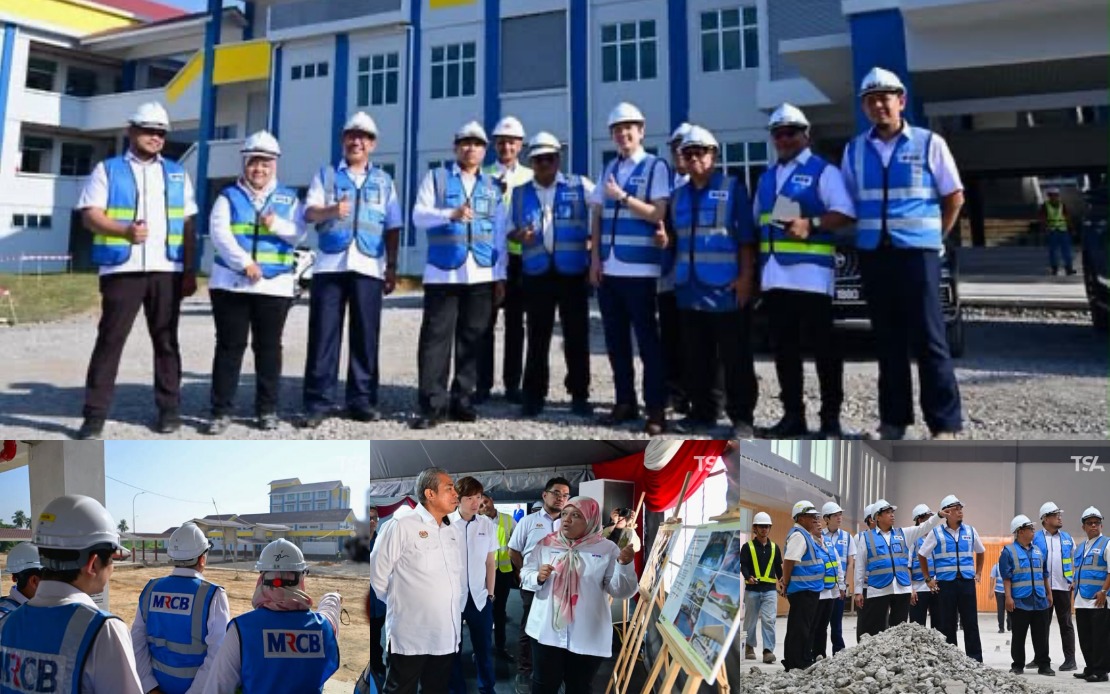
The Perlis Malaysia Sports School, a facility that has languished in an incomplete state since 2013, is finally on course for completion by January 2027 following renewed government momentum and structural reforms aimed at preventing further delays. The sports complex, located in Bukit Chabang, Padang Besar, represents a significant infrastructure investment for the northern region and is expected to become a training ground for elite athletes once it becomes operational. Chief Secretary to the Government Tan Sri Shamsul Azri Abu Bakar provided the encouraging timeline during remarks at Universiti Utara Malaysia, where he was addressing delegates at the Iltizam 2026 Convention.
Shamsul Azri's confidence in the completion date stems from tangible evidence on the ground. The first phase of construction has now reached between 85 and 90 per cent completion, representing substantial material progress compared to the stagnation that characterised the previous decade. A recent government survey of the site identified that most obstacles which previously held back work—notably insufficient labour availability and contractual disputes with construction firms—have now been resolved. This improvement reflects more rigorous project oversight and a determined effort to break the cycle of delays that had plagued the initiative since its original conception.
The project's revival gained formal momentum in April 2024 when Prime Minister Datuk Seri Anwar Ibrahim made the strategic decision to transfer responsibility to a capable government-owned enterprise. This institutional restructuring proved pivotal, removing the project from a bureaucratic environment that had proven unable to deliver results and placing it under an entity with clearer accountability and performance incentives. The shift represents a broader government strategy to address inherited infrastructure bottlenecks by matching projects to capable implementers rather than persisting with arrangements that had demonstrably failed.
The sports school's resurrection aligns with a wider government initiative to streamline public sector operations and eliminate unnecessary administrative impediments. In December 2025, the Government Service Efficiency Commitment Act 2025 (Act 867) came into full force following its gazetting in May 2025. This legislation functions as a binding legal framework rather than merely an advisory policy, establishing enforceable standards for how government agencies must operate. Shamsul Azri characterised it as a mechanism to restore public confidence in Malaysia's administrative apparatus by institutionalising efficiency commitments.
The legislative foundation for administrative reform is complemented by the Bureaucratic Red-Tape Reform (RKB) initiative operating under the broader Public Service Reform Agenda (ARPA). Since commencing implementation in 2024, this programme has successfully concluded 439 distinct RKB projects nationwide. The quantifiable impact is substantial: these initiatives have generated estimated compliance cost savings totalling RM2.95 billion for both citizens and the business community. These savings represent real money that would otherwise have been absorbed by unnecessary administrative procedures, fees, and delays inherent in inefficient government systems.
For Malaysian businesses and the general public, such efficiency improvements carry direct implications. A more streamlined government service delivery system reduces transaction costs, accelerates permitting and approval processes, and creates conditions more conducive to entrepreneurship and investment. The reforms are explicitly designed to enhance the competitiveness of Malaysia's business environment relative to regional competitors and to position the country as a more investor-friendly destination. In the context of regional economic competition with Singapore, Vietnam, and Thailand, such incremental efficiency gains compound over time into competitive advantages.
The Perlis sports school project itself demonstrates how government capacity improvements translate into tangible regional benefits. Padang Besar, located in the southernmost part of Perlis bordering Thailand, has historically received less infrastructural investment than more developed urban centres. A modern sports facility serving the region will provide training opportunities for young athletes in the northern corridor and could catalyse further development of sports tourism and talent identification programmes. The facility will serve athletes across Perlis, Kedah, and neighbouring states, representing a visible symbol of government commitment to equitable regional development.
Shamsul Azri's remarks on civil service conduct provide additional context to the political environment surrounding such public projects. He reiterated that civil servants remain bound by strict regulations prohibiting political engagement, and stated that no complaints have emerged regarding this matter. This emphasis reflects the government's concern to maintain political neutrality within the bureaucracy, ensuring that project decisions are based on merit and capability rather than political affiliation. Such assurances are particularly relevant when high-profile projects have previously experienced delays attributed to administrative dysfunction.
The completion of the Perlis sports school by January 2027 would represent a significant achievement in Malaysia's infrastructure development trajectory. For nearly fourteen years, the facility stood as a symbol of incomplete government ambition, a concrete testament to the consequences of mismanagement and institutional failure. Its completion would demonstrate that, with appropriate structural reforms, political will, and institutional realignment, even long-abandoned projects can be resurrected. The timeline offers a concrete benchmark against which government progress on efficiency improvements can be measured over the coming months.
Looking forward, the sports school project serves as a test case for the broader administrative reform agenda. If the January 2027 deadline is met, it will validate the effectiveness of the current government's approach to institutional restructuring and provide a template for addressing other stalled infrastructure initiatives across Malaysia. Conversely, any further delays would suggest that deeper systemic issues remain unresolved. For Malaysian stakeholders monitoring government performance on infrastructure delivery and administrative efficiency, the Perlis sports school represents a high-visibility indicator of whether current reforms are delivering tangible results or remaining aspirational statements.
The significance of such projects extends beyond mere sporting facilities. They represent broader statements about government capacity, financial management, and the ability to deliver on public commitments. In a region where multiple countries are competing for investment capital and talent, demonstrating functional government institutions capable of completing major projects on schedule enhances national credibility. The Perlis Malaysia Sports School, once finally complete, will contribute not only to athlete development but also to a narrative of improved governance and institutional effectiveness that Malaysia must cultivate to remain competitive in Southeast Asia's evolving economic landscape.

