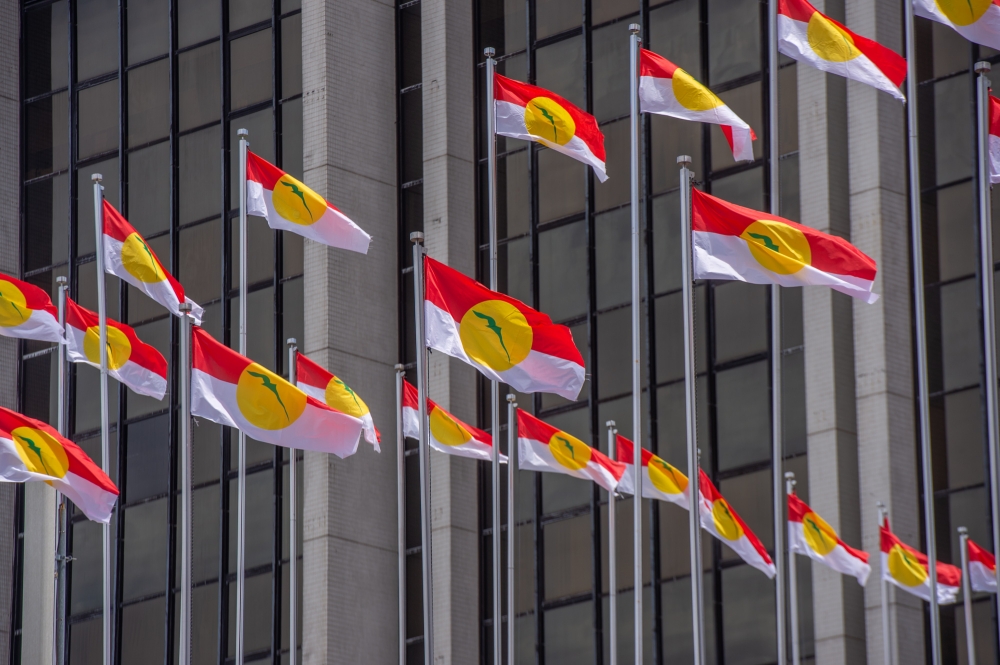
The Umno branch in Perlis is mobilising its grassroots network to field candidates across all available electoral positions in the forthcoming general election, marking a significant tactical shift for the coalition-dependent party in one of Malaysia's smallest states. The announcement reflects broader tensions within Malaysia's ruling political structures and raises questions about the stability of the Barisan Nasional alliance in states where Umno maintains strong institutional control.
This move by Perlis Umno carries particular weight given the state's electoral composition. With 15 state assembly seats and three federal parliamentary constituencies, the party is signalling confidence in its organisational capacity and grassroots appeal. The decision to contest solo rather than coordinate with traditional allies suggests internal calculations about resource allocation and the desire to maximise Umno's seat capture, rather than share victories with coalition partners who may command fewer on-the-ground advantages.
Perlis presents a distinctive political landscape within Malaysia's federal structure. As the smallest state by population and economy, it has historically been something of a testing ground for political strategies that eventually gain traction elsewhere. Umno's dominance in the state has been relatively uncontested compared to more competitive regions, potentially giving the party more latitude to experiment with different electoral approaches. The decision to contest every seat without ceding positions to allies reflects this confidence but also suggests calculus about declining returns from coalition arrangements.
The implications for Barisan Nasional are considerable. The coalition has traditionally operated on a division-of-seats basis, with component parties dividing territories to avoid fratricidal contests. Perlis Umno's unilateral decision to contest all positions sends a message to other state-level party units that such arrangements may no longer be binding or advisable. This could accelerate similar defections in other states, fundamentally altering how the alliance functions in electoral contests. The move also signals that Umno, as the coalition's heavyweight, increasingly feels empowered to dictate terms rather than negotiate them.
For Malaysian voters in Perlis, this strategy could mean increased electoral choice, though paradoxically it might also reduce it if other coalition partners withdraw from the state entirely. A purely Umno versus opposition contest would simplify the ballot but eliminate nuance within the centre-right political space. Voters accustomed to choosing between different coalition partners would find their options consolidated into a binary choice, potentially affecting turnout among those who previously appreciated wider selection.
The timing of this announcement reflects ongoing turbulence in Malaysian politics. The party has faced persistent internal divisions and challenges to its traditional voter base in recent electoral cycles. By taking aggressive territorial positions in stronghold states like Perlis, Umno leadership appears to be consolidating power where it can, rather than attempting broad-based coalition leadership. This defensive mentality, masked as offensive confidence, suggests the party views its coalition partnerships as increasingly disposable when direct electoral advantage appears achievable.
Neighbouring states will watch Perlis closely. Should Umno's solo strategy succeed in delivering strong results and party members perceive it as validation, other state branches facing pressures may adopt similar approaches. Conversely, if the strategy backfires through voter confusion, lower turnout, or unexpected opposition breakthroughs, it could serve as a cautionary example. The state effectively becomes a political laboratory where competing theories about coalition effectiveness and voter behaviour are being tested simultaneously.
The resources Perlis Umno will deploy in this campaign merit attention. Contesting every seat requires significant fundraising, candidate recruitment, and campaign infrastructure. Whether the party possesses sufficient reserves and personnel for such comprehensive contestation remains to be seen. If Umno stretches itself too thin, fielding weak candidates in peripheral constituencies, it could hand unexpected victories to opposition parties who concentrate their limited resources strategically.
For the Malaysian political system broadly, Perlis Umno's move represents a trend toward dealignment and the erosion of coalition structures that have defined the country's politics for decades. As component parties increasingly calculate individual advantage over collective benefit, the stability of superstructures like Barisan Nasional becomes questionable. Regional parties may find themselves in unprecedented territory, forced to compete openly against former allies rather than negotiate comfortable electoral divisions.
The opposition also stands to gain analytical advantage from this development. By studying how Umno's solo campaign performs across different demographic and geographic segments of Perlis, opposition strategists can refine targeting in other states. A comprehensive Umno sweep would suggest their dominance remains intact; narrower victories or unexpected losses would indicate vulnerabilities that could be exploited elsewhere through more focused opposition campaigns.
Ultimately, Perlis Umno's announcement reflects deeper anxieties about political viability and electoral momentum. Rather than suggesting confidence in coalition partnerships, the decision to contest solo reveals doubts about whether traditional alliances deliver optimal results in the current political environment. Whether this represents a temporary tactical adjustment or the beginning of a fundamental restructuring of Malaysian coalition politics remains to be determined, but the implications stretch far beyond one small northern state.

