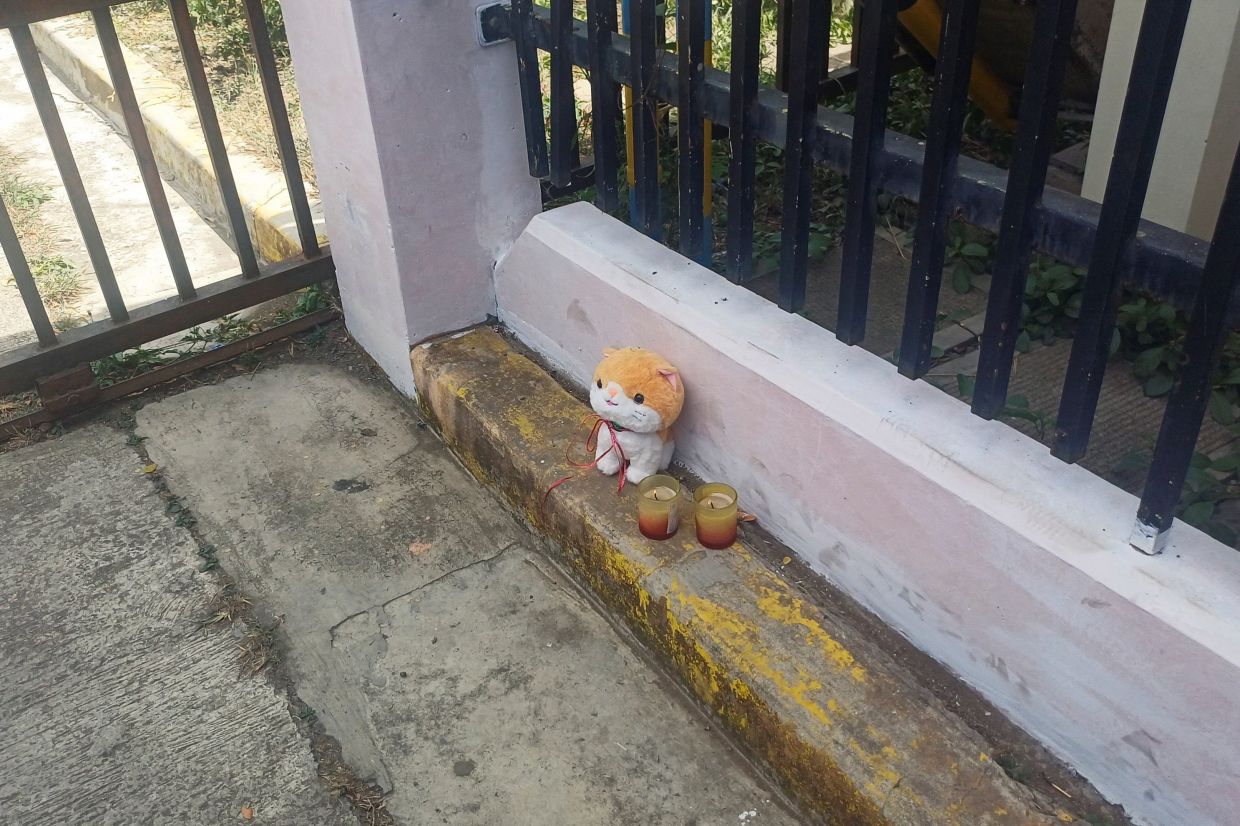
Philippine investigators are working to piece together the circumstances surrounding a school shooting in Zamboanga City on August 18, when a Grade 8 student opened fire on classmates before taking his own life, killing two others and wounding two more. The incident has thrust two critical policy debates into the spotlight: how to regulate young Filipinos' access to social media platforms, and whether existing firearms laws adequately protect against misuse by minors and unauthorised users. The shocking detail that the shooter livestreamed the attack using a body-worn camera has particularly alarmed policymakers, who worry that graphic footage circulating unchecked on social platforms may inadvertently desensitise young people to violence.
Education Secretary Sonny Angara visited Ateneo de Zamboanga University in the aftermath, emphasising the difficulty that educators and families face in identifying red flags before such tragedies occur. The student in question had maintained strong academic performance and had never been flagged by teachers as a discipline problem or a potential threat. Angara's remarks underscore a troubling reality: conventional warning systems—behavioural assessments, academic struggles, disciplinary records—failed to detect the crisis unfolding in this particular case. The shooter gave no outward sign to school staff that he was in distress or contemplating violence, complicating the narrative that better observation alone could prevent such incidents.
Angara argued that physical security measures, while necessary, are insufficient on their own. Fences, closed-circuit television systems, and metal detectors create barriers but cannot replace genuine community engagement and early intervention. He stressed that schools and communities must actively reach out to students, noting that seemingly minor acts of care and connection can profoundly affect young people's wellbeing. His comments reflect growing recognition among Philippine policymakers that school safety transcends hardware and infrastructure; it demands cultural shifts toward mental health awareness, peer support networks, and adults attuned to subtle signs of distress.
This represents the second such attack on a Philippine school in less than two months, a sobering escalation in a nation where campus shootings remain uncommon. The frequency alone has galvanised legislative action and urgent public concern. Police investigations are ongoing to establish the shooter's motive, examine his digital devices for clues about his state of mind, and trace how he obtained access to his father's firearms—notably including a .40-caliber pistol issued by the Bureau of Customs, raising questions about whether government-issued weapons are subject to adequate safekeeping requirements.
Senate President Sherwin Gatchalian has emerged as a leading voice advocating for a legislative ban prohibiting children under 16 from accessing social media platforms. His argument hinges on the premise that young teenagers lack the developmental maturity to navigate such spaces responsibly, and that exposure to viral violence footage—especially when presented via livestream formats—can normalise lethal aggression in their minds. The rapid dissemination of graphic images and conflicting reports across social media and encrypted messaging groups has compounded parental anxiety and public confusion in the immediate aftermath of the shooting.
Interior Secretary Jonvic Remulla has focused the government's attention on the firearm dimensions of the crisis. He is pushing lawmakers to impose stiffer penalties on gun owners whose weapons end up in the hands of minors, and to comprehensively review existing legislation governing loose firearms and improper storage. The fact that the student was able to access his father's pistols—including a firearm issued by a government agency—suggests gaps in accountability mechanisms designed to ensure that licensed weapon owners store arms securely and prevent unauthorised access. Remulla's call for stricter oversight reflects concern that current penalties may be too lenient to deter negligence.
Claire, a parent whose college-aged daughter attends a separate campus of the same university network, recounted how rapidly misinformation and distressing visual content spread through social channels and private group chats in the hours following the attack. She highlighted the asymmetry in how media is regulated offline versus online, pointing out that film and television content is subject to age-based ratings systems designed to protect children from inappropriate material. By contrast, social platforms operate with minimal content filtering for minors, allowing unvetted footage—particularly graphic violence—to reach young viewers instantaneously. Claire's observation resonates with the broader concern driving legislative proposals: that social media companies have not adequately adapted their platforms to protect younger users from content that could be psychologically harmful.
The debate unfolding in Philippine legislative chambers reflects tensions between competing values and practical constraints. Advocates for social media restrictions argue that keeping under-16 users off such platforms is the most straightforward protective measure available, given that teenagers' brains are still developing and their capacity for sound judgment about online content consumption remains incomplete. Critics might counter that enforcement would be difficult, that young people would find workarounds, and that wholesale prohibition infringes on parental choice and digital access more broadly. Yet the urgency of preventing further school violence has tilted the political calculus toward action.
On the firearms dimension, the policy conversation centres on how to maintain lawful gun ownership rights while closing loopholes that enable minors to access weapons. The case of a government-issued pistol reaching a student's hands suggests that even official inventory systems may lack sufficient oversight. Remulla's emphasis on enhanced penalties reflects a theory of prevention through deterrence: if gun owners know they face serious legal consequences for storing firearms unsecurely, they will take greater precautions. Whether penalties alone suffice—or whether the Philippines needs mandatory secure storage requirements, liability rules, or other affirmative duties—remains an open question.
For Malaysia and other Southeast Asian nations, the Philippine case carries salience. While school shootings remain statistically rare across the region, the conditions that enable such incidents—access to firearms, social media connectivity among youth, mental health challenges in school-age populations, and potential gaps in threat assessment protocols—exist across multiple countries. Malaysian policymakers and educators monitoring the situation may find instructive lessons in the Philippine response, particularly regarding how schools and communities can develop more nuanced early warning systems that move beyond conventional behavioural indicators.
The investigation into the Zamboanga City shooting continues, with authorities still working to reconstruct the shooter's psychological state, his access to weapons, and the specific timeline of events. As forensic examination of his electronic devices proceeds, investigators hope to uncover digital footprints—messages, searches, gaming activity, or social media engagement—that might illuminate his intentions. Police initially misidentified the shooter's grade level, later confirming he was a Grade 8 student, underscoring the fluid and sometimes confused nature of information immediately following such crises. Officers discovered his body on the fifth floor of the school, having moved upstairs from the fourth floor where the initial shooting occurred, with forensic evidence suggesting he died by self-inflicted gunshot wound.
As lawmakers debate regulatory responses, the fundamental challenge remains identifying and supporting young people in acute psychological distress before they reach a crisis point. Angara's emphasis on community connection, combined with Gatchalian's focus on limiting minors' social media exposure and Remulla's push for stricter firearms accountability, suggests a multi-faceted approach gaining traction in Philippine policy circles. Whether these measures, individually or collectively, can prevent future school violence is uncertain—but the political will to try appears stronger now than before the August 18 attack.

