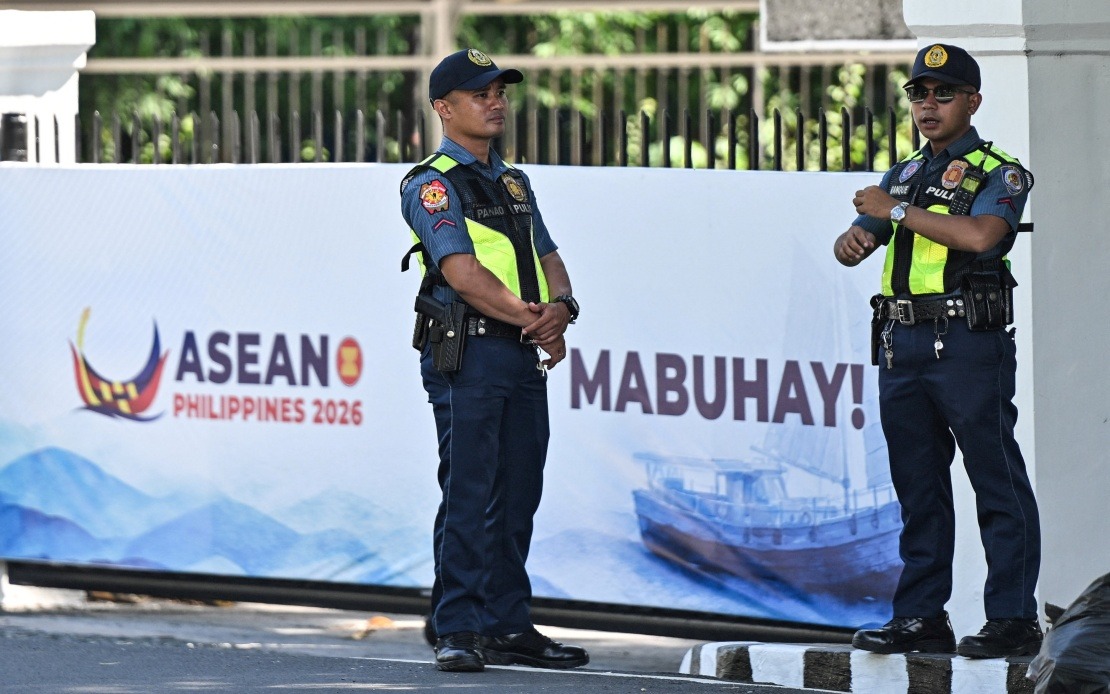
The Philippines has assumed a pivotal diplomatic role as it convenes the 59th ASEAN Foreign Ministers' Meeting (AMM) and Related Meetings throughout the week of July 20 to 24 in Manila. This high-stakes gathering represents a crucial moment for Southeast Asia to chart its collective course amid mounting global uncertainties and regional friction points. According to Foreign Affairs Assistant Secretary and ASEAN Spokesperson Dominic Xavier Imperial, the series of interconnected ministerial forums will tackle pressing development priorities while simultaneously working to strengthen the bloc's institutional cohesion during a period of considerable international instability.
The momentum built over the preceding seven months of Philippine stewardship of ASEAN will now culminate in these week-long deliberations, which draw together foreign ministers from all ten member states alongside representatives from key dialogue partners and regional organisations. Imperial characterised the meetings as an opportunity to reinforce ASEAN's collective identity and coordinate responses to challenges that transcend national borders. The carefully sequenced agenda reflects the region's multifaceted concerns, beginning with specialised sessions and progressing toward increasingly broad multilateral engagements involving major global powers.
The opening engagement brought ASEAN Foreign Ministers face-to-face with representatives of the ASEAN Intergovernmental Commission on Human Rights (AICHR) for their 16th interface meeting. This dialogue format underscores a sustained commitment within ASEAN's institutional framework to advance human rights protection and fundamental freedoms throughout the region, with particular attention to marginalised and vulnerable populations. The prominence given to human rights discussions at the outset signals that member states view the protection of citizens' dignity as inseparable from broader security and stability objectives, a positioning that reflects evolved thinking within ASEAN's traditionally state-centric approach to regional affairs.
Parallel discussions within the Southeast Asia Nuclear Weapon-Free Zone (SEANWFZ) Commission represent another cornerstone of the week's agenda. Ministers convened to examine implementation of the 2023–2027 strategic plan whilst considering applications from prospective states seeking accession to the SEANWFZ Protocol. This nuclear non-proliferation mechanism, established decades ago, continues to anchor regional security architecture by maintaining Southeast Asia's status as a zone free from nuclear weapons. The SEANWFZ framework remains particularly significant for smaller Southeast Asian nations seeking reassurance that regional disputes will not escalate to catastrophic levels, and the commission's work carries implications for managing great-power competition in an era of renewed nuclear anxiety.
When the formal 59th AMM opens on Tuesday, foreign ministers will review progress across ASEAN's three fundamental pillars—the political and security pillar, the economic pillar, and the socio-cultural pillar—whilst assessing the bloc's external relationships and debating pressing international issues. The adoption of two major outcome documents will crystallise the week's deliberations. The 59th AMM Joint Communiqué will serve as the comprehensive statement of regional positions on international developments and core priorities, whilst the Guidelines on the Modalities for Engagement of ASEAN with High Contracting Parties to the Treaty of Amity and Cooperation in Southeast Asia will establish a formal framework for deepening ties with states lacking existing official partnerships with the bloc.
These guidelines represent a significant deliverable of the Philippine chairmanship, crafted to structure cooperation with non-aligned or unaligned states whilst preserving the Treaty of Amity and Cooperation as the foundational principle governing regional relations. The TAC, as a cornerstone of peace and confidence-building, will be reinforced through this new framework, enabling ASEAN to expand its diplomatic reach without compromising its established institutional norms. For Malaysia and other member states, these guidelines offer a mechanism for engaging with emerging powers and repositioning ASEAN as a central diplomatic hub accessible to all nations sharing commitment to regional stability.
The week's progression toward increasingly expansive multilateral formats reflects a deliberate diplomatic architecture. On Wednesday, ASEAN will host Post-Ministerial Conferences (PMCs) with eleven major dialogue partners spanning the Indo-Pacific: India, the United States, Canada, Russia, China, the Republic of Korea, Japan, Australia, New Zealand, the United Kingdom, and the European Union. These bilateral-plus engagements permit ASEAN to shape how external powers perceive and respond to regional interests. In a context of heightened global tensions, these forums provide venues for dialogue partners to engage constructively on issues affecting the region, whether stemming from conflicts beyond Southeast Asia or from within-region flashpoints.
Thursday's schedule intensifies this multilateral engagement with three consequential regional forums: the 27th ASEAN Plus Three meeting (involving China, Japan, and South Korea), the 33rd ASEAN Regional Forum (the region's longest-established inclusive security dialogue), and the 16th East Asia Summit (the region's premier forum for strategic dialogue among major powers). Together, these three concurrent meetings constitute the most comprehensive assembly of East Asian and Indo-Pacific leaders, providing multilayered opportunities to coordinate on common challenges and manage competitive dynamics.
Two specific bilateral engagements deserve particular attention. A confirmed meeting between Philippine Foreign Affairs Secretary Ma. Theresa Lazaro and Chinese Foreign Minister Wang Yi carries significance extending well beyond bilateral relations. The Philippines and China have navigated complex recent interactions across multiple domains, and this engagement offers an opportunity to establish clearer frameworks for managing differences whilst exploring areas of cooperation. Imperial emphasised that these bilateral discussions carry regional implications, given that Philippine-China dynamics influence the broader regional security environment and international perceptions of Southeast Asia's stability.
Two substantive issue areas are certain to dominate ministerial conversations throughout the week: the Myanmar crisis and South China Sea territorial disputes. Regarding Myanmar, the Five-Point Consensus adopted by ASEAN following the 2021 military coup remains the bloc's official framework for engaging the State Administration Council and other Myanmar stakeholders. The ongoing humanitarian catastrophe and political deadlock in Myanmar demand sustained diplomatic pressure, requiring ASEAN to balance its cherished principle of non-interference with moral obligations toward a member state descending deeper into conflict. Imperial confirmed that ASEAN intends to maintain multifaceted engagement, working not only through official government channels but also with broader opposition elements and civil society actors seeking alternative pathways toward democratic restoration.
The Code of Conduct (COC) for the South China Sea represents another perennial focus, having consumed ASEAN's diplomatic energies for years. The COC negotiations involve China and ASEAN member states in attempting to establish binding rules governing maritime conduct, resource exploitation, and dispute resolution in one of the world's most economically vital and geopolitically contested waterways. These discussions carry profound implications for maritime security, freedom of navigation, and the regional balance of power. Malaysia, as both a South China Sea claimant state and ASEAN member, has particular stakes in achieving a COC that protects smaller nations' interests whilst accommodating China's core concerns, thereby preventing escalation.
The week concludes on Friday with commemorative activities honouring the 50th anniversary of the Treaty of Amity and Cooperation, a symbolic moment reflecting on five decades of ASEAN diplomacy and regional institution-building. This anniversary provides occasion to reaffirm ASEAN's founding principles whilst acknowledging how the regional landscape has transformed dramatically since 1976. For Malaysian observers and policymakers, these meetings represent an opportunity to assess whether ASEAN can maintain its centrality and influence amid intensifying great-power competition, or whether the bloc risks fragmentation along geopolitical fault lines. The week's outcome documents will signal whether ASEAN has successfully navigated internal consensus-building to articulate coherent positions, or whether existing tensions over South China Sea strategy, Myanmar policy, and engagement with major powers have begun eroding the unity that has historically constituted ASEAN's primary diplomatic asset.

