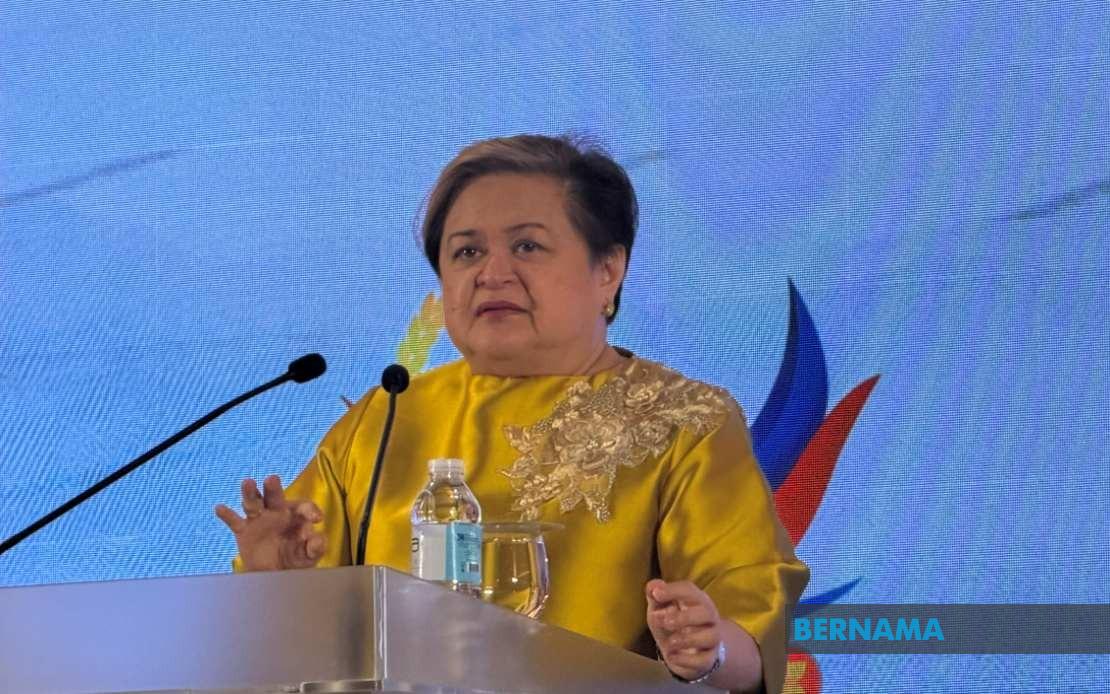
The Philippines has made an urgent appeal to its ASEAN partners to strengthen protections around the region's most vital maritime arteries, signalling growing concern that geopolitical instability beyond Southeast Asia could spill over and cripple the bloc's economic lifelines. Philippine Foreign Affairs Secretary Ma. Theresa P. Lazaro raised the alarm during discussions on regional maritime security, pointing specifically to recent turmoil in the Strait of Hormuz as a cautionary example of how vulnerable global shipping lanes have become to unexpected disruption.
The Hormuz incident, Lazaro explained, had vividly illustrated the cascading consequences that maritime disruptions trigger across interconnected economies. When shipping routes face blockages or instability, the ripple effects extend far beyond the immediate affected region, driving up energy costs, accelerating inflation pressures, undermining food security as agricultural exports face delays, and fracturing supply chains that businesses depend upon for survival. For ASEAN nations, whose economies are tightly woven into global trading networks, such shocks carry outsized impact precisely because of how deeply integrated the region is into international commerce.
Lazaro emphasised that ASEAN's particular vulnerability stems from its geographic position controlling some of the world's most critical sea lanes. The Strait of Malacca and the South China Sea are not merely regional assets but global chokepoints through which trillions of dollars in annual trade flows. Any meaningful disruption to these corridors would immediately threaten ASEAN's competitiveness, raising operational costs for manufacturers, delaying production schedules, and potentially pushing regional companies out of international markets as delivery commitments collapse and prices climb.
The secretary's intervention suggests that Manila views maritime resilience not as a niche security concern but as a foundational pillar of regional economic stability. She articulated a comprehensive vision for ASEAN's response that transcends traditional military or enforcement approaches. Instead, the Philippines advocates for a multi-layered strategy encompassing maintenance of secure and open sea lanes, deliberate strengthening of supply chain redundancy and diversification, and deepened cooperation on energy and food security—the two sectors most vulnerable to maritime disruption.
Central to Lazaro's proposal is enhanced crisis management infrastructure at the ASEAN institutional level. She has pushed for the development of formal communication and coordination protocols between ASEAN foreign ministers that would enable the bloc to detect emerging threats earlier and mobilise collective responses with greater speed and unity. These mechanisms matter because crises in maritime zones can escalate rapidly, and delays in coordinating regional responses allow consequences to metastasise. The Philippines also advocated for strengthened technical cooperation frameworks, expanded information-sharing arrangements, and upgraded early warning systems that pool intelligence and surveillance capabilities across member states.
Transparency and predictability emerge as touchstones in Lazaro's framing. She stressed that building business and investor confidence in the reliability of ASEAN's maritime environment requires consistent communication about conditions, risks, and coordinated responses. When traders and shipping companies perceive that ASEAN members are fragmented or unclear in their positions, they factor that uncertainty into decisions, potentially shifting routes or sourcing patterns away from the region. Conversely, a demonstration of cohesive ASEAN coordination sends a powerful signal that the region takes maritime security seriously and can respond decisively to threats.
Beyond these defensive measures, the Philippines has championed a concrete institutional initiative designed to anchor maritime cooperation within ASEAN's permanent infrastructure. Manila has proposed establishing an ASEAN Maritime Centre within Philippine territory, positioning it as a dedicated hub for regional maritime affairs and a platform for enhanced collaboration. The centre would operate under the rubric of ASEAN and ASEAN-led mechanisms, providing technical secretariat support for maritime initiatives while fostering dialogue across different sectors—from defence and maritime law enforcement to shipping, environmental management, and trade facilitation.
This initiative gains significance in the context of the Philippines' upcoming 2026 ASEAN Chairship, a period when Manila will set the bloc's agenda and priorities. By identifying the Maritime Centre as a flagship deliverable, the Philippines signals that maritime resilience will occupy elevated prominence in the regional conversation. The centre's cross-sectoral and cross-pillar architecture reflects recognition that maritime security cannot be siloed within defence ministries but requires integration of economic, environmental, diplomatic, and technical perspectives.
For Malaysia and other ASEAN members, particularly those whose economies depend heavily on maritime trade and energy imports, the Philippine initiative carries immediate relevance. The Strait of Malacca, controlled by Malaysia, Singapore, and Indonesia, remains one of the world's most congested and strategically important waterways. Malaysian traders and energy consumers face direct exposure to any disruption affecting the strait or broader regional maritime stability. Strengthened ASEAN coordination mechanisms and improved early warning systems offer tangible benefits by reducing the likelihood that crises escalate unchecked and by enabling faster collective response when incidents occur.
The timing of the Philippines' push reflects broader regional anxieties about mounting geopolitical volatility. Beyond traditional interstate tensions in the South China Sea, the bloc now faces spillover risks from conflicts in distant regions, climate-driven hazards affecting shipping, and emerging maritime security challenges ranging from piracy to trafficking. By advocating for comprehensive, institutionalised approaches to maritime resilience, the Philippines is essentially arguing that ASEAN cannot afford ad hoc or purely bilateral responses—the region requires coordinated, multi-layered strategies that integrate economic, security, and diplomatic dimensions.
The concept of resilience that Lazaro emphasises differs from simple military deterrence. Instead, it encompasses redundancy in supply chains, diversified energy sources, robust communication networks, and the diplomatic machinery to manage crises before they spiral. This approach aligns with ASEAN's traditional preference for constructive dialogue and practical cooperation over military posturing, even as it acknowledges that external shocks and geopolitical turbulence cannot be wished away.
Looking ahead, the success of the Philippine initiative will depend on whether ASEAN members translate rhetorical commitments into substantive investments in the Maritime Centre, protocols, and information-sharing arrangements. Bureaucratic resistance, budgetary constraints, and lingering bilateral tensions could impede progress. Nevertheless, the Philippines' articulation of maritime resilience as essential to ASEAN's economic survival represents an important framing that may help overcome parochial interests and spur collective action on an issue affecting all member states.

