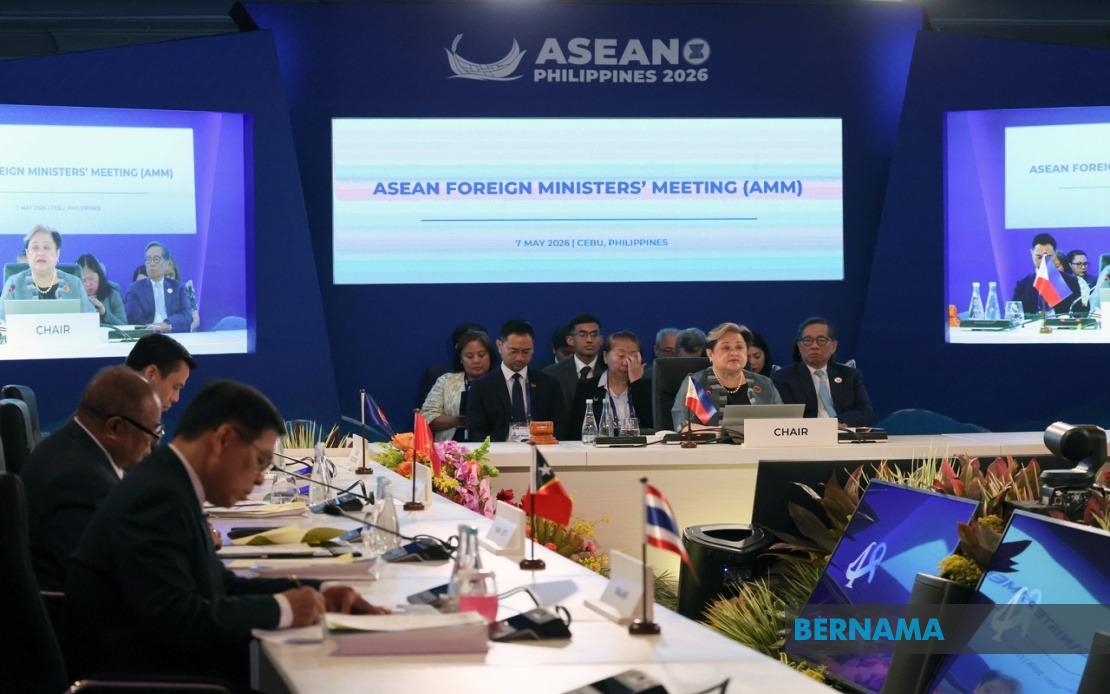
The Philippines has signalled that ASEAN's approach to resolving the Myanmar crisis must become more adaptable, even as it continues to champion the Five-Point Consensus adopted in April 2021 as the region's governing framework. Speaking to regional media, Philippine Foreign Affairs Secretary Ma. Theresa P. Lazaro made clear that flexibility in implementation does not equate to abandoning the foundational agreement, but rather adjusting how ASEAN and its chair execute the plan in response to the shifting landscape within Myanmar.
The Five-Point Consensus, agreed upon three years ago, establishes core objectives including an immediate end to violence, facilitation of dialogue among competing factions, appointment of an ASEAN Special Envoy to mediate disputes, delivery of humanitarian assistance to affected populations, and the envoy's direct engagement with all parties to the conflict. While these points remain central to ASEAN's diplomatic efforts, Lazaro indicated that member states increasingly recognise the need to recalibrate how the framework operates in practice. She emphasised that implementation should be intentional and grounded in what is actually occurring on the ground in Myanmar, rather than following a rigid interpretation disconnected from evolving realities.
This philosophical shift reflects growing recognition within ASEAN that nearly three years of relatively unchanged diplomatic posturing has yielded limited tangible progress. Myanmar's military government, which seized power in February 2021 by overthrowing elected civilian leader Aung San Suu Kyi, has shown little movement toward de-escalation or genuine dialogue. Meanwhile, the resistance movement has fragmented into multiple entities including the National Unity Government and the People's Defence Force, with various ethnic armed organisations pursuing their own agendas. The humanitarian catastrophe has only worsened, with millions facing food insecurity and displacement.
The Philippines acknowledged that other ASEAN leaders have begun questioning whether the existing implementation approach can yield meaningful outcomes. Rather than retreat from the consensus, Manila suggests the region should recalibrate expectations and tactics. This represents a delicate balancing act: maintaining diplomatic unity around the framework while conceding that the mechanisms for pursuing it require rethinking. Such pragmatism may reflect frustration with Myanmar's military leadership, which has largely ignored ASEAN pressure, as well as recognition that ASEAN's traditional consensus-based approach struggles when one member state refuses to cooperate meaningfully.
Myanmar's status within ASEAN remains a contentious issue. Since the coup, ASEAN has restricted Myanmar's representation at its summits, barring the military leadership and instead permitting only non-political representatives to attend high-level meetings. This middle-ground approach has satisfied neither those demanding Myanmar's expulsion nor those favoring continued full engagement. The Philippines confirmed that any restoration of Myanmar's complete participation would hinge on demonstrable progress in three specific areas: de-escalation of violence, advancement of constructive dialogue among Myanmar's competing power centres, and meaningful humanitarian assistance reaching civilians in need.
The annual ASEAN Leaders' Review and Decision on the Implementation of the Five-Point Consensus provides a formal mechanism for assessing Myanmar's performance against these criteria. These periodic reviews offer opportunities for member states to evaluate whether Myanmar has genuinely moved forward or merely offered symbolic concessions. The Philippines, currently holding the ASEAN chair, intends to use these gatherings to facilitate candid conversations among member states about Myanmar's trajectory and how ASEAN should adjust its engagement strategy accordingly. This suggests a potential shift toward more conditional diplomacy, where pressure on Myanmar's government remains tied to concrete benchmarks rather than hopes for voluntary compliance.
Malaysia, which preceded the Philippines in the ASEAN chair rotation, had already signalled this directional change in late June. Malaysian Foreign Minister Datuk Seri Mohamad Hasan articulated similar themes about exploring fresh approaches to strengthen the Five-Point Consensus while maintaining it as ASEAN's foundational framework. Importantly, Malaysia underscored the necessity of engaging multiple stakeholders beyond the military government, explicitly mentioning the National Unity Government, the People's Defence Force, and ethnic armed organisations. This multi-stakeholder engagement strategy represents a subtle but significant evolution in ASEAN's approach, acknowledging that military-to-military dialogue alone has proven insufficient.
The broader context for this reassessment involves ASEAN's fundamental challenge in managing a crisis within one of its own member states. Unlike extra-regional powers that can adopt more punitive stances, ASEAN must balance principle against pragmatism, knowing that Myanmar cannot simply be removed from the bloc. The region's norm of non-interference in internal affairs, while theoretically protecting all ASEAN members, has paradoxically constrained ASEAN's leverage when dealing with Myanmar's intransigence. Flexibility in implementation thus represents a strategy for maximising limited leverage by focusing on what ASEAN can actually influence rather than demanding changes that the military government shows no interest in making.
For Malaysia, Thailand, and other ASEAN neighbours with shared borders and significant diaspora populations affected by Myanmar's instability, the stakes extend beyond diplomatic principle. Regional security, economic disruption, and refugee flows represent concrete concerns that demand tangible progress. The Philippines' emphasis on adaptability reflects an acknowledgement that the humanitarian dimension of Myanmar's crisis cannot wait indefinitely for diplomatic breakthroughs. Humanitarian assistance, while listed in the Five-Point Consensus, has encountered obstacles regarding access, monitoring, and distribution that ASEAN has struggled to overcome without directly challenging Myanmar's sovereignty.
The evolution toward pragmatic flexibility also signals ASEAN's recognition that its role may be to facilitate rather than dictate outcomes. By supporting dialogue among Myanmar's multiple factions, ASEAN positions itself as a platform for negotiation rather than an enforcer of peace terms. This approach aligns with the regional organisation's strengths, which lie in creating diplomatic space, and acknowledges its weaknesses, which include limited leverage over determined military actors. The Philippines' articulation of this strategy suggests ASEAN may be moving toward a longer-term engagement model accepting that Myanmar's transition will not follow the swift trajectory initially envisioned.
Looking forward, the Five-Point Consensus will likely remain ASEAN's formal commitment, but its operational interpretation may grow increasingly pragmatic. Member states appear willing to recognise that achieving all five points simultaneously may be unrealistic, and that progress on some dimensions might enable gradual movement on others. This represents neither capitulation nor abandonment of principle, but rather a maturing recognition that ASEAN's capacity to resolve Myanmar's crisis remains limited, and that adaptation of strategy need not signal failure of fundamental objectives. Whether such flexibility proves sufficient to eventually draw Myanmar toward de-escalation and dialogue remains the paramount question for ASEAN's future credibility in crisis management.

