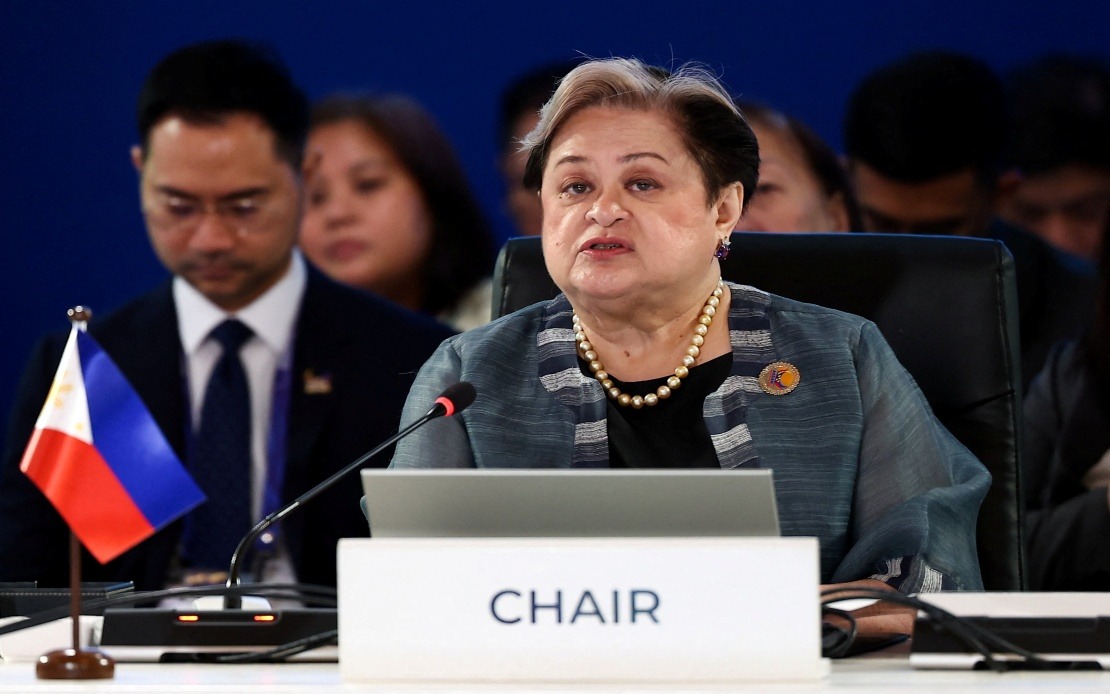
The Philippines is preparing to mount a significant humanitarian intervention in Myanmar through the framework of the Association of Southeast Asian Nations, with Foreign Affairs Secretary Ma. Theresa Lazaro taking the helm of the proposed mission slated for the final quarter of 2026. The announcement reflects a coordinated regional effort to address the deepening humanitarian crisis in the conflict-torn nation, which has descended into widespread violence and displacement since the 2021 military coup. Lazaro's role as the ASEAN chair's special envoy positions her as a crucial bridge between the regional bloc and all parties involved in Myanmar's internal conflict.
The initiative emerged following intensive diplomatic engagement in Bangkok on July 12 and 13, where Lazaro conducted a series of strategic meetings with fellow Southeast Asian foreign ministers and key Myanmar actors. These conversations underscored the urgency of the situation and the need for coordinated international action. The consultations brought together diverse stakeholders with competing interests and perspectives, yet achieved what officials described as broad consensus on the humanitarian mission's necessity. The fact that all participants backed the proposal suggests a rare moment of unity within ASEAN on Myanmar policy, where disagreements over the pace and approach of engagement have previously stalled collective action.
The humanitarian mission aims to substantially widen the geographic reach of assistance programmes to Myanmar's civilian population, particularly in areas currently experiencing severe conflict and limited access to aid. Myanmar's ongoing instability has created pockets of territory where humanitarian organisations struggle to operate, leaving vulnerable populations cut off from essential supplies, medical care, and shelter. By orchestrating an official ASEAN mission, regional leaders hope to create the political conditions and security guarantees necessary for expanded humanitarian access. This approach acknowledges that technical and logistical obstacles to aid delivery are often intertwined with political and military considerations.
During her meetings, Lazaro engaged directly with Myanmar Foreign Minister U Tin Maung Swe to advance implementation of the Five-Point Consensus, the cornerstone of ASEAN's Myanmar strategy. This framework, adopted in 2021 following the coup, calls for an immediate cessation of violence, dialogue among all parties, the delivery of humanitarian assistance, and mediation by an ASEAN special envoy. While the Five-Point Consensus represented a collective regional position, its implementation has proved challenging, with various parties interpreting and committing to its provisions inconsistently. The Myanmar government's commitment to the plan remains contested, and progress has been halting at best.
U Tin Maung Swe used the opportunity to brief ASEAN foreign ministers on his government's stated peace efforts, including a 100-day peace plan and initiatives to combat transnational crimes that often flourish in ungoverned spaces. He also detailed the junta's claimed actions in advancing the Five-Point Consensus. However, these official government narratives are frequently at odds with reports from international observers, civil society organisations, and ethnic armed groups regarding the actual trajectory of violence and the nature of military operations on the ground. The international community remains sceptical of Myanmar's commitment to genuine political dialogue and conflict resolution.
The meeting between ASEAN ministers and U Tin Maung Swe marked a watershed moment—the first in-person gathering of this kind since 2021. Such engagement, even if procedural, carries symbolic weight in Myanmar's geopolitical context. It signals ASEAN's continued commitment to inclusive dialogue rather than isolation, a position that some regional states favour despite international pressure to take a harder line against the junta. This approach reflects ASEAN's fundamental principle of non-interference in member states' internal affairs, though that doctrine has come under increasing strain given the scale of Myanmar's humanitarian catastrophe.
Lazaro separately convened ethnic armed organisations and representatives of the National Solidarity and Peacemaking Negotiation Committee to explore pathways toward inclusive national political dialogue. These conversations are pivotal, as the proliferation of armed groups—some cooperating with the military, others opposing it—has fragmented Myanmar's political landscape beyond the simple coup narrative of 2021. Multiple stakeholders told Lazaro they remained receptive to dialogue, though they attached various preconditions and expectations to any negotiation process. The fact that diverse parties signalled openness suggests that the appetite for violence is not absolute, and that diplomatic channels retain some potential, however constrained.
The timing of these discussions is significant in the context of Myanmar's regional position and broader geopolitical shifts in Southeast Asia. Myanmar's location along the China-India border, its resources, and its strategic importance make its stability a matter of concern for major powers beyond ASEAN. China and India both have substantial interests in Myanmar's trajectory, while the United States and European nations monitor developments closely. ASEAN's attempt to position itself as the primary mediator reflects the bloc's desire to maintain relevance and influence in shaping Myanmar's future, even as it struggles to exercise meaningful leverage.
For Malaysian and broader Southeast Asian observers, the humanitarian mission represents a test case for ASEAN's capacity to translate diplomatic consensus into concrete action. Malaysia, as a former ASEAN chair and a nation with historical engagement in regional conflict resolution, has particular stakes in the outcome. The success or failure of this initiative will influence how ASEAN approaches similar crises and whether the bloc can maintain its unified front on Myanmar as the humanitarian situation potentially deteriorates further. The blockade or disruption of aid routes remains a critical challenge that military and political negotiations alone cannot resolve.
The proposal to expand humanitarian access also raises practical questions about implementation. Which humanitarian organisations will participate? How will security be guaranteed? What coordination mechanisms will exist between ASEAN, Myanmar's government, and armed groups? The DFA has provided limited operational details, suggesting that substantial groundwork remains before any mission can launch. This phased approach—first securing political commitment, then working out logistics—is prudent but time-consuming, a concern given that conditions in Myanmar are deteriorating and civilian suffering is immediate.
Lazaro's leadership of the mission carries both advantages and risks. As Philippines Foreign Affairs Secretary and ASEAN chair's special envoy, she carries the institutional weight and political authority necessary to negotiate sensitive matters with all parties. The Philippines' position as ASEAN chair during this period gives added credibility to the mission. However, the complexity of Myanmar's conflict—involving the military junta, multiple ethnic armed organisations, civilian resistance movements, and displaced populations—means that any mediation effort faces inherent limitations. Humanitarian missions, while necessary, are not substitutes for political solutions.
Looking forward, the success of this initiative depends on several factors: sustained political will among ASEAN members, genuine cooperation from Myanmar's government, willingness of armed groups to facilitate access, and the capacity of humanitarian organisations to operate effectively in active conflict zones. The announcement represents a step forward in acknowledging the crisis's severity and committing resources to address it. However, observers note that humanitarian assistance, while morally essential, addresses symptoms rather than causes. Resolving Myanmar's underlying political crisis requires progress on dialogue, power-sharing arrangements, and accountability—aims that Lazaro's mission touches upon but cannot unilaterally achieve.

