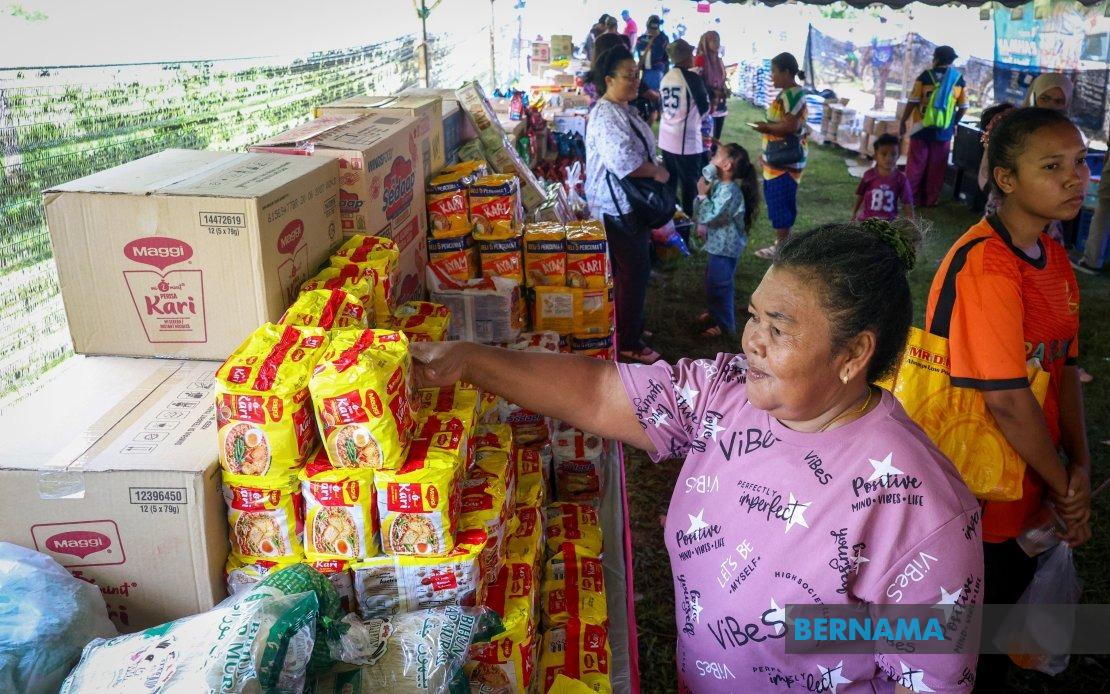
The Rahmah MADANI Sales Programme (PJRM) has arrived at the Pasik Resettlement Scheme (RPS) in Gua Musang, extending government price-controlled goods to more than 1,000 Temiar Orang Asli residents who previously endured substantial barriers to purchasing basic necessities. This deployment marks an important step in narrowing the cost-of-living gap that routinely affects indigenous communities in Peninsular Malaysia's interior regions, where geographic isolation compounds affordability challenges.
For years, residents of Pasik RPS faced formidable obstacles when seeking discounted essentials through PJRM outlets. Kampung Ayong resident Ramli Chimbong, 51, exemplifies the struggles that motivated this expansion. Previously forced to undertake two-and-a-half-hour journeys to Kampung Jerek to access the programme, residents incurred substantial transport and ancillary costs—Chimbong estimates spending at least RM600 per trip on vehicle rental, meals, and related expenses. These transportation costs substantially eroded any savings gained from purchasing discounted goods, effectively negating the programme's affordability benefits for remote populations.
The pricing differential alone underscores the economic impact of bringing PJRM directly to communities. While village retailers charge RM40 for a nine-kilogramme bag of rice, the programme offers identical quantities for RM29—a reduction exceeding 27 percent that meaningfully stretches household budgets stretched by inflation. For families managing subsistence incomes and irregular employment opportunities, such savings translate into genuine relief from economic pressure, particularly for staple foods where prices affect daily nutritional adequacy.
SMS Maju Solution, the vendor managing the Pasik RPS rollout, stocked a comprehensive inventory reflecting anticipated demand patterns. The initial shipment included 100 product categories alongside substantial quantities of high-demand items: 300 bags of rice, 300 trays of eggs, and 300 chickens. Residents' enthusiasm manifested immediately, with community members arriving as early as 9 am—suggesting pent-up demand for price-controlled goods and highlighting how inconvenient previous purchasing arrangements had become for this demographic.
The programme's structure leverages existing government financial initiatives. Eligible residents utilize SARA (Rahmah Basic Contribution) balances credited to their MyKad identity documents, streamlining transactions and enabling transparent purchasing. SMS Maju Solution owner Sabariah Mohamed Sayuti observed that substantial credit balances remained unutilized across the community, with numerous residents holding between RM300 and RM800. This pattern suggests previous inability to access PJRM outlets rather than lack of government support allocation, confirming that geographic barriers—rather than insufficient assistance—prevented residents from benefiting from existing affordability initiatives.
Operational deployment to remote locations revealed practical challenges reflecting Peninsular Malaysia's infrastructure disparities. The vendor team experienced vehicle damage while navigating Pasik RPS's rocky and muddy road network, illustrating the physical conditions constraining supply delivery and logistical planning. These difficulties underscore why government programmes often concentrate on accessible locations, leaving isolated communities underserved despite genuine need. Overcoming such obstacles requires sustained commitment and coordination between government agencies and logistics providers.
Nenggiri assemblyman Mohd Azmawi Fikri Abdul Ghani positioned the initiative within broader government strategies addressing rural cost-of-living pressures. His statement emphasizing programme expansion to all Orang Asli settlements reflects policy recognition that indigenous communities experience disproportionate economic vulnerability. Rural populations typically face compounded disadvantages: limited employment diversity, inadequate infrastructure, and reduced commercial competition that inflates prices. Targeted affordability programmes represent government attempts to counterbalance these systemic disparities.
The Pasik deployment carries implications extending beyond immediate community benefit. Orang Asli settlements throughout Peninsular Malaysia experience similar geographic isolation and economic pressures. Successful implementation at Pasik RPS, despite logistical challenges, demonstrates operational feasibility for reaching other remote populations. Expansion would require resource allocation and sustained vendor participation, but the programme's demonstrated demand suggests justified investment returns in community welfare and political-administrative goodwill.
For Malaysian policymakers, this initiative reflects recognition that cost-of-living assistance must reach beyond urban and accessible rural zones. Indigenous communities, despite comprising small population percentages, deserve equitable access to government programmes. The PJRM's expansion to Pasik RPS acknowledges that affordability crises affect all demographic groups, with geographic marginalization amplifying economic hardship. Continued programme expansion could meaningfully improve household financial security for communities historically underserved by mainstream commercial networks and government initiatives.
The programme's success ultimately depends on sustained vendor participation and government commitment to regular supply delivery. Infrastructure improvements facilitating vendor access would reduce operational costs and supply disruptions. Community education initiatives could maximize programme awareness, ensuring eligible residents understand SARA credit utilization and available product ranges. These supporting measures would transform the Pasik RPS deployment from isolated intervention into sustainable framework addressing persistent economic disparities affecting Malaysia's indigenous populations.

