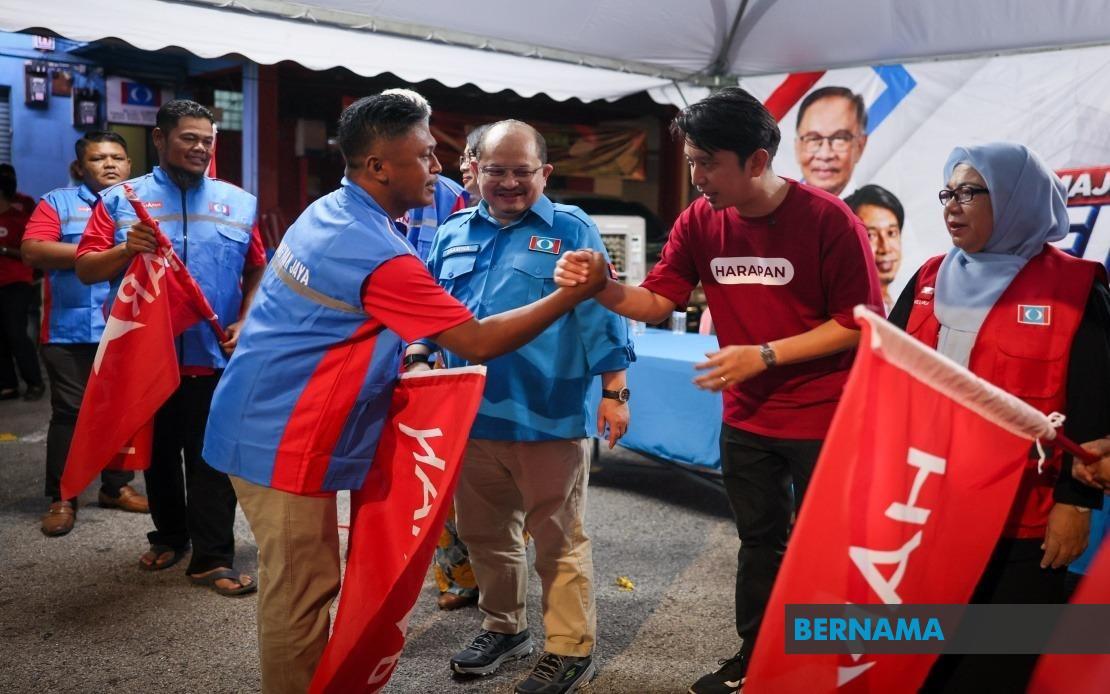
The Melaka branch of Parti Keadilan Rakyat has signalled its intention to reveal its slate of candidates for the forthcoming state election sooner than customary, according to Adam Adli Abdul Halim, who serves as acting chairman of the Melaka PKR Leadership Council. This accelerated timeline reflects a strategic shift to furnish newly selected representatives with sufficient runway to establish themselves among constituents before ballots are cast. Speaking after inaugurating the election machinery for the Hang Tuah Jaya branch in Taman Bukit Piatu, Adam Adli elaborated that the party has wrestled with timing complications in previous electoral cycles, prompting this year's deliberate decision to frontload the process.
The selection process itself operates through a multi-tiered framework, commencing with assessments conducted at the branch level before progressing to state-level scrutiny. Once these hurdles are cleared, prospective candidates undergo final vetting at the central party apparatus, where the party president delivers the ultimate determination. This cascading approach is designed to ensure rigorous evaluation whilst maintaining party unity and discipline throughout the nomination phase. By initiating this process early, PKR aims to compress the timeline without sacrificing the thoroughness expected of such consequential decisions.
Adam Adli emphasised that the party's pivot towards earlier announcements stems partly from its commitment to fielding numerous fresh political entrants rather than relying solely on incumbent representatives. This generational refresh carries implications for how PKR positions itself in Melaka's competitive political landscape, signalling a departure from established networks towards mobilising emerging talent. The strategic imperative to introduce new candidates necessitates longer lead times for public familiarity-building and grassroots integration, explaining the party's temporal recalibration.
Enhancing representation across demographic lines constitutes another rationale underpinning the accelerated schedule. PKR has explicitly prioritised achieving equilibrium between female candidates and younger aspirants, a positioning that aligns with broader patterns within Malaysian political parties seeking to modernise their public profiles and appeal to younger voters. Constructing balanced candidacies that reflect these demographic considerations requires advance planning and coordination, reinforcing the necessity for an earlier announcement calendar. This represents a conscious effort to translate party principles regarding inclusivity into tangible electoral outcomes.
The party simultaneously plans to reinvigorate its election machinery through a series of launches spanning multiple constituencies including Tangga Batu, Alor Gajah, Masjid Tanah, and Jasin. These activation events serve dual purposes: establishing visible party presence in target constituencies whilst simultaneously testing and strengthening organisational capacity ahead of formal campaigning. Adam Adli, simultaneously serving as Deputy Minister of Higher Education, underscored that constructing a robust election apparatus constitutes the party's immediate priority, superseding even candidate finalisation in the current phase.
This sequencing reveals how opposition parties approach electoral contests in Malaysia's contemporary political environment. Rather than announcing candidates and subsequently scrambling to assemble campaign infrastructure, PKR is inverting this sequence by establishing foundational machinery first. The rationale emphasises that solid organisational capacity can support any eventual candidate selection, insulating the party against leadership vulnerabilities and enabling rapid deployment once names are formally announced. This operational philosophy prioritises institutional strength over individual candidate prominence.
Regarding prospective cooperation with Barisan Nasional, discussion remains embryonic. Adam Adli disclosed that informal exploratory conversations between Pakatan Harapan and the BN have transpired, yet formal negotiations establishing cooperation frameworks have not commenced. The absence of substantive talks signals either cautious positioning or genuine uncertainty regarding potential alignment, a stance consistent with Malaysian political parties' tendency to maintain optionality until negotiations materialise productively. Communication between the coalitions has proven valuable for fostering civility and moderating electoral tone, regardless of whether concrete cooperation materialises.
Pakatan Harapan's election director Datuk Seri Amirudin Shari has initiated contact with Melaka Chief Minister Datuk Seri Ab Rauf Yusof to explore meeting possibilities, indicating that PH regards dialogue as worthwhile despite unresolved questions about cooperation modalities. Adam Adli characterised these discussions as extending beyond mere tactical discussions, encompassing broader aspirations towards elevating electoral standards and diminishing acrimonious political conduct. This framing suggests that opposition and ruling coalition representatives envision potential conversations serving democratic functions beyond immediate partisan advantage.
However, PKR has simultaneously hedged against cooperation prospects failing to materialise. The party maintains independent readiness for solo contestation, ensuring that optimistic engagement with BN does not translate into unpreparedness should negotiations collapse. This dual-track approach reflects experienced political management, avoiding circumstances where one coalition becomes dependent upon another's goodwill for electoral viability. For Malaysian voters tracking coalition dynamics, this posture signals that Melaka's election outcome remains genuinely contested rather than predetermined by backroom arrangements.
The forthcoming Melaka state election thus emerges as a significant test for PKR's organisational capacities and its revised approach to candidate development. By frontloading both machinery construction and candidate preparation, the party is attempting to navigate the perpetual tension between rushing electoral cycles and permitting adequate preparation. For Southeast Asian observers of Malaysian politics, this reflects how opposition parties must innovate operationally to compete effectively against incumbents commanding state resources. The results of PKR's strategic recalibration will illuminate whether earlier candidate announcements genuinely strengthen electoral prospects or merely expose organisational fissures earlier than traditional timelines would disclose.

