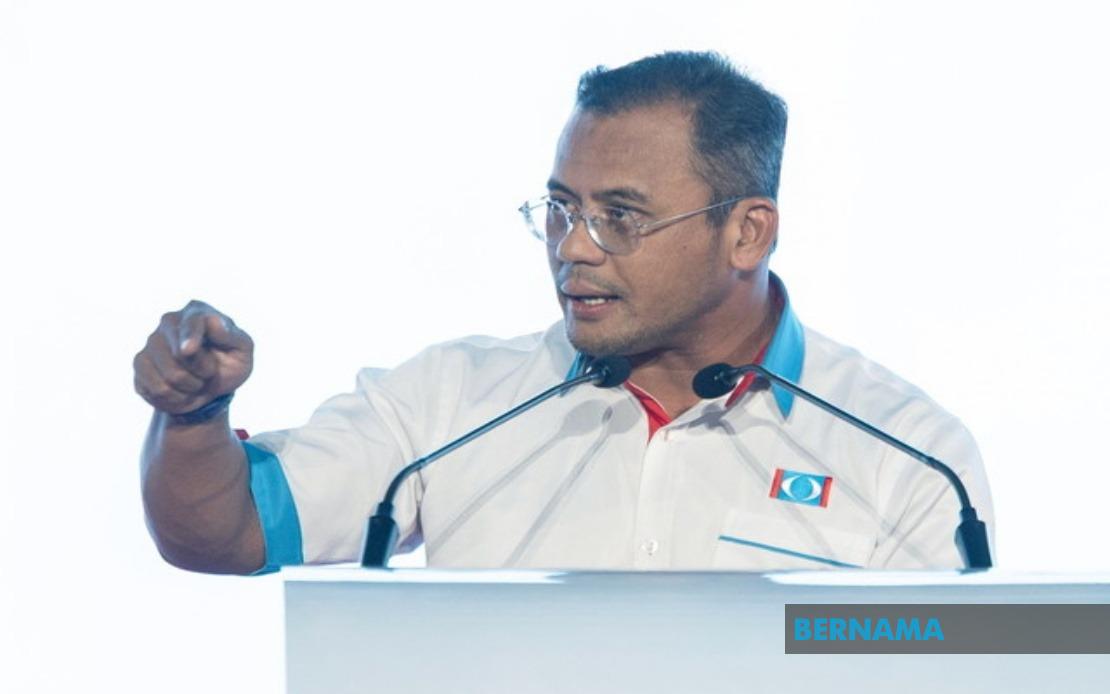
PKR's senior leadership has reinforced the party's foundational commitment to inclusive governance, asserting that the multiethnic coalition must simultaneously honour the constitutional framework that underpins Malaysia's social contract while extending equitable representation to all communities. Speaking at the PKR National Congress in Melaka on August 16, party officials outlined a strategic vision that seeks to navigate the delicate balance between respecting constitutional provisions and building bridges across demographic divides—a positioning that reflects PKR's broader role as a moderating force in Malaysian politics.
Datak Seri Amirudin Shari, PKR vice president and Selangor Menteri Besar, articulated this dual commitment during his closing address at the congress held at Melaka International Trade Centre. He emphasized that the party's political approach must extend fairness and dignity to all segments of Malaysian society—Malays, Chinese, Indians, Christians, Buddhists and Hindus alike—whilst acknowledging that certain constitutional provisions regarding Islam and the position of Malays represent foundational elements that warrant respect from all political actors. This formulation reflects an attempt to triangulate between competing demands within PKR's heterogeneous support base and the broader Malaysian electorate.
The framing carries particular significance given Malaysia's complex political landscape, where identity-based messaging has traditionally dominated electoral campaigns. PKR's emphasis on this balance signals recognition that the party cannot effectively challenge more ethnically-focused competitors by mirroring their rhetoric. Instead, the party appears intent on positioning itself as the alternative that can deliver responsive governance without weaponizing communal anxieties. Amirudin traced this approach back to the reform movement initiated by PKR president Datuk Seri Anwar Ibrahim in 1998, suggesting continuity between the party's founding principles and contemporary strategy.
According to Amirudin, the PKR-led reform agenda has successfully elevated several critical concerns into mainstream political discourse. These include the enrichment of democratic institutions and the protection of fundamental rights, the more equitable distribution of economic resources across communities, and the establishment of governance systems characterized by integrity and accountability. By anchoring party identity to these substantive policy platforms rather than identity politics, PKR implicitly argues that its electoral appeal derives from deliverables rather than divisive messaging.
Datak Seri R. Ramanan, another PKR vice president and Minister of Human Resources, reinforced this message with particular emphasis on rejecting racial instrumentalization in politics. Ramanan warned that certain political competitors deliberately weaponize racial tensions to secure electoral advantage, deliberately fracturing national unity to serve narrow factional interests. His intervention suggests that PKR views the deliberate politicization of identity as a fundamental threat to both national cohesion and effective governance. By positioning the party as a defender of diversity rather than a promoter of any single community's interests, Ramanan articulated a distinctly different political brand.
Ramanan extended his remarks to encompass internal party management, calling upon PKR's leadership echelon and membership to prioritize organizational unity and suppress personal ambitions. His warning that internal conflict undermines the party machinery at grassroots levels speaks to practical organizational challenges that multiethnic coalitions frequently encounter. When senior figures engage in visible competition, lower-level members become demoralized and confused, the party apparatus weakens, and political opponents benefit from the disarray. This counsel suggests that PKR views internal discipline as essential to its ability to champion inclusive politics convincingly.
A third vice president, Datuk Chang Lih Kang, approached the question from an empirical angle, arguing that PKR's durability and effectiveness would ultimately be demonstrated not through propaganda but through concrete electoral performance across diverse communities. Chang cited the Chennah state election result in Negeri Sembilan as illustrative of this principle. That contest saw DAP secretary-general Anthony Loke, a non-Malay politician, secure notably increased support from Malay voters despite facing what Chang characterizes as identity politics attacks. This outcome, according to Chang's analysis, demonstrates that voters across communities can support capable representatives irrespective of their ethnic background when those representatives deliver substantive value.
The invocation of the Chennah result carries broader implications for Malaysian coalition politics. It suggests that the traditional dominance of ethnically-segmented voting patterns may be eroding under certain conditions—specifically when candidates demonstrate administrative competence and commitment to their constituencies. For PKR and its coalition partners, this observation offers evidence that an alternative political model based on performance and inclusivity can compete effectively against identity-based messaging. However, the significance of citing a single electoral success should be treated carefully; broader patterns require additional supporting evidence.
Collectively, the statements from PKR's vice presidents articulate a coherent political strategy amid challenging circumstances. Malaysia's electoral environment has increasingly featured the rise of identity-focused parties and messaging, particularly on the Malay-Muslim side of the political spectrum. PKR's insistence on inclusive governance while respecting constitutional provisions represents an attempt to occupy distinctive political terrain—neither dismissing communal concerns nor allowing those concerns to dominate the political agenda. This positioning reflects sophisticated understanding that Malaysia's heterogeneous society requires political parties capable of bridging divides rather than exploiting them.
The party's emphasis on substantive governance outcomes—economic fairness, democratic strengthening, administrative integrity—rather than identity politics suggests that PKR leadership believes electoral competition will ultimately be decided on competence grounds. Whether this confidence proves justified depends on broader voter behaviour patterns and the ability of coalition partners to implement coherent policy programmes. PKR's insistence on this approach also reflects the practical reality that a multiethnic party cannot sustain itself through identity politics favouring any single community, as doing so would alienate substantial portions of its own base.
For Malaysian observers, these statements merit attention as indicators of how the ruling coalition intends to contest future electoral cycles. The emphasis on rejecting racial divisiveness while respecting constitutional structures suggests that PKR views the maintenance of national unity and democratic institutions as prerequisites for effective governance. Whether this rhetorical commitment translates into concrete policy choices and internal party discipline will substantially determine both PKR's trajectory and the broader character of Malaysian politics in coming years.

