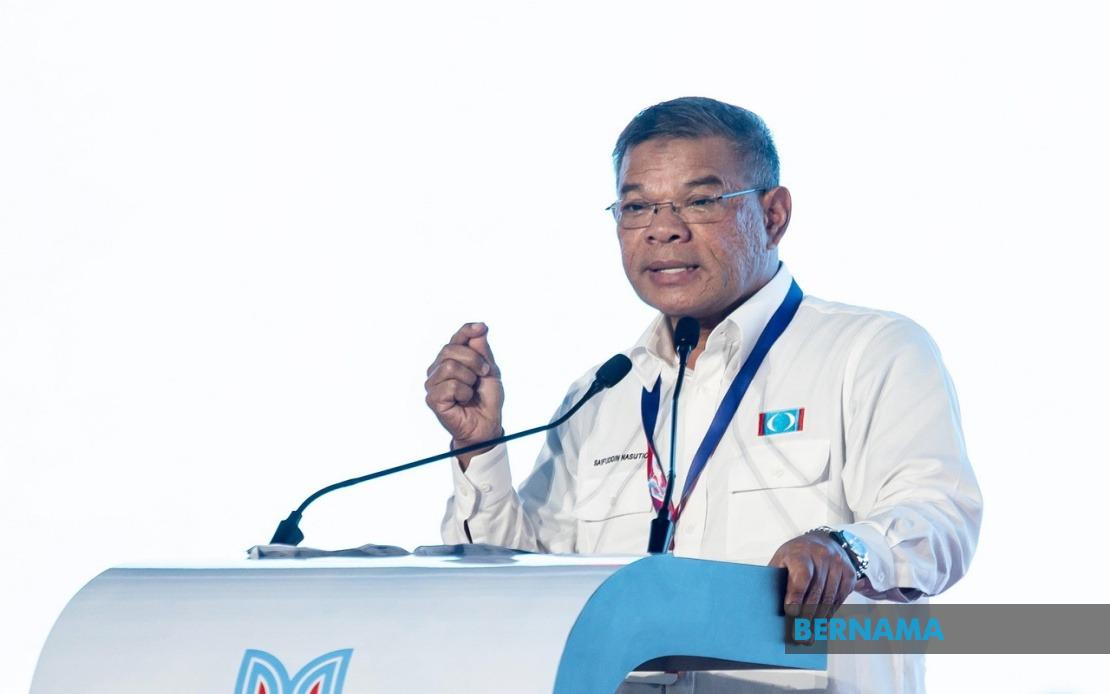
The Malaysian People's Justice Party (PKR) has taken a firm stance against identity and racial politics, arguing that such divisive approaches offer no genuine benefit to the nation's long-term interests. Speaking at the party's 2026 National Congress in Melaka this week, PKR vice-president Datuk Seri Saifuddin Nasution Ismail, who is currently discharging deputy presidential duties alongside his role as Home Minister, characterised identity politics as a fundamentally sterile exercise in which no party emerges victorious.
The thrust of PKR's argument rests on a straightforward premise: that Malaysian voters should assess their government primarily through the lens of measurable economic outcomes and tangible improvements to living standards. Rather than engaging in struggles over cultural or religious primacy, Saifuddin Nasution advocated for what the party frames as "performance-based politics"—a framework in which governance quality and prosperity creation take precedence. This positioning reflects PKR's attempt to shift the political conversation away from the communal identity narratives that have dominated much of Malaysia's post-independence discourse and continue to feature prominently in contemporary electoral campaigns.
Central to PKR's vision is the concept of "growing the pie of prosperity," a metaphor designed to reframe the distributional politics that has historically characterised Malaysian governance. Under this formulation, rather than redistributing existing wealth or contending over demographic entitlements, the focus shifts to expanding the overall economic base so that all communities benefit simultaneously. This approach implicitly challenges zero-sum frameworks in which advancement for one group is perceived as diminishment for another—a dynamic that has repeatedly shaped Malaysian electoral competition along ethnic and religious lines. Saifuddin Nasution explicitly articulated this point, suggesting that there is no inherent conflict between ensuring children are well-fed and respecting the rights of all citizens.
The PKR leadership's stance on Malaysia's multi-ethnic and multi-religious character reveals a careful balancing act. Rather than denying or minimising the significance of communal identities, Saifuddin Nasution acknowledged that Malay, Islamic, Chinese, Indian, Sabahan and Sarawakian identities form legitimate dimensions of Malaysian social reality. What he rejected, however, was the weaponisation of these identities—their deployment as instruments to generate fear and suspicion among communities. This distinction is analytically important, as it allows PKR to affirm cultural and religious identity while simultaneously critiquing the political mobilisation strategies that translate identity consciousness into electoral division.
For Malaysian readers accustomed to political rhetoric centred on communal interests and protections, this reframing represents a notable departure. The party's emphasis on need-based rather than identity-based assistance policies suggests a redistributive approach divorced from demographic categorisation. Under such a framework, government support would flow to individuals and households based on objective criteria of need—poverty levels, health status, educational disadvantage—rather than ethnic or religious background. While such proposals are not novel within Malaysian policy discourse, their prominence in PKR's current political messaging reflects an attempt to capture centrist and younger voters potentially fatigued by identity-oriented politics.
Saifuddin Nasution further argued that the genuine threats confronting Malaysian communities emerge not from demographic diversity itself but from poverty and social dysfunction. Drug abuse, in particular, was highlighted as a corrosive force damaging the younger generation across all backgrounds. This framing positions economic inequality and social pathology, rather than inter-ethnic competition, as the primary challenges requiring governmental attention. Such reasoning appeals to a narrative of shared vulnerability, where threats to national cohesion originate from controllable policy failures rather than structural features of Malaysian plural society.
The good governance agenda and anti-corruption efforts constitute the third pillar of PKR's stated priorities. By emphasising clean administration and the prevention of financial leakage from state coffers, the party implicitly ties economic performance to institutional integrity. This messaging carries particular resonance given ongoing public concern over corruption in Malaysian public administration and the perception that kleptocratic practices undermine rather than protect communal interests. The framing suggests that effective service delivery and resource allocation depend fundamentally on eliminating corrupt practices that benefit elites at the expense of ordinary citizens regardless of their ethnic background.
PKR's emphasis on persuading younger voters carries strategic implications for Malaysian electoral politics. Generational cohorts with weaker attachment to historical ethnic narratives and greater exposure to socio-economic concerns through digital media may indeed be more receptive to performance-centred political messaging. The party's explicit commitment to disseminating MADANI Government successes and engaging youth electorates suggests recognition that electoral competition increasingly hinges on mobilising voters who prioritise bread-and-butter issues over identity affirmation. This tactical calculation reflects broader shifts in Malaysian society, particularly among urban and educated populations.
However, the tension between PKR's aspirational political framework and Malaysia's entrenched identity-based competition structures merits consideration. Despite decades of modernisation and urbanisation, communal identities remain potent mobilising forces across Malaysian politics, and opposition parties have proven adept at leveraging identity concerns to frame governing parties as insufficiently protective of majority or minority interests. Whether PKR's performance-focused messaging can effectively counter such narratives in a competitive electoral environment remains an open question. The party's capacity to translate its rhetorical positioning into tangible economic outcomes and subsequent electoral rewards will significantly shape the credibility of its political approach.
The PKR leadership's call to move beyond identity politics also carries implications for Malaysia's regional standing and diplomatic positioning. As Southeast Asian democracies grapple with managing plural societies and preventing communal conflict, Malaysia's political conversations carry subtle influences across the region. Should PKR's framework gain traction and demonstrate electoral viability, it could influence how other regional parties conceptualise the relationship between identity politics and economic governance. Conversely, if identity-based mobilisation continues to dominate electoral outcomes, PKR's positioning may require recalibration.

