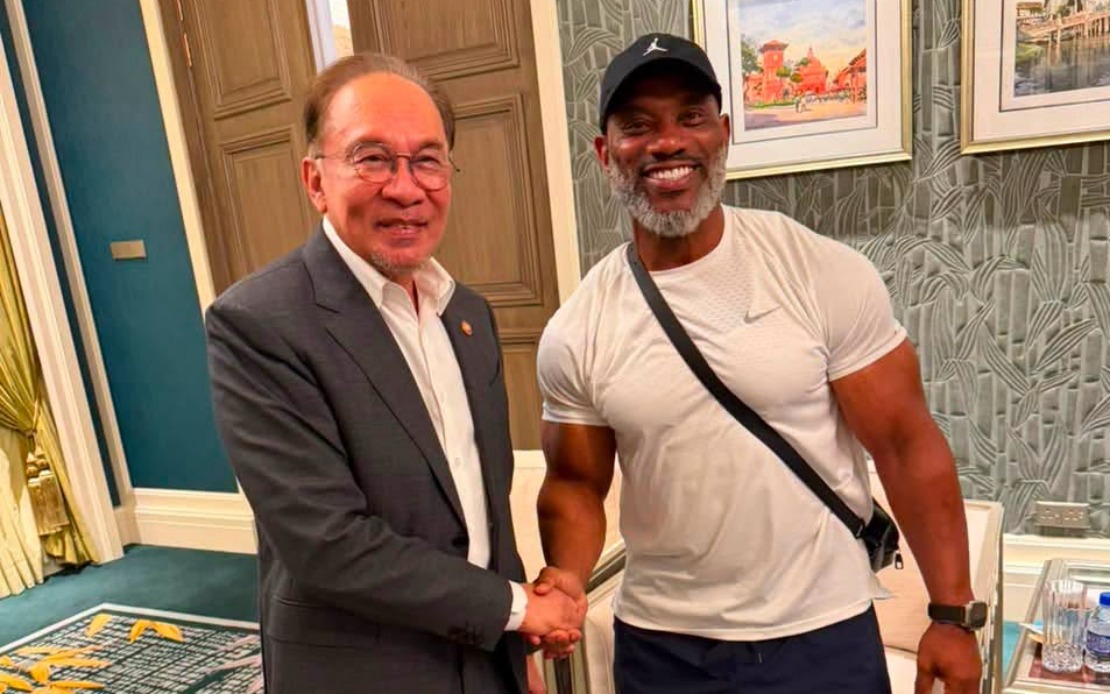
Prime Minister Datuk Seri Anwar Ibrahim encountered one of professional bodybuilding's most decorated athletes when he met Dexter Jackson, the sport's most decorated Arnold Classic champion, during a recent engagement in Kuala Lumpur. The brief but memorable encounter drew public attention after Anwar shared details and photographs of the meeting on his official Facebook page, offering followers a glimpse into an unexpected collision between Malaysia's political leadership and the world of elite fitness competition.
Dexter Jackson brings an extraordinary competitive pedigree to any meeting. At 56 years old, the American bodybuilder remains a towering figure in his sport, having captured the prestigious Mr Olympia title in 2008 and later claimed the Masters Mr Olympia championship in 2012. These achievements alone would cement most athletes' legacies, yet Jackson's most impressive statistic may be his unprecedented dominance in the Arnold Classic competition, where he has secured nine championship victories—a record that stands unmatched in the event's history. The Arnold Classic, founded in 1989 and named after Hollywood actor and former California governor Arnold Schwarzenegger, ranks among bodybuilding's most prestigious stages alongside the Mr Olympia contest.
Anwar's decision to highlight this meeting reflects his broader engagement with diverse figures and communities across Malaysia and internationally. The Prime Minister's social media post conveyed genuine enthusiasm, suggesting that the encounter had left a personal impression beyond the formal or ceremonial. His accompanying comment, suggesting that meeting Jackson had inspired him to return to physical training, struck a tone both genuinely appreciative and self-deprecating—characteristics that have become somewhat familiar in Anwar's public communications.
The interaction carries subtle significance within Malaysia's cultural context. While bodybuilding remains a niche sport in the region compared to football or badminton, the discipline has developed growing popularity among Malaysian fitness enthusiasts and younger demographics increasingly interested in health and wellness trends. Jackson's career represents decades of dedication, discipline, and competitive excellence—values that transcend sport itself and resonate with broader narratives about achievement and perseverance that political leadership often seeks to invoke.
The photograph documentation of the meeting, shared across social media platforms, exemplifies modern political communication. Where previous generations of leaders might have marked such encounters in formal government records or restricted media releases, contemporary political figures use direct social channels to create immediate, accessible records of their activities. This approach democratises access to otherwise exclusive encounters and allows constituents to view their leaders engaging with noteworthy international figures on equal, personable terms.
Dexter Jackson's presence in Malaysia likely related to professional commitments such as fitness seminars, competition judging, or promotional appearances that have become increasingly common as bodybuilding gains international commercial visibility. The sport has evolved substantially beyond its niche origins, now incorporating substantial sponsorship arrangements, multimedia platforms, and celebrity culture elements that attract high-profile international competitors to various countries for extended engagement periods.
Anwar's light-hearted suggestion about resuming gymnasium training reflects a relatable aspect of personal fitness that resonates across demographic boundaries. The comment avoids pomposity while acknowledging Jackson's physical achievements in an appropriately humble manner. This conversational tone contributes to the broader perception management that characterises political engagement in social media environments, where apparent authenticity and relatability often carry as much weight as formal pronouncements.
The encounter also underscores Malaysia's position within international networks of sports, entertainment, and fitness industries. By hosting accomplished international athletes and facilitating meetings between national leadership and prominent international figures, Malaysia reinforces its role as a destination for global events and engagements. Such interactions contribute incrementally to the country's international profile and soft power positioning, particularly within health, wellness, and lifestyle sectors experiencing explosive growth across Southeast Asia.
Fitness and health consciousness have accelerated across Malaysia in recent years, driven partly by rising awareness of lifestyle-related health conditions and growing middle-class engagement with premium fitness services. The visibility of accomplished international athletes like Jackson serves to elevate the perceived legitimacy and aspirational status of fitness pursuits within broader Malaysian society. Government leadership engagement with such figures implicitly endorses these activity categories as worthy of serious attention and investment.
The specific mention of Jackson's achievements—Mr Olympia championships and the unmatched Arnold Classic record—provides context that appeals to different audience segments. Sports enthusiasts immediately recognise the significance of these titles, while general readers gain sufficient information to understand that Jackson represents elite accomplishment within his domain. This calibrated information density reflects competent social media strategy that neither oversimplifies nor overwhelms typical audience members.
Looking forward, such encounters contribute to Malaysia's broader efforts to position itself as a hub for international sporting and fitness industries. As regional wealth continues expanding and health consciousness grows throughout Southeast Asia, the visibility of accomplished international athletes conducting business and building relationships within Malaysian contexts helps attract future major events, sponsorships, and investments in fitness infrastructure and related commercial activities. For Anwar personally, the meeting represents the type of informal, human engagement that modern political leadership increasingly values as means of connecting with constituents beyond traditional policy discussions.

