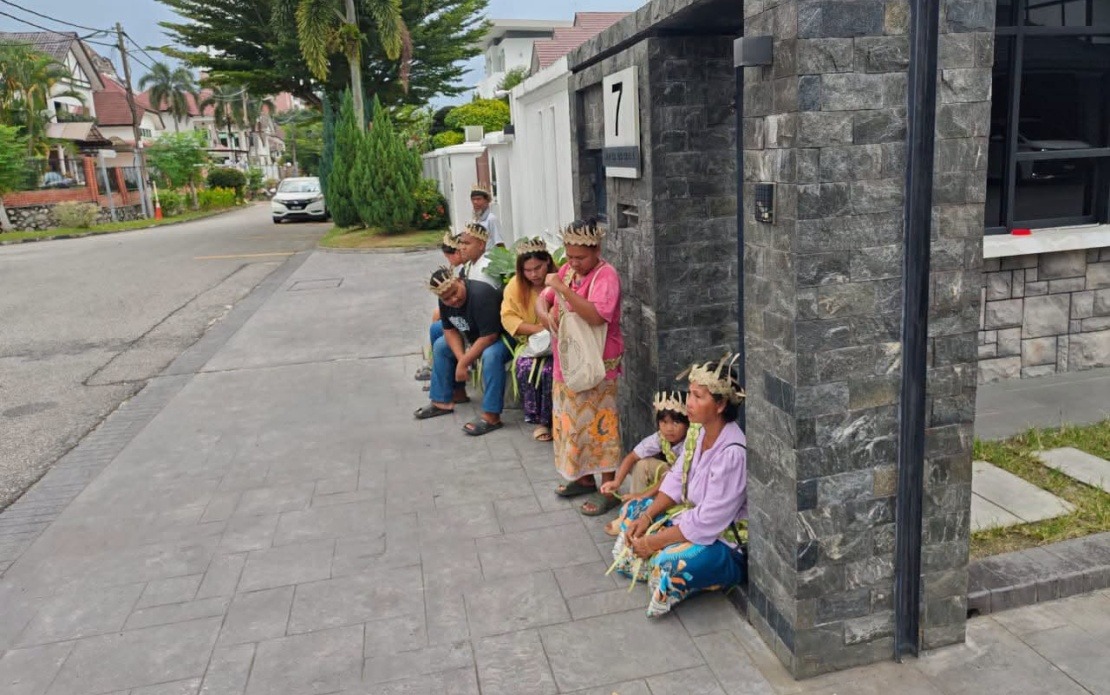
Prime Minister Datuk Seri Anwar Ibrahim has undertaken to escalate the land rights issue confronting the Orang Asli inhabitants of Kampung Sungai Cot in Maran, Pahang, by raising the matter directly with the state government. The commitment came following a phone conversation the Prime Minister held with community representatives who had travelled to meet him at his residence on July 17.
In his statement posted on social media, Anwar acknowledged hearing firsthand accounts of the hardships faced by the Orang Asli community regarding their ongoing land conflict. Beyond the territorial dispute itself, the representatives also brought to his attention concerns about the temporary detention of three village residents by police—a situation that has since been resolved, with those detained now released. The Prime Minister expressed gratitude for this development, signalling that law enforcement had responded appropriately to the concerns raised.
The encounter underscores the persistent vulnerabilities of Malaysia's indigenous populations when it comes to land security and property rights. The Orang Asli, as the peninsula's original inhabitants, have long faced systemic challenges in asserting and defending their territorial claims against competing interests, whether from development projects, state encroachment, or commercial ventures. Kampung Sungai Cot represents one of many such disputes that have accumulated across the country, reflecting deeper structural issues in how indigenous land claims are adjudicated and protected within Malaysia's legal framework.
Anwar's intervention at the highest political level carries symbolic and practical weight. By committing to personally engage the Pahang state government, the Prime Minister has elevated the profile of this particular dispute beyond the typical administrative channels where such matters often languish. This direct engagement suggests a willingness to apply executive pressure on state authorities to seek resolution, though the ultimate power to resolve land disputes frequently rests with state governments operating under their own constitutional remit.
The Prime Minister also took the opportunity to appeal for measured discourse around the issue, urging all stakeholders not to exploit the situation for political gain or sectional advantage. His call for a solution that is fair, prudent, and legally sound reflects an understanding that land disputes involving indigenous communities can easily become flashpoints for broader social tensions if handled carelessly or allowed to be weaponized by competing political interests.
The timing of this public commitment is significant within Malaysia's current political landscape. Indigenous rights have gradually moved higher on the national agenda, driven partly by increased civil society advocacy, partly by growing international scrutiny of how countries treat their first peoples, and partly by indigenous communities themselves becoming more vocal and organised in demanding recognition and redress. For a Prime Minister to be seen as responsive to Orang Asli grievances carries political dividends even as it represents a genuine obligation to address historical injustices.
The release of the three detained residents appears to have been expedited following the community's direct appeal to the Prime Minister, suggesting that at least in the short term, the escalation of the issue to national leadership can produce tangible results. However, the substantive question of land rights remains unresolved, and this will require sustained engagement and negotiation between multiple levels of government, potentially involving the state government, federal agencies responsible for indigenous affairs, and local administrative bodies.
For Malaysia's Southeast Asian context, the Orang Asli land question connects to broader regional trends regarding indigenous peoples' rights and environmental governance. Several neighbouring countries have faced international pressure over similar issues, and Malaysia's approach to resolving such disputes carries implications not just domestically but for how the region is perceived internationally in terms of respect for indigenous populations and the rule of law.
The path forward will depend significantly on whether Anwar's commitment translates into concrete negotiations with Pahang authorities and whether those negotiations can bridge the competing claims and interests involved. Land disputes of this nature often prove intractable because they pit customary and historical claims against formal state title systems, creating legal and political complexity that requires not just political will but also innovative policy solutions and genuine commitment from state governments to accommodate indigenous interests.
Moving forward, observers will watch whether this case becomes a model for how the federal government can facilitate resolution of similar Orang Asli land disputes across the country, or whether it remains a one-off intervention that ultimately depends on the specific political dynamics and receptiveness of the Pahang state government. The statement itself represents an important acknowledgment of the grievance, but the real test will come when negotiations begin in earnest between federal and state authorities.

