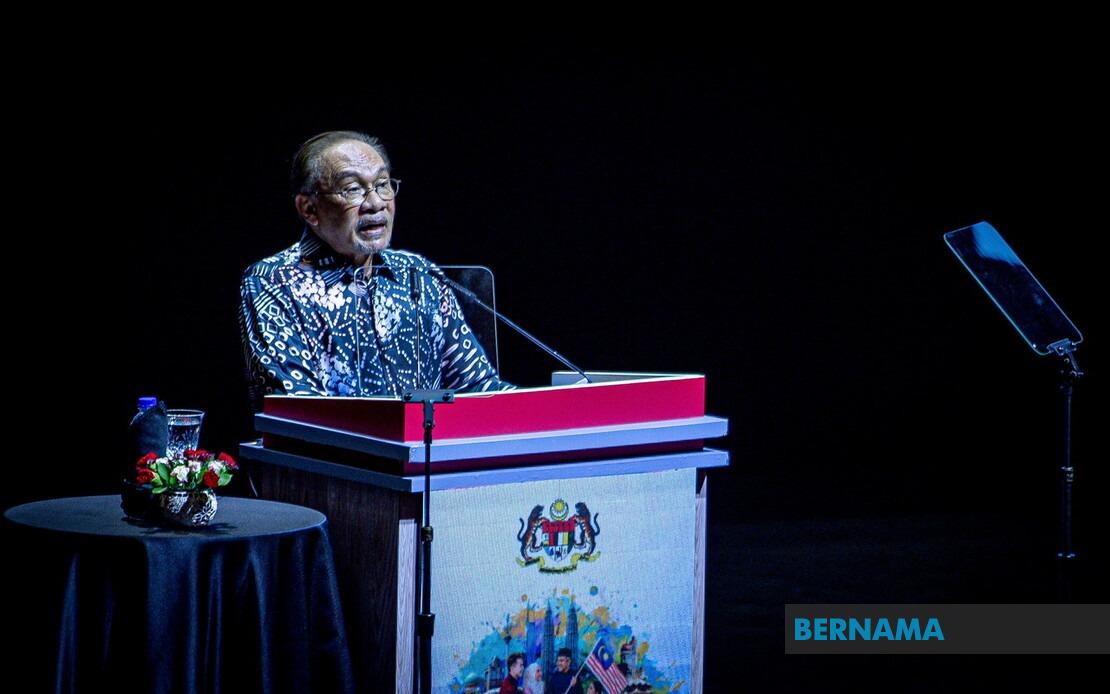
Prime Minister Datuk Seri Anwar Ibrahim unveiled a comprehensive six-point package of immediate interventions during the 2026 National Day Prime Minister's Address at Putrajaya International Convention Centre, aimed at providing tangible relief to households grappling with escalating cost of living pressures. The measures will come into effect on September 1, signalling the government's commitment to swift implementation of its cost-of-living support agenda ahead of Malaysia's National Day celebrations.
The package encompasses multiple economic domains critical to household affordability: fuel subsidies, school maintenance programmes, artificial intelligence initiatives, healthcare digitalisation, e-invoicing frameworks, and microfinancing schemes. By targeting diverse segments of society—from schoolchildren to housewives and young people—the government seeks to address the multifaceted nature of living cost challenges facing ordinary Malaysians. The breadth of these measures reflects recognition that no single policy can adequately address the complex intersecting pressures affecting different demographic groups simultaneously.
Anwar's acknowledgement that previous government measures, while substantial, have not fully resolved people's concerns represents a notable shift in political communication. Rather than claiming victory or downplaying lingering struggles, the Prime Minister explicitly recognised that citizens continue to face genuine hardship in their daily financial management. This candid assessment contrasts with typical incumbent rhetoric and signals to voters that the administration understands their predicament remains serious. Such honesty may serve to rebuild public confidence in government responsiveness, particularly among constituencies feeling abandoned by earlier policy cycles.
Fuel subsidies constitute a cornerstone of Malaysia's cost-of-living support structure, affecting transport costs, goods delivery, and broader inflation dynamics. Continued commitment to subsidisation—despite its substantial fiscal burden—underscores the political salience of petrol prices in Malaysian public consciousness. The September 1 implementation date allows the government to lock in popular measures before any potential fiscal pressures might necessitate reversal, a strategic timing that combines economic principle with political advantage during a period of national sentiment.
The healthcare digitalisation component addresses a dimension of living costs often overlooked in headline inflation figures. By modernising healthcare delivery systems through digital infrastructure, the government can potentially reduce time spent on medical consultations and transportation costs, while improving treatment efficiency. For middle and lower-income households, reducing healthcare-related financial burdens—whether through faster diagnosis or reduced clinic visits—provides meaningful savings beyond direct subsidies. This approach signals growing government sophistication in identifying indirect cost-of-living pressures beyond traditional fuel and food categories.
Educational support through school maintenance programmes directly reduces household expenses for families with children. Strengthened school infrastructure funded by government rather than parent contributions represents a material saving for working families, particularly in rural areas where private educational alternatives remain limited. Such investment also addresses equity concerns, ensuring that educational quality does not become stratified along socioeconomic lines—a development that would compound intergenerational economic disadvantages.
The inclusion of artificial intelligence and e-invoicing initiatives may appear peripheral to immediate cost-of-living relief, but represents forward-looking structural modernisation. E-invoicing systems can reduce business compliance costs, potentially leading to lower consumer prices through reduced operational overhead for merchants. Similarly, AI applications in government and commerce can streamline processes, reduce bureaucratic delays, and lower transaction costs. These technical measures reflect understanding that cost-of-living solutions require both immediate relief and medium-term productivity improvements.
Microfinancing provisions address access to capital for small entrepreneurs and informal sector workers who cannot access traditional banking. By improving availability of small loans at reasonable rates, the government helps people establish or expand income-generating activities—a structural approach to improving household finances beyond temporary subsidies. This recognises that sustainable cost-of-living improvement requires economic opportunity expansion alongside direct assistance programmes.
The presence of Deputy Prime Minister Datuk Seri Dr Ahmad Zahid Hamidi and Cabinet ministers at the announcement emphasised whole-of-government coordination in implementing these measures. Such visible ministerial alignment signals that implementation capacity exists across relevant departments and agencies. For Malaysian citizens, ministerial presence suggests measures will receive adequate budget allocation and political priority rather than becoming stalled in bureaucratic processes.
For Southeast Asian observers, Malaysia's approach demonstrates how middle-income nations balance welfare support with fiscal sustainability. Unlike wealthier developed economies with larger tax bases, Malaysian policymakers must carefully calibrate subsidy programmes against long-term debt implications. This six-point package represents a middle path between austerity and open-ended spending—targeted interventions addressing specific cost-of-living dimensions rather than universal payments that might prove fiscally unsustainable.
The September 1 implementation timeline provides sufficient advance notice for government agencies to prepare operational adjustments while maintaining momentum and demonstrating decisiveness. For households, advance notice allows planning adjustments around the school year and seasonal expenditure patterns. The government's willingness to announce the package during National Day celebrations—traditionally a period of patriotic sentiment—strategically intertwines economic support with national pride narratives.

