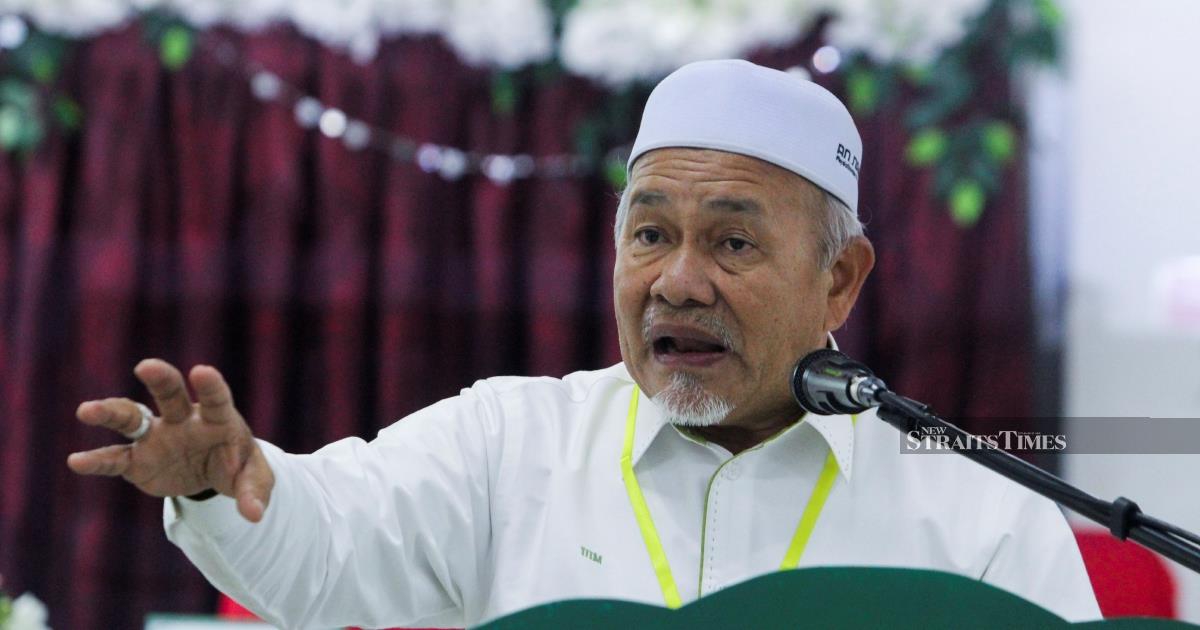
The campaign operations of Perikatan Nasional and Barisan Nasional are functioning effectively in Negri Sembilan, with coordination between the two major political coalitions proceeding without significant friction, according to Datuk Seri Tuan Ibrahim Tuan Man, the deputy president of PAS. Speaking in Seremban, the senior party figure highlighted that groundswell support for the joint campaign effort has remained consistently positive across different electoral divisions, indicating a degree of unity that observers have closely monitored given the complex history of cooperation between PN and BN.
The smooth operation of campaign machinery across both coalitions underscores an important development in Malaysian politics at the state level. Negri Sembilan, as one of Malaysia's smaller and more economically diverse states, has historically served as a bellwether for broader political trends. The state's electoral dynamics are shaped by its mixed demographics, ranging from urban centres like Seremban to more rural constituencies, which has traditionally demanded careful coordination between political partners seeking to maximize their combined reach.
Tuan Ibrahim's assessment suggests that despite occasional tensions at the national level between PN and BN—two coalitions that have competed fiercely in previous electoral cycles—their ground-level coordination in Negri Sembilan has not been compromised. This separation between leadership-level political manoeuvring and grassroots execution is common in Malaysian politics, where local party members often maintain pragmatic working relationships even when coalition partners disagree on strategic direction at higher levels.
The maintenance of positive grassroots coordination holds particular significance for electoral success in state campaigns. Local party officials, constituency workers, and community liaisons play crucial roles in voter outreach, candidate support, and get-out-the-vote operations. When these networks function cohesively between allied coalitions, they can amplify campaigning efficiency and reduce the duplication of effort that sometimes plagues multiparty campaigns. In Negri Sembilan's competitive political environment, such operational harmony can translate into tangible electoral advantages.
The PAS deputy president's comments come at a time when the political landscape in Malaysia continues to evolve following the 2022 general election and subsequent state-level contests. The relationship between PN and BN has been characterized by strategic partnerships in certain regions and competitive contests in others, reflecting the complex arithmetic of Malaysian coalition politics. Negri Sembilan appears to represent a jurisdiction where constructive collaboration has taken root, though the sustainability of such arrangements often depends on power-sharing agreements and the distribution of electoral benefits.
For Malaysian voters and political observers, the functioning of PN-BN campaign machinery has implications beyond immediate electoral outcomes. It signals whether the two coalitions view each other as sustainable partners for future governance arrangements or merely tactical allies of convenience. Smooth operational coordination typically suggests stronger underlying trust between coalition partners, though it does not necessarily indicate agreement on policy matters or post-election governance structures.
The grassroots focus emphasized by Tuan Ibrahim is particularly relevant given that electoral success in Malaysian state contests often hinges on community engagement and local credibility. Negri Sembilan constituencies require campaign approaches that address local concerns such as economic development, infrastructure, educational facilities, and community services. When PN and BN coordinate at this level effectively, their combined messaging can address a broader spectrum of voter concerns while avoiding counterproductive competitive campaigns that might alienate local communities.
The positive coordination reported also reflects prudent political calculation on the part of both coalitions. In states where they share common interests or face formidable opposition from other political forces, cooperation at the ground level serves mutual interests. Negri Sembilan's political history suggests that fragmented opposition can lead to victories for candidates preferred by neither coalition, creating incentive for collaborative rather than antagonistic campaigning.
From a regional Southeast Asian perspective, Malaysia's coalition politics remains distinctive in its complexity and flexibility. The willingness of different political blocs to collaborate at state level while maintaining distinct identities nationally is facilitated by the federal structure and the separation between national and state electoral dynamics. Other Southeast Asian democracies often struggle with more rigid party alignments, making the relative fluidity of Malaysian political partnerships notable.
Looking forward, observers will monitor whether the smooth PN-BN cooperation reported in Negri Sembilan extends to other states or represents a localized arrangement. The durability of such partnerships often depends on election results, post-election negotiations, and whether both coalitions gain sufficient representation to justify continued collaboration. Recent Malaysian electoral history demonstrates that coalitions can shift rapidly once results are determined and power distribution becomes concrete rather than theoretical.
The assessment from PAS leadership also comes as important context for understanding current political dynamics in Negri Sembilan specifically. The state has experienced various power configurations over recent years, and voter sentiment toward different coalitions has shifted accordingly. That campaign machinery is reported to function smoothly suggests both PN and BN believe they have viable pathways to significant representation in the state, making efficient joint operations worthwhile.

