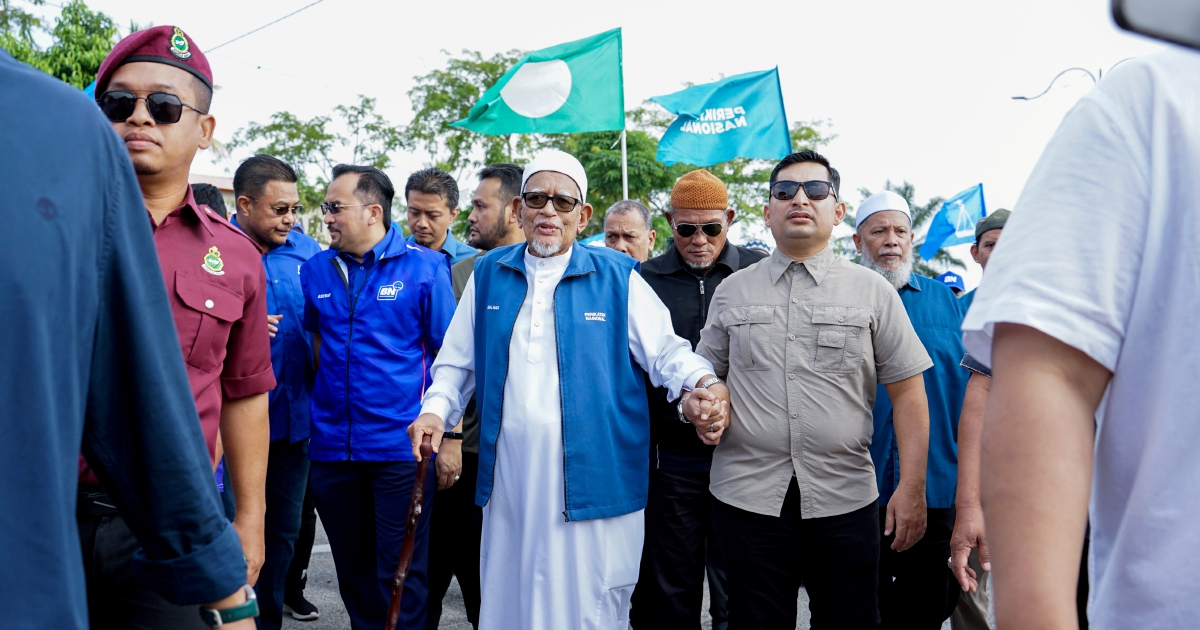
The political landscape of Melaka is entering a critical negotiation phase as Perikatan Nasional and Barisan Nasional work through the mechanics of how they will contest the state election. Speaking in Marang, PAS president Tan Sri Abdul Hadi Awang has publicly confirmed that discussions between the two coalitions are actively underway regarding the distribution of parliamentary and state legislative seats.
These negotiations represent a key moment in Malaysian coalition politics, particularly as both groupings seek to maximise their combined electoral advantage whilst managing the complex internal dynamics of member parties. The discussions come at a time when both coalitions have been attempting to strengthen their respective positions nationwide, and Melaka represents a crucial test of their ability to work together on electoral grounds.
The Melaka state election holds particular significance for national politics given the state's relatively compact size, making it easier to study coalition behaviour and voter preference patterns. With multiple political parties within both PN and BN seeking to field candidates, seat allocation has become a delicate negotiation involving senior party leadership from both coalitions. The outcome will likely set a precedent for how future electoral contests between these groupings are managed across other states.
Barisan Nasional, the traditionally dominant coalition in Malaysian politics, brings substantial institutional experience and established voter networks to any electoral partnership. Perikatan Nasional, the newer coalition that formed following the 2020 general election, has been building its own electoral machinery and party structures. The negotiation process between them reflects the evolving landscape of Malaysian politics, where cooperation and competition between coalitions have become increasingly fluid.
Within Perikatan Nasional, PAS continues to play a central role as one of the coalition's largest members by membership and parliamentary representation. The party's leadership, embodied by figures like Tan Sri Abdul Hadi Awang, has consistently emphasised the importance of coalition unity whilst also safeguarding PAS interests in seat allocation. This balancing act remains critical as negotiations unfold, since individual parties within coalitions must deliver sufficient parliamentary seats to justify their continued participation to their own members and supporters.
Barisan Nasional comprises multiple parties including UMNO, the Malaysian Chinese Association (MCA), and the Malaysian Indian Congress (MIC), each with their own historical claims to certain constituencies and voter demographics. The coalition system requires that these parties negotiate both with each other and with representatives of Perikatan Nasional to reach an agreement that allows all participants to campaign simultaneously without destructive internal competition.
For Malaysian voters and observers, these negotiations are significant because they determine the nature of electoral competition in Melaka. Whether the two coalitions maintain distinct identities or effectively merge campaigns in certain constituencies will influence voter choice and campaign messaging. The transparency—or lack thereof—of these seat-sharing discussions also reflects broader concerns about democratic process and party accountability in Malaysia's political system.
The timing of these talks also carries implications for the broader national political scene. The success or failure of seat negotiations in Melaka may influence how other state elections are conducted and how the two coalitions approach the next general election. Should negotiations proceed smoothly, it could signal that PN and BN have found a workable framework for collaboration. Conversely, any public disagreements could reveal fissures within either coalition that might affect their national standing.
Melaka's electoral history shows a state where political fortunes have shifted considerably over recent decades, with no single coalition guaranteed victory regardless of seat allocation arrangements. This unpredictability makes seat distribution even more consequential, as both coalitions seek to position their parties in constituencies where they have historically performed well or where new opportunities exist. Negotiations must therefore balance historical performance data with forward-looking assessments of changing voter demographics and preferences.
The involvement of senior figures like Tan Sri Abdul Hadi Awang in confirming these negotiations publicly suggests that both coalitions are treating the matter seriously and wish to maintain orderly processes. Public acknowledgement of negotiations also signals confidence that an agreement can be reached, though the actual substance of any deal will likely remain confidential until formal candidate nominations occur.
For Southeast Asian observers monitoring Malaysian politics, these coalition negotiations exemplify the complex power-sharing arrangements that characterise the region's political systems. Malaysia's experience with multi-party coalitions offers lessons for other democracies navigating similar terrain, particularly regarding how internal negotiations are managed whilst maintaining coalition cohesion and electoral appeal.
As discussions continue, the Melaka election itself appears increasingly likely to serve as an important barometer of coalition strength and voter sentiment heading into Malaysia's next major electoral contests, making these behind-the-scenes negotiations far more significant than simple seat division exercises.

