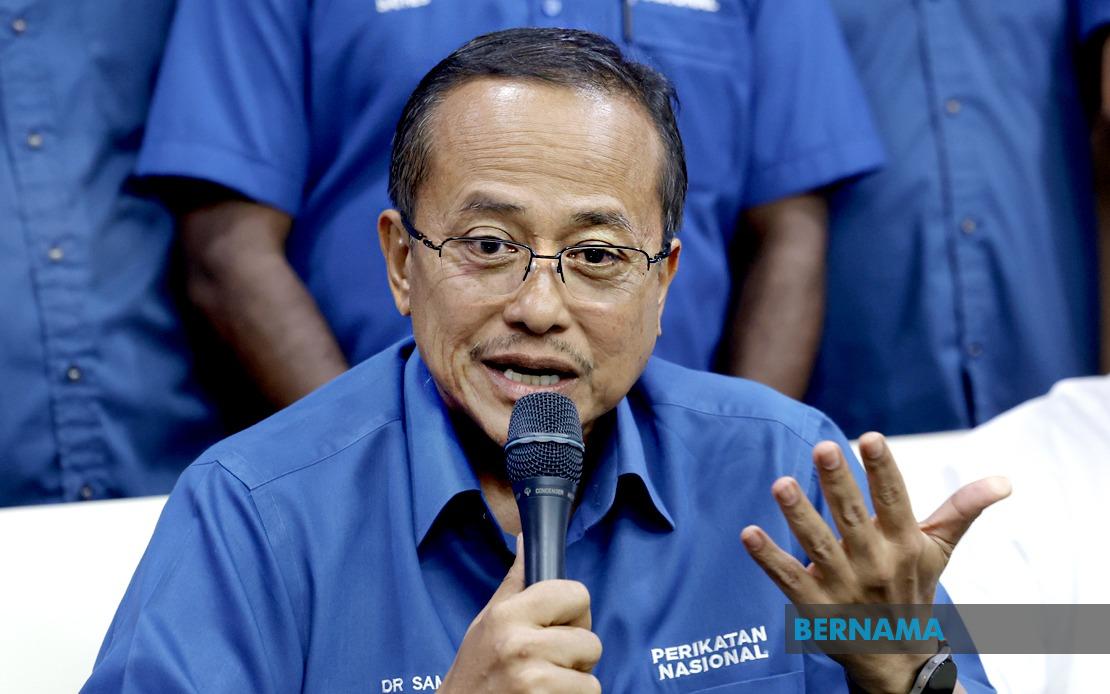
Perikatan Nasional has indicated openness to entering negotiations with Barisan Nasional ahead of the forthcoming Melaka state election, according to PN chairman Datuk Seri Dr Ahmad Samsuri Mokhtar. The statement comes amid ongoing speculation about possible political realignments in the state, though no formal talks between the two major coalitions have yet commenced.
Speaking at the 23rd Perak PAS Convention in Taiping on Friday, Ahmad Samsuri stressed that PN remains receptive to discussions with BN should the ruling coalition wish to explore cooperation. He emphasised that the window for such talks remains open precisely because the Melaka State Legislative Assembly has not yet been dissolved, meaning there is still adequate time to reach any potential agreements before an election is formally called.
The PN leader's remarks reflect a significant strategic shift in coalition politics within Melaka. Rather than positioning the two coalitions as outright adversaries, Ahmad Samsuri has presented potential collaboration as a viable pathway for PN to transition from its current opposition status into government. This signals a pragmatic approach to politics in the state, where electoral mathematics rather than ideological alignment may dictate political partnerships.
According to Ahmad Samsuri's analysis, a combined PN-BN ticket would substantially improve both coalitions' electoral prospects in Melaka. He cited internal calculations suggesting approximately a 75 percent probability of victory should the two groups successfully unite behind a common platform. Such a statistical assessment carries weight in Malaysian politics, where state-level outcomes can significantly influence national political dynamics and precedent-setting for future federal arrangements.
However, the PN chairman cautioned that achieving such cooperation would present considerable obstacles. He employed the metaphor of a journey that is far from straightforward, acknowledging that the path toward establishing a joint government would be fraught with complications requiring careful navigation. This candid assessment suggests awareness within PN leadership that merging two distinct political entities with potentially conflicting interests and policy positions would demand substantial compromise from both sides.
The challenges Ahmad Samsuri referenced extend beyond mere procedural negotiations. They encompass fundamental questions about seat allocation, candidate selection, leadership roles within a merged administration, and reconciliation of potentially divergent policy platforms. For BN, accepting PN as a coalition partner would represent a significant departure from its traditional approach of competing as a monolithic bloc in Malaysian elections. For PN, which has positioned itself as a reform-minded alternative to established politics, a merger with the veteran BN coalition could complicate its messaging around renewal and change.
The timing of these overtures carries strategic significance within Malaysia's broader political landscape. Melaka has traditionally been a BN stronghold, though PN's predecessor Pakatan Harapan made inroads in recent electoral cycles. A successful PN-BN cooperation model in Melaka could serve as a template for future arrangements in other states, potentially reshaping how Malaysian coalitions operate at the sub-national level. This has implications for how the federal government might evolve if such arrangements prove successful and become replicated elsewhere.
From a Malaysian perspective, such coalition flexibility demonstrates the adaptive nature of the country's political system. Unlike rigid two-coalition structures, Malaysian politics frequently accommodates temporary alliances and shifting partnerships based on state-level considerations. This fluidity, while sometimes portrayed as unstable, also permits creative problem-solving when existing arrangements prove electorally disadvantageous or politically impractical. Ahmad Samsuri's willingness to engage with BN exemplifies this pragmatic tradition.
The stance also reflects PN's maturation as a significant political force. Rather than insisting on competing independently in Melaka, PN is demonstrating sufficient confidence in its bargaining position to negotiate from a position of strength. This contrasts sharply with its earlier incarnation, when the coalition was often forced into secondary roles within broader political arrangements. The 75 percent success projection, regardless of its methodological basis, underscores PN's perception of its own electoral viability.
For BN, Ahmad Samsuri's overture presents both opportunities and complications. Accepting PN as a genuine partner would elevate the newer coalition's status and potentially provide legitimacy to an administration in which it held significant ministerial positions. Conversely, resisting such overtures risks allowing PN to campaign as the reform-minded alternative and could potentially cost BN the election if voters fracture between competing coalition candidates.
The statement notably avoids prescribing specific terms or conditions for any potential arrangement. Ahmad Samsuri left considerable latitude for negotiations, suggesting that PN would remain flexible regarding the structural form such cooperation might take. This openness may be intentional strategy, preserving negotiating room while signalling good faith to potential partners.
Looking forward, whether these preliminary signals transform into substantive negotiations depends largely on BN's response. The ruling coalition's leadership will need to weigh whether accepting PN as a coalition partner serves its interests better than contesting Melaka as an independent force. The coming weeks will reveal whether Ahmad Samsuri's diplomatic overture finds reciprocal interest from BN, or whether both coalitions ultimately proceed toward an electoral contest as separate entities.

