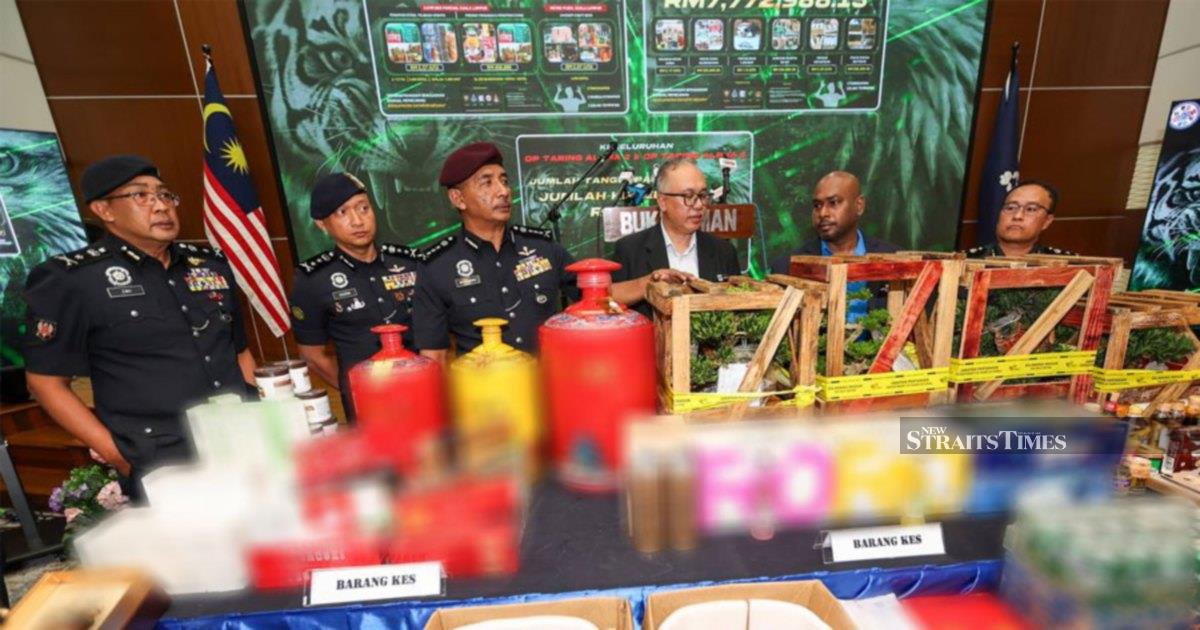
Law enforcement authorities have intensified their crackdown on smuggling networks operating within the Klang Valley, successfully dismantling two separate illicit operations that resulted in the arrest of five individuals and the recovery of contraband worth RM12.8 million. The coordinated enforcement drive, spanning Kuala Lumpur and Klang, underscores the ongoing commitment by the Royal Malaysia Police to combat transnational and domestic smuggling that threatens the nation's revenue streams and public safety.
The simultaneous operations targeting these smuggling operations represent a significant breakthrough in police investigations that have been tracking suspicious commercial activities in the region for some time. The scale of the seizure, totalling RM12.8 million, highlights the substantial financial stakes involved in organised smuggling networks that have become increasingly sophisticated in their methods of moving contraband across state lines and into local markets.
Smuggling remains one of Malaysia's persistent enforcement challenges, particularly given the country's strategic location along major regional trade routes and its porous maritime boundaries. Criminal syndicates exploit these vulnerabilities to move prohibited goods, including counterfeit products, controlled substances, and duty-evading merchandise that would normally attract significant customs levies. The operations in Kuala Lumpur and Klang demonstrate that organised crime groups continue to view the Klang Valley as a lucrative hub for smuggling activities due to its proximity to major ports and transportation infrastructure.
The five suspects apprehended during the operations are currently assisting police in their investigations, with authorities examining the extent of their involvement in the smuggling network and identifying potential links to other criminal syndicates. Police are investigating whether the operations were part of a larger organised smuggling enterprise or if they represent separate criminal ventures that happened to operate within the same geographic area.
The seizure of RM12.8 million in contraband and related goods comes at a time when Malaysian customs and police authorities are deploying enhanced intelligence-gathering techniques to identify and intercept smuggling operations before goods reach final consumers. Technology-driven surveillance, increased inter-agency coordination, and community tip-offs have all contributed to improving detection rates in recent years, though enforcement officials acknowledge that significant smuggling activity likely continues undetected.
For Malaysian readers, the implications of these enforcement successes extend beyond the headline figures. Smuggling operations that undercut legitimate businesses by avoiding customs duties create unfair market competition, artificially depress prices for illegal products, and ultimately deprive the government of revenue needed for public services. When counterfeit goods enter circulation, consumers risk purchasing substandard or dangerous products, while legitimate manufacturers lose market share to criminal enterprises selling at artificially low prices.
The Klang Valley's particular vulnerability to smuggling stems from its status as Malaysia's primary commercial and industrial heartland, housing the Port Klang authority and numerous logistics facilities. Criminals exploit the high-volume traffic passing through these gateways to conceal contraband among legitimate cargo. The concentration of enforcement successes in this region suggests that authorities are increasingly effective at identifying suspicious shipments and high-risk containers for more intensive scrutiny.
Regional smuggling networks frequently operate across Southeast Asian borders, utilising porous boundaries and inconsistent enforcement capabilities among neighbouring countries. Malaysian authorities recognise that tackling smuggling requires not only domestic enforcement but also regional cooperation with enforcement agencies in Thailand, Singapore, Indonesia, and Brunei. Intelligence sharing and coordinated border operations have become essential tools in disrupting transnational smuggling routes.
The arrests and seizures announced in these two operations will likely spark further investigation into the operational networks supporting the smuggling activities. Police will be examining financial records, communication intercepts, and warehouse facilities to identify additional suspects who may have been involved in the supply chain, from the original sources of the contraband through to the final distribution points in local markets.
Authorities have indicated that investigations into the arrested individuals remain ongoing, with detectives pursuing leads that may extend beyond Kuala Lumpur and Klang into other regions. The RM12.8 million valuation of seized goods provides a snapshot of the financial dimensions of just these two operations, and the total value of smuggling activity in Malaysia across all enforcement agencies likely runs to several billion ringgit annually.
For legitimate businesses competing in Malaysian markets, enforcement actions of this scale offer some assurance that government agencies are actively working to level the commercial playing field. However, industry associations have consistently argued that resource constraints and the sophistication of smuggling operations mean that enforcement remains only partially effective, and that ongoing vigilance and increased penalties for smuggling are necessary to further deter criminal activity.
The police operation serves as a reminder of the persistent challenge that organised smuggling presents to Malaysian law enforcement. As criminal networks continue to evolve their methods and exploit new technologies, authorities must remain equally adaptive in their response strategies, ensuring that the Klang Valley and other vulnerable regions receive adequate enforcement resources.

