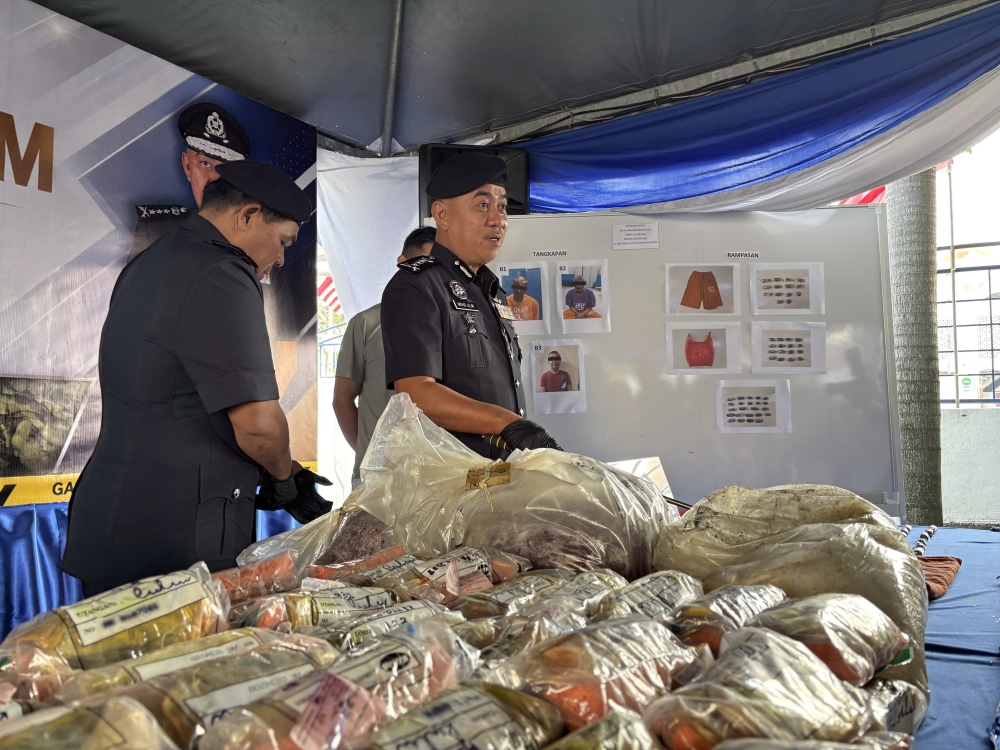
Three individuals, including a serving police officer, are now facing investigation after law enforcement discovered controlled drugs with an estimated street value of RM18,534 concealed within a Lumut police station cell. The seizure, which involved methamphetamine, heroin and cannabis, marks a troubling breach in the security measures expected at facilities designed to detain suspects and safeguard evidence. The case has drawn significant concern from authorities in Perak, where the incident occurred, highlighting vulnerabilities within the custodial system that officials had hoped to eliminate through stricter oversight procedures.
The discovery occurred during a routine check at the Lumut station, situated in the maritime district of Perak's western coast. What began as standard inspection protocols escalated into a criminal investigation when the forbidden substances materialized inside the holding area. The presence of these drugs in a police facility—rather than confiscated from public streets or homes—suggests either an extraordinary lapse in security or, more troublingly, potential collusion between individuals with access to the station. The Lumut police cell incident represents a serious embarrassment for law enforcement agencies striving to maintain public confidence in the integrity of institutional processes.
Among the three arrested is a police constable whose name has not been widely publicized as investigations continue into the precise circumstances surrounding the discovery. The involvement of an officer amplifies the reputational damage to the Royal Malaysian Police, which has repeatedly emphasized its commitment to rooting out corruption and misconduct within its ranks. Personnel with uniforms and access credentials represent particularly concerning security risks, as they circumvent conventional barriers designed to prevent unauthorized items entering restricted zones. Questions now loom about whether this constable acted independently or as part of a coordinated operation involving individuals outside the force.
The breakdown of the seized materials reveals the diversity of substance abuse problems across Malaysian society. Methamphetamine, colloquially known as crystal meth or ice, continues to plague communities across the peninsula and remains a priority for narcotics enforcement. Heroin represents another persistent challenge, particularly given its highly addictive properties and the medical complications associated with intravenous use. Cannabis, though less immediately life-threatening than opioids, contributes significantly to arrest volumes and incarceration rates within Malaysia's comparatively strict drug control framework. The combination of these three substance categories within a single seizure reflects the multifaceted nature of drug distribution networks operating throughout the region.
The timing of this discovery coincides with sustained governmental emphasis on anti-drug initiatives. Malaysia maintains some of Southeast Asia's harshest penalties for trafficking and possession offences, including mandatory capital punishment for quantities exceeding stipulated thresholds. Despite these severe legal consequences, supply chains continue flourishing, suggesting either extraordinary demand dynamics or systematic enforcement failures. The appearance of significant drug quantities within a custodial facility raises uncomfortable implications about whether internal controls operate as effectively as official pronouncements suggest. If contraband can materialise inside police stations themselves, the public reasonably questions the viability of broader interdiction strategies.
The incident invites scrutiny of Lumut station's management structure and supervisory frameworks. Modern police facilities typically incorporate surveillance systems, visitor logs, and restricted access protocols intended to prevent precisely this category of breach. Whether such measures existed at the Lumut location, and whether they functioned adequately, remains unclear from preliminary reports. Training standards for custodial personnel, particularly regarding searches and substance recognition, also warrant examination. The discovery suggests that existing protocols either malfunctioned or were deliberately circumvented—both scenarios demand urgent remediation before public confidence erodes further.
For Malaysian readers and the wider Southeast Asian region, this case illuminates persistent institutional challenges that transcend the specifics of this single station. Corruption within law enforcement remains a documented problem across the Association of Southeast Asian Nations, undermining anti-drug operations that depend critically upon officer integrity. When individuals entrusted with enforcement authority instead facilitate illegal substance movement, entire intervention systems become compromised. The Lumut discovery demonstrates that formal legislation and policy frameworks prove insufficient without corresponding commitment to institutional reform and personnel accountability.
The investigation now proceeds along multiple investigative streams. Authorities must determine how the drugs entered the facility, whether other personnel facilitated the introduction, and what portion of the seized material was destined for further distribution versus personal consumption. The constable's specific role—whether as organizer, accomplice, or opportunistic actor—requires clarification through interrogation and forensic analysis. Additionally, investigators must trace connections to external criminal networks, as police cells rarely serve as terminal points in drug supply hierarchies. Understanding the broader operational structure could illuminate larger trafficking organizations operating across Perak and adjacent states.
Procedural improvements will inevitably follow this incident. Enhanced screening protocols, augmented surveillance capabilities, and potentially reorganized custodial staffing represent likely administrative responses. However, such structural modifications address symptoms rather than fundamental causes. True institutional reform requires cultivating organizational cultures where officers internalize ethical standards as professional imperatives rather than externally imposed constraints. Training initiatives emphasizing the corrosive consequences of internal corruption, combined with transparent disciplinary processes demonstrating consequences for violations, represent longer-term approaches to preventing recurrence.
The broader implications for Malaysian society extend beyond immediate law enforcement circles. Public perception of police integrity directly affects cooperation with investigations, witness willingness to report crimes, and general confidence in the criminal justice system's capacity to deliver fairness. When custodial facilities—supposedly secure institutional spaces—become venues for drug activity, community skepticism about systemic reliability intensifies. This case therefore represents not merely an embarrassing operational failure but a potential catalyst for constructive dialogue about necessary institutional transformations throughout Malaysian policing.

