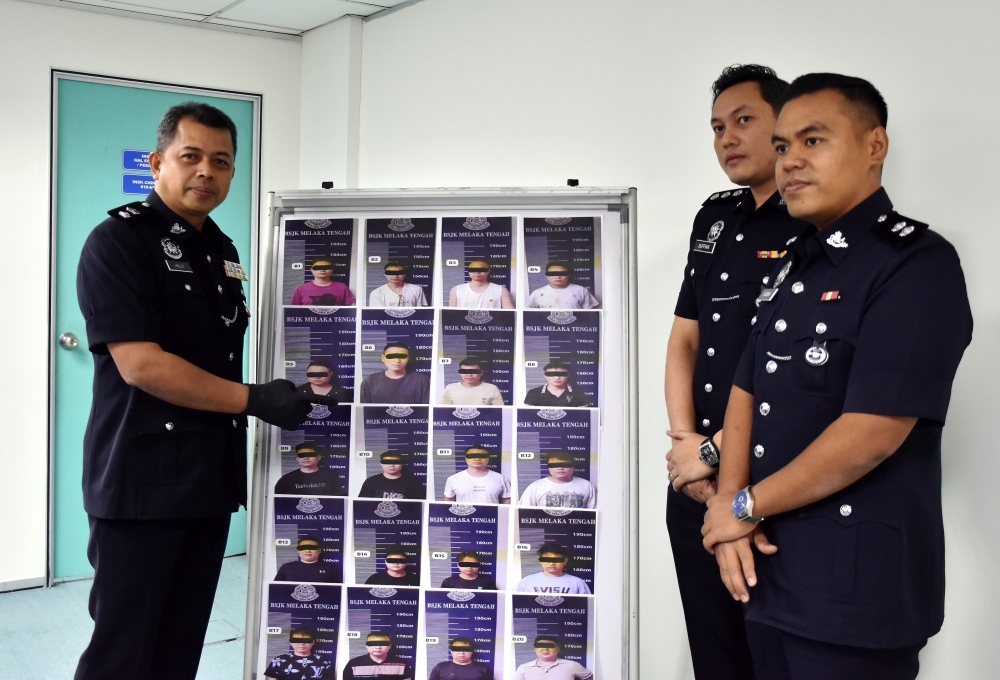
Authorities in Melaka have moved against an organised fraud operation, apprehending 21 Chinese nationals implicated in running a counterfeit investment scheme that police say had victimised individuals across multiple jurisdictions. The arrests represent a significant enforcement action against cross-border financial crime operating within Malaysian territory.
The operation functioned as a sophisticated confidence scheme designed to ensnare investors through false promises of substantial financial returns. Police investigations revealed that the syndicate created fictional investment opportunities and assured participants of unrealistic gains, a tactic commonly employed by transnational criminal networks targeting credulous investors throughout the region. The fraudsters maintained the facade through professional-looking documentation and sustained contact with victims to build trust over extended periods.
The scale of the operation suggests substantial coordination and infrastructure. To sustain such an enterprise, organisers typically establish multiple layers of operational control, recruit local facilitators, and maintain communication channels across borders. The concentration of the syndicate in Melaka indicates that Malaysia has become an attractive operational base for transnational fraud networks, a pattern increasingly documented by regional law enforcement agencies.
Such schemes represent a particular vulnerability for Southeast Asian societies. The region's growing middle class and increasing sophistication of digital communication have expanded the potential victim pool. Investors in Malaysia, Singapore, Thailand, and other nations regularly encounter these deceptive opportunities through social media platforms, messaging applications, and email. The fraudsters deliberately exploit linguistic and cultural familiarity to lower their targets' guard, often posing as compatriots or leveraging community networks.
The financial impact on victims extends beyond immediate monetary losses. Individuals who discover they have been defrauded frequently experience significant psychological distress and reputational damage within their communities. Families may lose savings accumulated over years, disrupting retirement planning and educational aspirations for children. The cumulative damage across multiple victims creates broader economic consequences as confidence in legitimate investment channels erodes.
Malaysian authorities have intensified efforts to combat investment fraud following repeated incidents that have damaged the country's reputation as a secure financial hub. The Royal Malaysian Police have dedicated resources to investigating complex cross-border schemes, though resource constraints limit the proactive investigation capacity available for relatively small-value individual cases. The arrest of entire operational cells, as occurred in Melaka, demonstrates tactical success but requires substantial investigative resources that might otherwise address other criminal priorities.
The presence of Chinese nationals operating within Malaysia raises questions about visa protocols and the adequacy of arrival monitoring systems. Immigration authorities must balance legitimate business travel and cultural exchange against the risk that criminal syndicates exploit Malaysia's relatively open visa policies to establish operational bases. Enhanced information-sharing between immigration and police intelligence units could potentially identify suspicious patterns of entry and accommodation arrangements characteristic of fraud operations.
The investigation process following such arrests typically involves extensive victim identification, evidence compilation, and coordination with authorities in victim jurisdictions. Repatriating proceeds and compensating victims across multiple countries presents formidable legal and diplomatic complications. Victims in Singapore, Thailand, Vietnam, or other nations must navigate foreign legal systems to recover losses, a process that frequently proves unsuccessful even after perpetrators are convicted.
These operations reflect broader vulnerabilities within the digital economy that enable transnational crime. Investment fraud syndicates exploit the anonymity and reach of online platforms while remaining insulated from direct law enforcement action through physical separation from victims. The sophistication of operational security measures, including the use of cryptocurrency and money laundering techniques, significantly complicates investigative and prosecution efforts for Malaysian authorities.
Preventive measures require simultaneous action across multiple domains. Financial regulators must enhance surveillance of suspicious transaction patterns, particularly those involving cryptocurrency exchanges or unusual fund flows. Public education campaigns should equip potential investors with knowledge of common fraud indicators and reporting mechanisms. Community leaders, particularly within Chinese-speaking communities, could serve as trusted sources of information about legitimate investment practices and warning signs of fraudulent schemes.
The broader context reveals that transnational fraud networks view Southeast Asia as an economically attractive operational theatre characterised by sufficient regulatory complexity to enable concealment while offering access to growing pools of disposable income. Malaysia's strategic geographic position, developed telecommunications infrastructure, and established Chinese diaspora communities create operational advantages for such syndicates. Disrupting these networks requires sustained coordination between Malaysian law enforcement and regional partners to identify and intercept proceeds and prevent reconstitution of the criminal operation under alternative structures.

