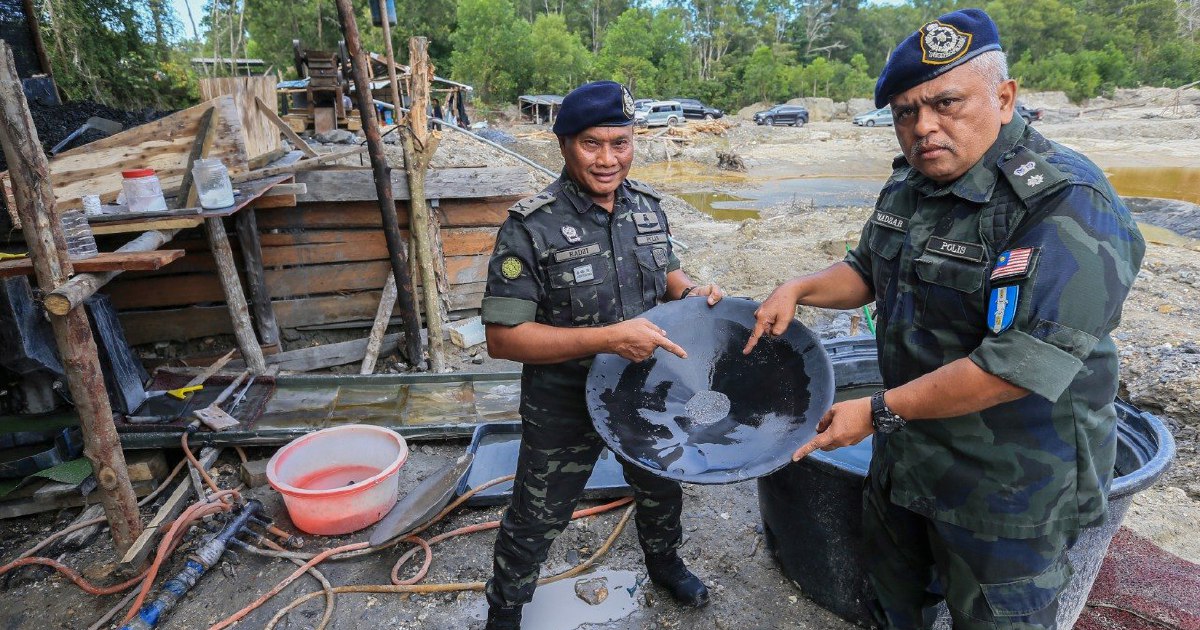
Police have successfully shut down a substantial illegal gold mining operation in Marang, Terengganu, arresting 15 individuals allegedly connected to a syndicate known as 'Mak Siti'. The operation, which authorities estimate was generating up to RM13,000 per day, was discovered during a raid conducted at Bukit Kor, highlighting the persistent challenge of unlicensed mineral extraction across Malaysia.
The dismantling of this syndicate represents a significant enforcement victory for local law enforcement agencies grappling with the proliferation of underground mining activities that drain national resources while operating outside regulatory frameworks. The scale of the operation—generating more than RM4.7 million annually if daily figures are sustained—underscores the substantial financial incentives driving illegal miners to operate despite the legal risks and environmental consequences. The suspects now face investigation under relevant laws governing unlawful mining and resource extraction.
Illegal gold mining has become increasingly problematic across Southeast Asia, with Malaysia experiencing recurrent busts as criminal networks exploit vulnerable areas with accessible mineral deposits. These operations typically involve sophisticated organizational structures, with participants ranging from field workers to middlemen and financiers. The 'Mak Siti' syndicate's apparent efficiency in generating consistent daily revenues suggests a well-established system for extraction, processing, and distribution of illegally obtained gold.
The environmental ramifications of such operations extend beyond simple resource depletion. Unregulated mining at Bukit Kor and similar sites causes habitat destruction, soil degradation, and potential water contamination—impacts that affect local communities and wildlife ecosystems. These environmental costs are rarely factored into the profitability calculations of operators, effectively externalizing damage onto the broader population and future generations.
Terengganu, located on the east coast of Peninsular Malaysia, has experienced various mining-related pressures historically. The state's geographical positioning and geological features apparently make it attractive to illegal operators seeking quick profits. Previous enforcement actions in the region suggest that these activities are not isolated incidents but rather symptoms of ongoing tensions between development pressures, resource extraction, and regulatory oversight.
The deployment of police resources for this operation reflects prioritization of these cases within law enforcement hierarchies. Maintaining surveillance and intelligence networks to identify major syndicate operations requires sustained effort and inter-agency coordination. The successful raid indicates that intelligence gathering and community information likely played roles in locating and timing the enforcement action.
Financial investigations accompanying such enforcement actions typically reveal money laundering mechanisms and the distribution networks through which illegally mined gold enters legitimate markets. These parallel inquiries help authorities understand how illicit minerals transition into legal commerce, often through smelters and traders who may or may not be aware of the materials' origins. Breaking these supply chains is as important as disrupting mining operations themselves.
The detention of 15 individuals represents a cross-section of operational participants, suggesting involvement at multiple levels—from extraction teams to administrative coordinators. Subsequent legal proceedings will test how comprehensively authorities understand the syndicate's full structure and whether higher-level organizers can be successfully prosecuted. Dismantling leadership networks requires evidence and testimony that may take months or years to fully develop.
For Malaysian readers concerned about natural resource governance, this enforcement action illustrates ongoing government commitment to combating illegal extraction. However, the frequency and scale of discovered operations suggest that detection remains reactive rather than preventive. Strengthening capacity for proactive surveillance, community reporting mechanisms, and preventive enforcement remains crucial for improving outcomes in future cases.
The success of this operation may generate valuable intelligence for regional law enforcement partners in Thailand, Indonesia, and other Southeast Asian nations experiencing similar challenges. Intelligence sharing about methodologies, organizational patterns, and market networks helps neighboring countries anticipate and counter comparable threats within their jurisdictions.
Monetary incentives driving participation in illegal mining remain substantial relative to alternative employment opportunities in rural areas. Addressing this phenomenon comprehensively requires not only enforcement but also economic alternatives that provide comparable income opportunities without legal and environmental costs. Development programs targeting mining-prone regions may reduce recruitment of participants into illicit networks.
As investigations proceed and legal processes unfold, the case will provide insights into prosecution strategies and sentencing approaches that may influence future enforcement priorities. The determination with which authorities pursue these cases signals government seriousness about protecting natural resources and environmental integrity—messages that resonate beyond law enforcement to broader governance and sustainability agendas.

