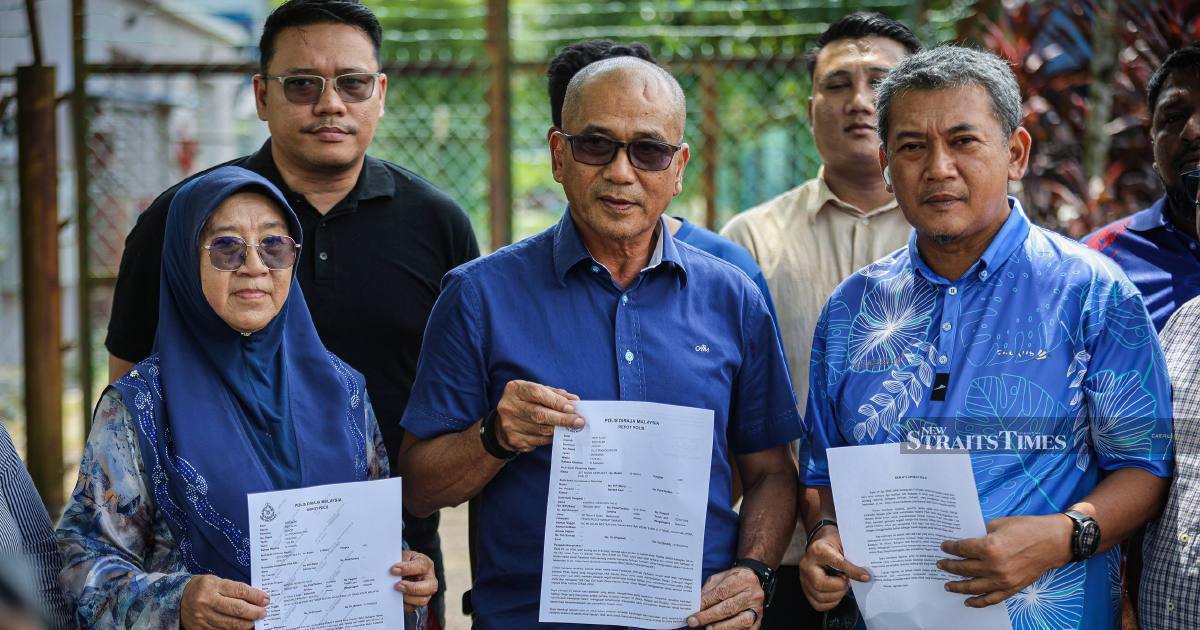
Members of Johor's Barisan Nasional coalition have taken formal police action against prominent figure Datuk Dr Mohd Puad Zarkashi, a former member of Umno's supreme council, in response to recent allegations he levelled at the Johor palace and the state's Umno leadership. The reports, filed in Johor Baru, mark an escalation in tensions within the coalition as various quarters seek to address what they characterise as inflammatory claims about institutional interference in the state's political machinery.
The escalating dispute highlights the fraught dynamics that continue to characterise Umno and Barisan Nasional operations in Malaysia's southern heartland. Johor has long occupied a distinctive position within the Malaysian political landscape, given the considerable influence wielded by the institution of the Johor Sultanate and the intricate relationship between palace and party structures. The filing of multiple reports suggests considerable frustration among BN members regarding Puad's public commentary, indicating that what might ordinarily constitute internal party discourse has instead spilled into the public arena and now into formal police channels.
Datuk Dr Mohd Puad Zarkashi, whose position within Umno's upper echelons grants his statements particular weight among party faithful and political observers, appears to have crossed a line that the coalition's Johor representatives deemed indefensible. The nature of his allegations—concerning purported palace influence over state Umno decision-making—touches on sensitivities that have historically preoccupied Malaysian politics, particularly regarding the proper constitutional relationship between traditional institutions and partisan politics. Such demarcations remain contentious and occasionally nebulous, creating space for genuine disagreement about where institutional stewardship ends and partisan interference begins.
The decision to lodge formal police complaints rather than address the matter exclusively through internal party mechanisms suggests that Johor BN leadership views Puad's statements as sufficiently serious to warrant state intervention. This approach represents a notable departure from the traditional confidential handling of intra-party disputes, signalling either heightened acrimony or a calculated strategy to establish an official record of the allegations and subsequent denial. In either case, the move indicates that internal consensus-building within the coalition appears to have fractured on this particular issue.
The timing of these reports carries political significance within the broader context of Malaysia's current political trajectory. Umno and Barisan Nasional have experienced considerable turbulence in recent years, ranging from electoral setbacks to internal leadership contests and corruption-related legal proceedings affecting senior figures. Against this backdrop, renewed allegations concerning palace involvement in party affairs come at a moment when the coalition's institutional cohesion remains a live concern for senior leadership. Any suggestion of external institutional pressure on party autonomy threatens to undermine the narrative of independent, meritocratic party governance that BN leaders have sought to rebuild.
The palace institution in Johor, among Malaysia's most prominent and politically conscious sultanates, has historically maintained clear public positions regarding its role within the state's political system. Allegations suggesting deviation from this established protocol would naturally provoke defensive responses from those invested in preserving institutional boundaries and reputation. The filing of police reports may partly represent a defensive mechanism intended to demonstrate the seriousness with which such allegations are regarded and the swift corrective measures undertaken.
For observers tracking Malaysian political developments, the incident illuminates persistent tensions between institutional and partisan authority that democratic consolidation has not fully resolved. The emergence of such disputes in a police-report format rather than through other dispute-resolution mechanisms reflects Malaysia's somewhat fractured approach to managing sensitive political disagreements that implicate both democratic norms and monarchical institutions. The question of appropriate channels for raising concerns about institutional boundaries remains contested terrain.
The implications for Umno and Barisan Nasional are potentially significant. Should momentum build around the allegations or should police investigations uncover substantive evidence supporting Puad's claims, the coalition faces reputational damage that could extend beyond Johor into perceptions of BN governance nationally. Conversely, should the reports be dismissed or investigations conclude without substantive findings, questions may persist regarding whether the police mechanism was appropriately deployed in a matter that some observers might characterise as primarily political rather than criminal in nature.
This incident also carries particular resonance for Southeast Asian readers attuned to the broader question of how democratic parties navigate relationships with traditional institutions within constitutional monarchies. Malaysia's experience offers instructive lessons about the vulnerabilities that arise when such relationships remain inadequately codified or subject to divergent interpretations, particularly when ambitious individuals within parties perceive advantage in airing institutional grievances through public channels.
Moving forward, the police investigation will likely shape not merely the immediate consequences for Datuk Dr Mohd Puad Zarkashi but also broader understandings within Malaysian political circles regarding acceptable discourse concerning palace-party relations. The willingness of Johor BN members to pursue formal police action signals that certain boundaries remain inviolable, though whether those boundaries reflect genuine constitutional concerns or primarily serve factional party interests remains a matter of legitimate analytical debate.

