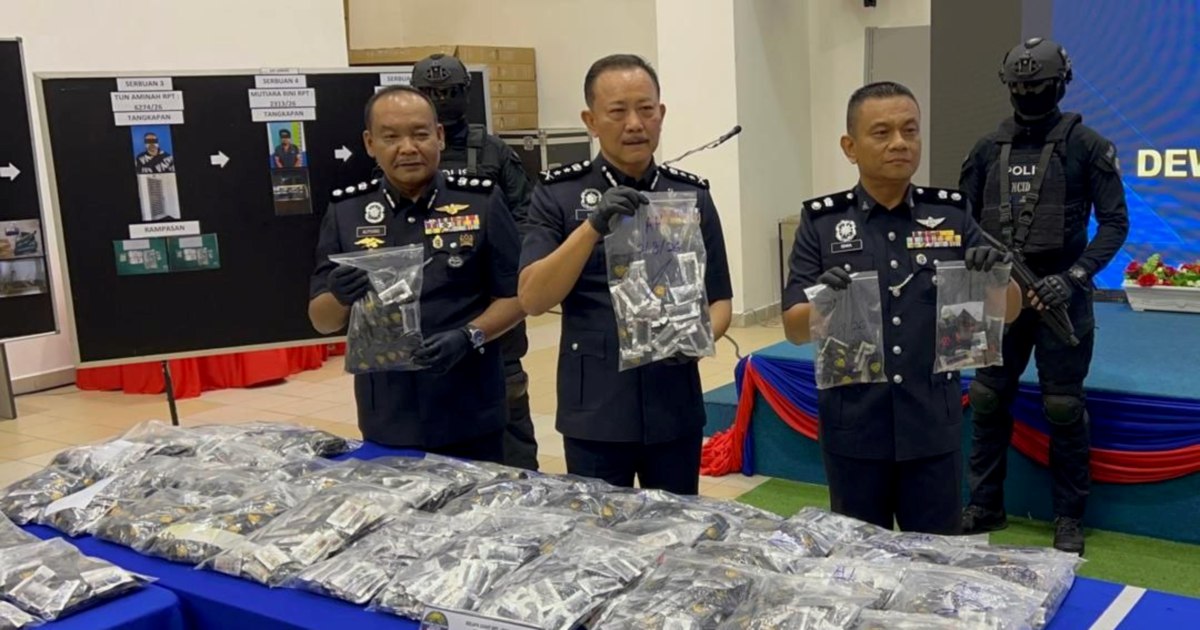
Authorities in Johor have successfully targeted a substantial narcotics operation centred on the production and trafficking of vape cartridges laced with illegal drugs. The coordinated enforcement action, carried out on Sunday, resulted in the apprehension of seven individuals suspected of running the syndicate and the seizure of inventory valued at RM10.68 million. The operation exemplifies intensified law enforcement efforts against emerging drug delivery methods that exploit vaping's popularity among younger demographics across Southeast Asia.
The simultaneous raids unfolded across five different locations throughout Johor state, reflecting the geographic spread of the criminal network. This methodical approach prevented suspects from alerting associates at other sites and forestalled the destruction of evidence. The timing and scale of the operation suggest coordination with intelligence gathering preceding the actual enforcement sweep, a standard practice when targeting organised narcotics operations with established supply chains and distribution networks.
Vape-based drug delivery represents a significant enforcement challenge for regional authorities. The cartridges' resemblance to legitimate commercial vaping products allows traffickers to conceal contraband within shipments and personal possession. This concealment advantage has made drug-infused vapes an increasingly lucrative alternative to traditional packaging methods, particularly attractive to criminal enterprises seeking to penetrate markets dominated by youth and young adults. The Malaysian seizure reflects a pattern of such discoveries throughout the region, signalling the method's growing prevalence in organised drug trafficking.
The monetary valuation of RM10.68 million attached to seized inventory provides insight into the operation's commercial scale and profitability. This figure likely represents wholesale or street value rather than production costs, underscoring the substantial profit margins involved in the illicit vape cartridge business. Such returns incentivise sophisticated criminal organisations to invest in laboratory equipment, chemical precursors, and distribution infrastructure, creating ongoing challenges for law enforcement agencies attempting to suppress supply.
Drug-infused vaping products occupy an ambiguous regulatory space across much of Asia. Many jurisdictions lack specific legislation addressing drugged vapes, creating legal lacunae that traffickers occasionally exploit. Malaysia's existing drug laws, however, typically categorise such products under controlled substance regulations regardless of their novel delivery mechanism. The enforcement success in Johor indicates authorities are interpreting and applying existing legislation effectively despite the products' novelty.
The investigation's culmination through simultaneous raids represents resource-intensive enforcement activity requiring coordination between police units, intelligence officers, and operational teams. Such operations demand significant advance planning, surveillance, and intelligence validation to ensure actionable evidence and lawful execution. The seven arrests suggest investigators possessed sufficient information to identify individuals across the syndicate's supply chain, from manufacturing to street-level distribution.
For Malaysian readers and regional observers, this operation underscores ongoing law enforcement vulnerabilities surrounding pharmaceutical and chemical precursor diversion. Drug manufacturing syndicates require access to base chemicals, equipment, and distribution channels—inputs that organised crime groups frequently source through legitimate commercial channels or theft. Successful interdiction often requires collaboration between pharmaceutical regulators, customs authorities, and police to identify suspicious chemical orders and suspicious acquisitions of manufacturing apparatus.
The emergence of designer drug-delivery systems like medicated vapes reflects trafficking networks' adaptive capacity. As enforcement agencies enhance interdiction of conventional narcotics movement, criminals develop alternative distribution methods that exploit regulatory blind spots and consumer preferences. This cat-and-mouse dynamic ensures continuous evolution of illicit drug markets and ongoing pressure on law enforcement to update strategies, training, and intelligence capabilities.
Regional cooperation remains essential given the transnational nature of drug trafficking networks. The syndicate's operation across multiple Johor locations raises questions about supply source and distribution destinations extending potentially beyond state or national boundaries. Intelligence sharing with counterparts in neighbouring Singapore, Brunei, and Indonesia could illuminate supply routes and trafficking partnerships, enabling coordinated regional enforcement responses against larger trafficking organisations.
The incident also highlights demand dynamics driving vape-based narcotics markets. Young consumers' familiarity with legitimate vaping products makes drug-infused cartridges attractive for discreet consumption. Schools, universities, and youth facilities across Malaysia have documented emerging challenges managing vaping-related substance abuse among student populations. Law enforcement success against supply networks requires complementary demand-reduction efforts including education, treatment access, and community engagement initiatives.
Beyond immediate arrests and asset seizure, the investigation's intelligence value may prove equally significant. Interrogation of detainees, financial records analysis, and communications data can illuminate supplier relationships, customer networks, and money laundering patterns. Such information assists authorities in identifying co-conspirators remaining at liberty and upstream suppliers providing precursor chemicals and equipment.
Police have not yet provided detailed information regarding charges pending against detainees or anticipated court proceedings. Such details will emerge as the investigation transitions from enforcement operations to prosecution. The case's legal trajectory will influence how Malaysian courts interpret drug laws applied to novel delivery mechanisms, potentially establishing precedent for future prosecutions involving emerging narcotic products.
Successful elimination of drug manufacturing and distribution infrastructure produces temporary supply disruption, though criminal entrepreneurship frequently moves operational sites to alternative locations. Authorities must sustain investigative pressure and intelligence gathering to prevent rapid reconstitution of trafficking operations. The Johor syndicate's dismantling represents meaningful progress against organised drug crime, yet enforcement challenges remain significant across Malaysia and the broader Southeast Asian region.

