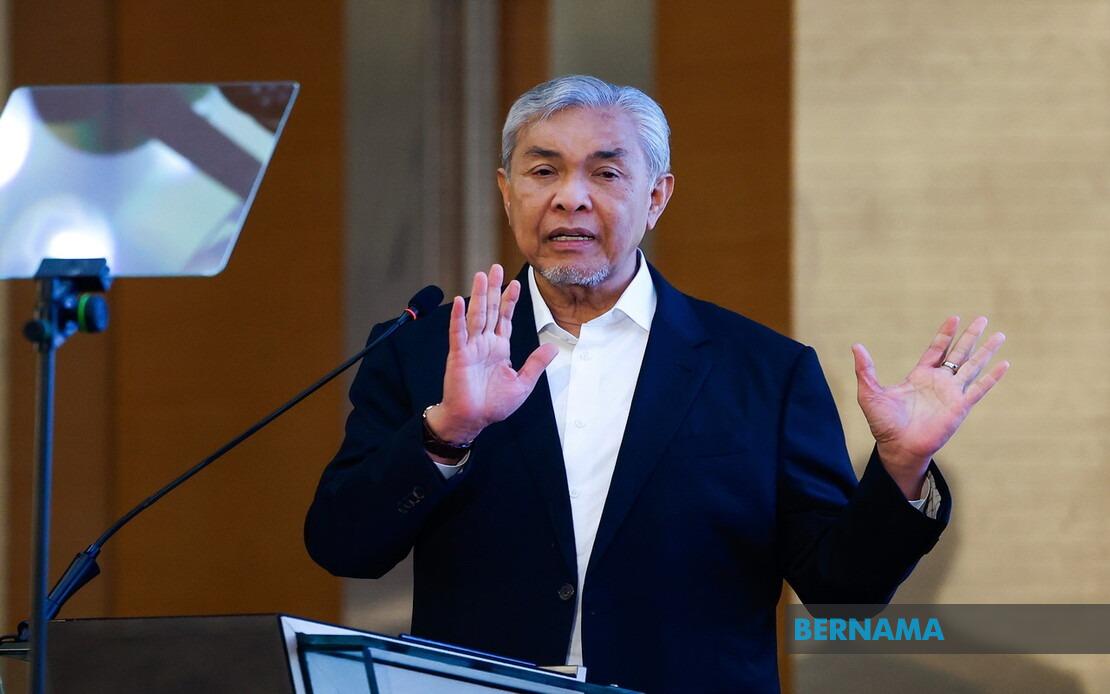
Deputy Prime Minister Datuk Seri Dr Ahmad Zahid Hamidi has issued a firm reminder to all political parties participating in the Negeri Sembilan state election to maintain respect for the institution of the monarchy and steer clear of contentious issues centred on race, religion and royalty—collectively known as the 3R matters—throughout the campaign period. Speaking in Seremban on July 27, Ahmad Zahid emphasised that the Negeri Sembilan Palace's recent advisory to political contestants deserves careful consideration and compliance from all involved parties.
The directive from the royal household represents a timely intervention aimed at preserving the sanctity of constitutional institutions during an electoral period when political rhetoric often intensifies. Ahmad Zahid underscored that the Barisan Nasional coalition has consistently maintained a principled stance by declining to weaponise matters pertaining to race, religion or royal institutions for electoral advantage. This positioning reflects a broader understanding that certain constitutional safeguards and institutional respect transcend partisan political competition and form the bedrock of Malaysia's constitutional monarchy system.
In articulating the government's commitment to upholding these principles, Ahmad Zahid stressed the fundamental importance of defending the institution of the Malay Rulers as a cornerstone of the Malaysian political framework. He specifically referenced the Undang Yang Empat—the four paramount rulers of Negeri Sembilan—as an institution equally deserving of protection and respect within the state's governance structure. By framing institutional protection as a cross-factional responsibility, Ahmad Zahid signalled that the preservation of these constitutional elements should supersede partisan interests.
The Deputy Prime Minister's comments came during his attendance at the Negeri Sembilan Entrepreneurs Gathering Programme, where he took the opportunity to address the assembled business community and political figures. Also in attendance were Deputy Rural and Regional Development Minister Datuk Rubiah Wang and Majlis Amanah Rakyat chairman Datuk Dr Asyraf Wajdi Dusuki, underscoring the coordinated messaging from government leadership regarding electoral conduct standards.
The timing of this admonition reflects broader concerns about maintaining political decorum during competitive electoral campaigns. Negeri Sembilan's state election presents a significant political contest with implications extending beyond the state itself. The palace's proactive stance in issuing guidance demonstrates that Malaysia's constitutional monarchies remain vigilant custodians of institutional boundaries, willing to intervene when necessary to safeguard their constitutional roles from potential politicisation.
Ahmad Zahid's remarks carry particular weight given his position as Deputy Prime Minister and chairman of Barisan Nasional, the nation's longest-serving political coalition. His explicit commitment to avoiding 3R matters serves to establish a standard of conduct that the BN expects its component parties and allies to observe. This public declaration essentially establishes accountability mechanisms, as any BN-affiliated party transgressing these boundaries could face scrutiny and potential disciplinary action within the coalition structure.
The broader political context reveals ongoing dynamics between Malaysia's major political formations. Beyond the specific admonition regarding 3R issues, Ahmad Zahid also addressed claims of discord between Barisan Nasional and Perikatan Nasional, denying the existence of any meaningful dispute that might have precluded cooperation between these two significant political coalitions. According to Ahmad Zahid's characterisation, the relationship between BN and PN remains grounded in mutual understanding and constructive engagement, though he did not elaborate on the specific terms or conditions governing such understanding.
For Malaysian voters, particularly those in Negeri Sembilan, these pronouncements establish important parameters for evaluating campaign conduct. The emphasis on institutional respect and avoidance of polarising rhetoric reflects a deliberate effort to maintain electoral competition within constitutionally appropriate boundaries. This approach contrasts with electoral environments in other democracies where campaigns frequently intersect with religious and cultural sensitivities.
The Negeri Sembilan election takes on regional significance within Malaysia's complex federal structure, where state-level contests often serve as barometers for national political sentiment. The state's demographic composition, economic interests, and historical political trends make it a closely watched battleground. By establishing clear expectations regarding campaign conduct before intensified campaigning commences, the palace and government leadership attempt to prevent the escalation of political tensions that occasionally characterise Malaysian electoral periods.
For political parties contesting the election, particularly opposition formations, Ahmad Zahid's reminder effectively establishes a benchmark against which campaign conduct will be evaluated. Parties that transgress these boundaries risk accusations of institutional disrespect, a politically damaging characterisation in Malaysia's political culture where constitutional reverence carries substantial weight among voters. The public nature of this reminder ensures that violations become conspicuous and subject to public scrutiny and media commentary.
The emphasis on mutual respect and constitutional propriety reflects a deeper understanding within Malaysia's political establishment that electoral competition, however vigorous, must occur within frameworks that preserve institutional integrity. This philosophy distinguishes Malaysia's electoral approach from jurisdictions where campaigns frequently traverse sensitive cultural and religious terrain with limited restraint. As Negeri Sembilan enters its electoral period, the stage has been set for competition that, theoretically at least, prioritises constitutional respect alongside partisan ambition.

