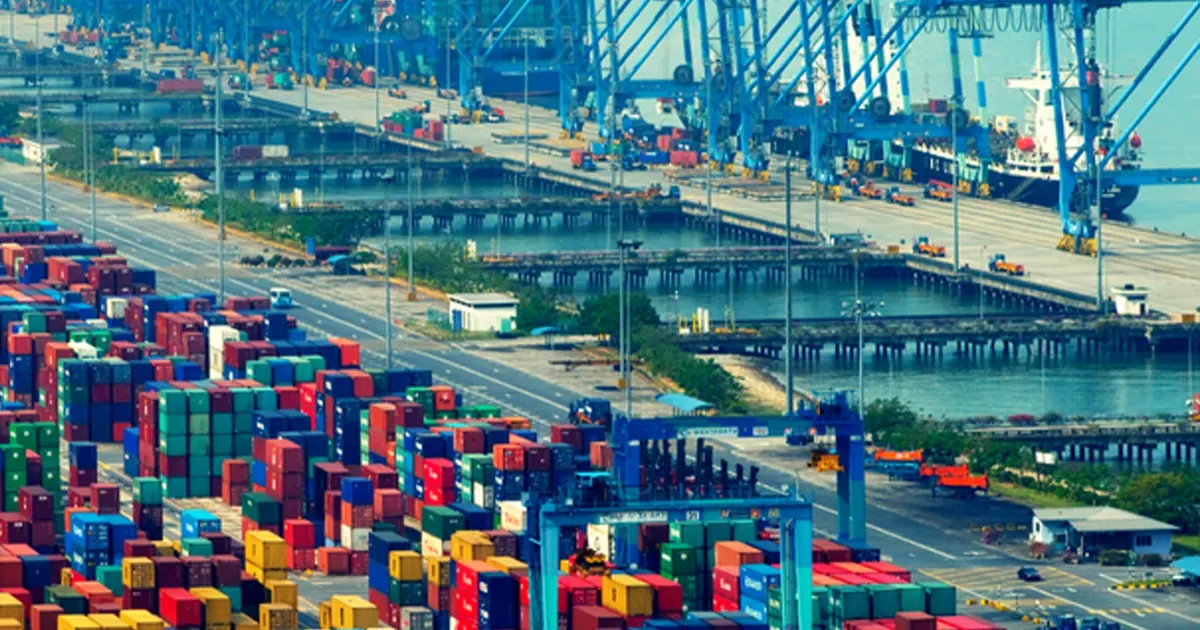
The Port Klang Free Zone has emerged as a major success story in Malaysia's logistics recovery, generating RM108 million in revenue while achieving an 86% reactivation rate of its operations. Transport Minister Loke Siew Fook attributed the facility's resurgence to steady, consistent growth momentum over the past 18 months, marking a significant turnaround for the sprawling cargo hub that had faced years of underutilisation and administrative challenges.
The PKFZ's recovery gains particular significance given Malaysia's strategic positioning as a regional trading gateway. The free zone facility, spanning hundreds of hectares in the Port Klang vicinity, serves as a critical infrastructure asset for businesses seeking bonded warehouse space, storage, and value-added logistics services. Its reactivation directly supports Malaysia's efforts to remain competitive as a transhipment and distribution centre in Southeast Asia, where regional supply chains have undergone substantial restructuring since the pandemic.
The 86% reactivation milestone reflects improved tenant engagement and utilisation rates that have surpassed earlier expectations. Previously, the facility struggled with significant vacant space and lower-than-capacity operations, creating concerns about its viability as an economic engine for the port district. The current trajectory suggests that strategic management interventions, combined with broader recovery in international trade flows, have successfully reignited business confidence in the facility.
Revenue figures alone tell only part of the story. The RM108 million generated represents not merely transactions but restored economic activity in warehouse management, customs clearance facilitation, freight handling, and related services. This multiplier effect cascades through the broader Port Klang ecosystem, supporting employment in logistics, transport, and supply chain sectors that depend on robust free zone operations for their own commercial viability.
Loke's public acknowledgement of the growth trajectory reflects government confidence in the facility's direction under current management. The Transport Ministry has invested considerable political capital in the PKFZ's rehabilitation, recognising that port infrastructure excellence directly influences Malaysia's competitiveness for foreign direct investment and trading partnerships. The minister's emphasis on the 18-month performance window suggests the government views this period as marking a definitive turning point rather than temporary recovery fluctuation.
The reactivation progress also carries implications for Malaysia's broader port infrastructure strategy. As global supply chains reconfigure and nearshoring trends reshape regional logistics networks, free zone facilities offer flexibility that traditional ports sometimes cannot. Companies seeking regional hub locations increasingly evaluate Malaysia against competitors in Singapore, Thailand, and Indonesia. The PKFZ's improved performance strengthens Malaysia's value proposition in these competitive assessments.
Operational recovery of this magnitude typically correlates with increased customs revenues, port utilisation fees, and value-added services contracts. Beyond direct government revenue, the facility's activation supports private sector participation in logistics services, creating opportunities for Malaysian enterprises to capture higher-margin activities like packaging, labelling, quality control, and light manufacturing within the bonded environment.
The 14% operational capacity gap remaining suggests targeted focus areas exist for further expansion. Planners and management likely have identified specific tenant categories, product segments, or service offerings where additional capacity could be productively absorbed. Whether this residual capacity reflects physical constraints, market demand limitations, or strategic phasing remains relevant to understanding the facility's medium-term growth ceiling.
International trade patterns favour the PKFZ's expansion prospects. As companies diversify sourcing away from China and India, Southeast Asian logistics hubs benefit from increased transaction volumes. Malaysia's geographic position at one of the world's busiest shipping straits, combined with functional free zone infrastructure, positions PKFZ to capture incremental regional transshipment activity that previously concentrated in more established competitors.
The revenue and reactivation figures also reflect successful resolution of legacy governance and operational issues that had previously constrained the facility. Institutional improvements in customs processing, tenant relations, and facility maintenance directly translate to the improved utilisation metrics. These operational foundations matter considerably to multinational logistics companies evaluating long-term commitments to regional facilities.
For Malaysian policymakers, the PKFZ recovery validates strategic importance of maintaining world-class port and logistics infrastructure as economic development priorities. Competition for regional logistics hub status intensifies as ASEAN countries upgrade facilities and services. The PKFZ's improving trajectory demonstrates that Malaysia retains capability to compete effectively when management, infrastructure, and policy alignment converge purposefully.
Looking forward, the sustained growth trajectory under Minister Loke's portfolio oversight suggests government commitment to continued investment and operational refinement. Whether the facility can move beyond 86% activation to fuller capacity utilisation depends on external trade dynamics and internal operational capabilities. The next phase likely involves targeted marketing to prospective regional tenants, sector-specific service development, and continued infrastructure enhancement to capture additional margin opportunities.
The Port Klang Free Zone's recovery journey ultimately reflects broader dynamics in Malaysia's economic strategy: the recognition that logistics and trade facilitation infrastructure, supported by competent governance, directly generates wealth creation across multiple sectors. As the facility continues its growth trajectory, it increasingly demonstrates that Malaysia's port infrastructure can compete effectively in the region's logistics competition.


%22%2F%3E%3C%2Fpattern%3E%3C%2Fdefs%3E%3Crect%20width%3D%22100%25%22%20height%3D%22100%25%22%20fill%3D%22url(%23ph6fyvg)%22%2F%3E%3Crect%20width%3D%22100%25%22%20height%3D%22100%25%22%20fill%3D%22url(%23ph6fyvp)%22%2F%3E%3Ctext%20x%3D%2250%25%22%20y%3D%2250%25%22%20text-anchor%3D%22middle%22%20dominant-baseline%3D%22central%22%20fill%3D%22rgba(255%2C255%2C255%2C0.95)%22%20font-family%3D%22Georgia%2C%20'Times%20New%20Roman'%2C%20serif%22%20font-weight%3D%22700%22%20font-size%3D%22320%22%20letter-spacing%3D%22-0.02em%22%3EOnn%3C%2Ftext%3E%3C%2Fsvg%3E)