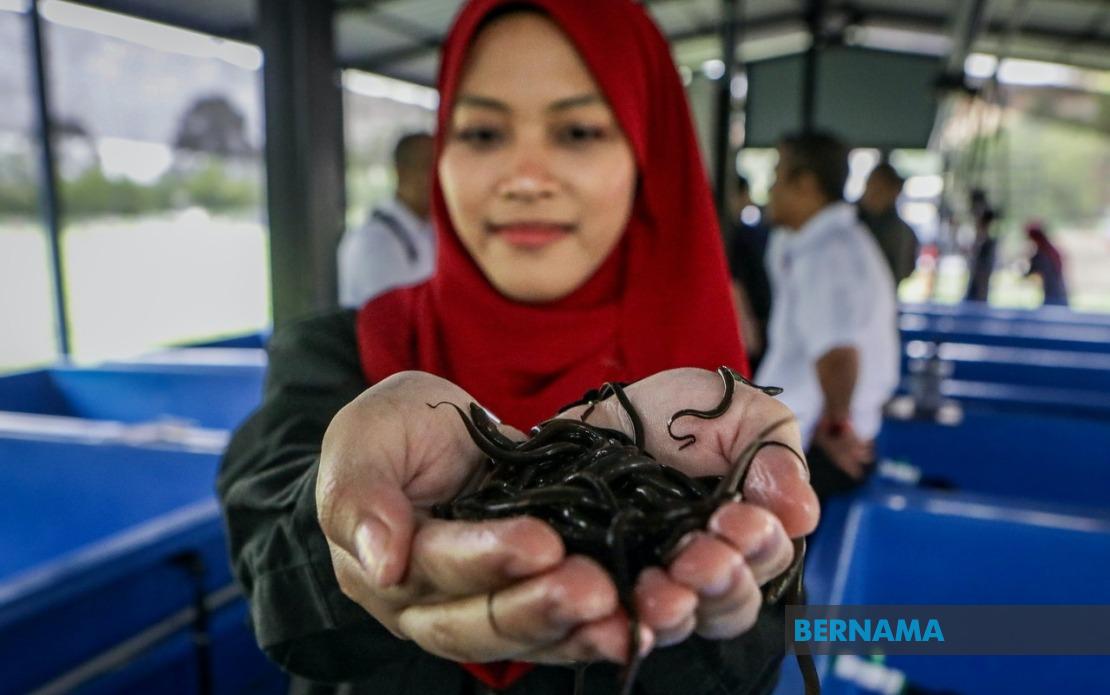
Politeknik Tuanku Syed Sirajuddin (PTSS) in Arau has stepped beyond its traditional role as an educational institution to become a direct catalyst for rural economic development, launching an ambitious commercial eel farming initiative that demonstrates how technical vocational colleges can reshape community livelihoods across Malaysia. The Projek Penternakan Belut Komersial Geran Sejati MADANI represents a significant shift in how government institutions approach skills transfer and community empowerment, moving beyond classroom instruction to hands-on enterprise development that bridges the gap between academic knowledge and market-ready agricultural production.
The RM500,000 project, which received its official launch in early July through the office of the Prime Minister's Implementation Coordination Unit, reflects growing recognition that Malaysia's economic development must extend beyond urban centres and into rural communities seeking alternative income streams. By positioning PTSS as the implementation lead rather than simply a training provider, the initiative demonstrates confidence in technical education institutions to manage complex agribusiness projects while simultaneously developing human capacity. This approach proves particularly relevant for Southeast Asia, where rural populations increasingly seek sustainable alternatives to traditional livelihoods, and where agricultural innovation driven by educational institutions can address both poverty and food security simultaneously.
PTSS director Khairul Anuar Ishak articulated the broader significance of the project during its launch, emphasising that technical vocational institutions must function as engines of community transformation rather than merely producing certified graduates for external employers. The director positioned the eel farming initiative as evidence that TVET expertise, when properly deployed, creates immediate tangible benefits for local populations through practical knowledge transfer, technical supervision, and innovation support. This philosophy recognises that communities often possess entrepreneurial capacity but lack access to professional guidance, market linkages, and technological know-how—gaps that educational institutions are uniquely positioned to fill through structured mentorship and hands-on training delivered in real operational environments.
The project structure reveals careful attention to sustainability and genuine community ownership. Five distinct communities across Perlis will each receive 15,000 eel seeds, representing a total aquaculture commitment that positions participating communities as serious commercial producers rather than hobbyist farmers. The phased implementation spanning six months covers every critical success factor: infrastructure development, equipment procurement, seed provision, comprehensive training, and financial management systems. Rather than abandoning communities after initial training, PTSS has committed to remaining engaged throughout the establishment period before transferring full operational responsibility to local managers, creating an accountability mechanism that ensures quality implementation.
The production targets suggest realistic but ambitious outcomes that could meaningfully improve household incomes for participating families. Each community is projected to harvest approximately 5,000 kilogrammes of eels following a five-to-six-month growth cycle, representing substantial yield from relatively contained facilities. These projections rest on proven aquaculture science and proper management practices, rather than speculative estimates. The integration of contract farming methods into the project's marketing strategy proves equally significant, as it removes the uncertainty that often deters smallholder farmers from entering new sectors. By securing guaranteed purchase agreements before production commences, the project eliminates market risk and allows farmers to focus exclusively on production excellence.
The partnership structure underlying this initiative reveals how Malaysian governance is increasingly operationalising cross-institutional collaboration to address rural development challenges. The cooperation between PTSS, the Prime Minister's Implementation Coordination Unit, and the Perlis Federal Development Office demonstrates that technical expertise, policy oversight, and regional administration can function as an integrated system when rural economic development becomes a genuine priority. This collaborative model offers important lessons for other Malaysian states seeking to deploy similar initiatives, particularly those with significant rural populations and existing educational infrastructure that remains underutilised for community development purposes.
The broader context of this project within Malaysia's TVET modernisation agenda deserves examination. The government has increasingly emphasised that technical education must produce not merely employees but entrepreneurs and community leaders capable of identifying and implementing solutions to local economic challenges. The eel farming project exemplifies this evolution: students at PTSS will participate in actual commercial production, gaining experience in aquaculture science, business management, and community coordination simultaneously. This experiential learning approach produces graduates with portfolio evidence of real enterprise management, significantly enhancing their employability while simultaneously creating immediate community benefit.
Eel farming represents a particularly astute sectoral choice for rural Perlis communities. The species thrives in relatively contained aquatic environments requiring limited space compared to conventional fish farming, making it accessible to smallholder producers. Eels command premium prices in regional markets, particularly across Southeast Asia where they remain culturally significant and nutritionally valued. The six-month production cycle aligns well with smallholder cash flow requirements, allowing farmers to generate income relatively quickly compared to longer-cycle agricultural activities. Additionally, eel farming creates secondary economic opportunities through feed production, processing, and distribution, potentially stimulating broader local economic activity.
The financial commitment of RM500,000 reflects government recognition that genuine rural economic transformation requires substantive investment rather than symbolic gestures. These resources translate into genuine infrastructure—ponds, equipment, breeding stock, and intensive technical support—that produce measurable productivity improvements. For participating communities, this represents access to productive assets that would otherwise require capital accumulation beyond typical household resources. The transparent allocation structure, with each community receiving equal seed provision, suggests equity considerations in project design, though monitoring mechanisms will determine whether benefits distribute fairly among participating farmers.
The success of this initiative will likely generate replicable models for other TVET institutions across Malaysia and Southeast Asia facing similar rural development mandates. If participating communities achieve projected production levels and establish sustainable markets, the project will demonstrate that technical colleges can catalyse aquaculture sector development while generating graduate employment opportunities in their local regions. Conversely, challenges in achieving targets would provide valuable lessons regarding the specific support mechanisms required for smallholder farmers to successfully transition to commercial aquaculture.
Looking forward, the most significant impact may emerge from normalising the concept that TVET institutions bear direct responsibility for community economic outcomes, not merely student credential outcomes. This philosophical shift positions technical education as a development instrument with genuine rural transformation potential, particularly in regions where agricultural innovation and skills training remain underdeveloped. Should PTSS successfully replicate this eel farming model across multiple communities and document the income improvements achieved by participating families, the project could influence how Malaysian government institutions conceptualise their roles in addressing regional inequality and rural economic stagnation.

