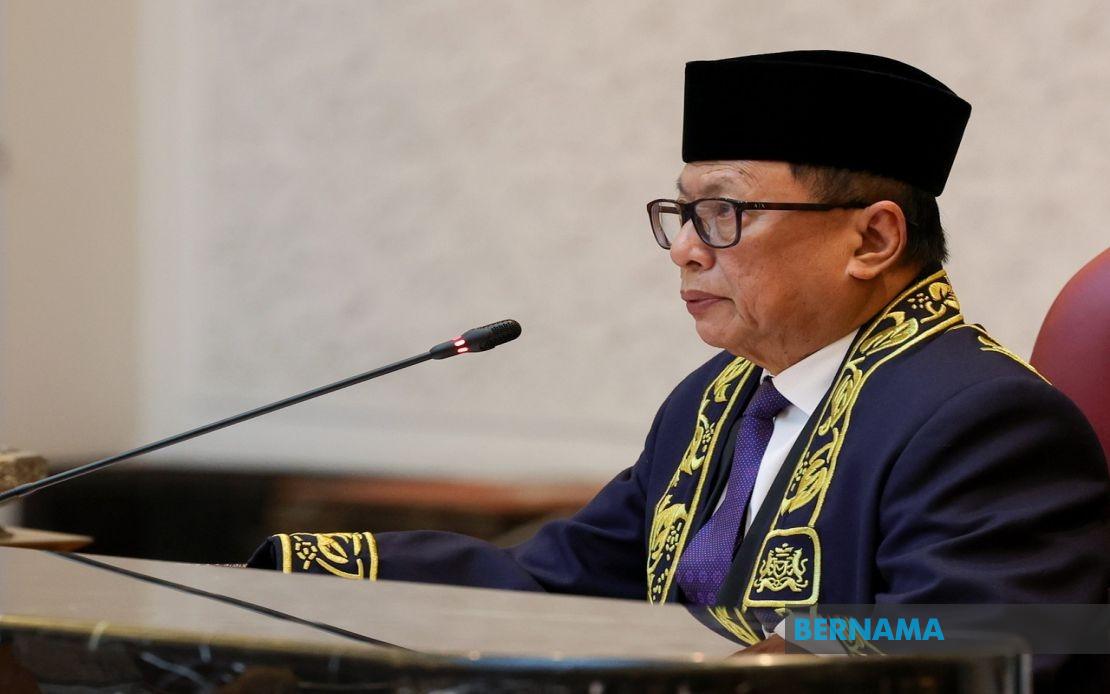
Datuk Dr Mohd Puad Zarkashi, a longtime UMNO figure and current Supreme Council member, announced his immediate resignation from the party on June 25, 2026, in a carefully crafted statement that suggests mounting tensions within Johor's political establishment. The Rengit assemblyman's departure marks a significant rupture in what was once considered a stable regional alliance and reflects broader fault lines within UMNO's leadership structure ahead of the upcoming Johor state election.
In his resignation statement, Puad Zarkashi framed his exit as a principled stand rather than a capitulation to party pressure. He explicitly stated that UMNO need not proceed with expulsion proceedings, effectively seizing the initiative and denying the party any narrative advantage. This tactical move allows him to maintain the moral high ground whilst simultaneously removing the party's ability to discipline him through formal mechanisms. By resigning voluntarily, Puad Zarkashi has positioned himself as a man of conscience rather than a recalcitrant party member, a distinction that carries significant weight in Malaysian political discourse where perceptions of integrity often outweigh institutional loyalty.
The core of Puad Zarkashi's criticism centres on his assessment of Johor Chief Minister Onn Hafiz's leadership style. By employing the colloquial term "pak turut"—a Malay expression denoting a yes-man or sycophant—Puad Zarkashi suggests that the chief minister lacks genuine autonomy or independent decision-making capacity within UMNO's hierarchy. More provocatively, he characterises Johor UMNO itself as a "tethered puppet," implying that regional autonomy has been sacrificed to external control. This language carries implications that extend beyond personal grievances; it suggests a structural problem within UMNO's governance where elected state leaders operate within severe constraints rather than exercising genuine executive authority.
Puad Zarkashi's decision gains context when examined alongside his recent public statements regarding candidate selection irregularities for the upcoming Johor state election. His hints at procedural improprieties suggest that frustrations with leadership had been building well before his dramatic exit. The timing of his resignation—announced after his preliminary accusations of selection irregularities—indicates a calculated escalation rather than an impulsive decision. He has clearly determined that remaining within UMNO while voicing such concerns would render him vulnerable to accusations of disloyalty, a concern he explicitly addresses in his statement by noting he is now "free to criticise UMNO" without such charges.
The former Batu Pahat Member of Parliament brings substantial experience to this internecine dispute. His tenure as Deputy Education Minister from 2009 to 2013 and his subsequent role as Director-General of the Special Affairs Department (JASA) from March 2015 to April 2018 underscore his integration within federal-level politics. More locally, his previous position as Speaker of the Johor State Legislative Assembly granted him intimate knowledge of state governance processes. This background makes his criticisms carry greater weight than those of peripheral party figures; his accusations emanate from someone with direct institutional experience and high-level access to decision-making processes.
Puad Zarkashi's electoral record presents a mixed picture that contextualises his current frustrations. His victory in the 12th General Election with a majority of 12,968 votes in Batu Pahat demonstrated electoral appeal, but his subsequent loss to PKR's Datuk Mohd Idris Jusi by merely 1,524 votes in the 13th General Election suggests narrowing support or shifting voter preferences in what should have been a secure seat. His decision to step back from defending the Rengit state seat in the forthcoming election, which he had won in 2022, represents a tactical retreat that may reflect recognition of electoral vulnerability or, as he claims, a principled decision to create space for younger candidates. The circumstances surrounding this withdrawal decision remain unclear, but his exit from the party shortly thereafter suggests dissatisfaction with how the leadership handled his proposed transition.
For Malaysian readers, this resignation exposes fissures within UMNO that have significant ramifications for political stability in Johor, Malaysia's southern economic powerhouse. The relationship between federal UMNO headquarters and state-level leadership has long operated on implicit understandings rather than formal mechanisms, creating tension when personalities clash or policy disagreements emerge. Puad Zarkashi's claims that Onn Hafiz functions as a puppet rather than an autonomous leader challenge conventional narratives about UMNO's democratic internal structures. If credible, such allegations suggest that meaningful decision-making authority resides outside Johor's state apparatus, raising questions about the legitimacy and effectiveness of state-level governance.
The broader implications for the Barisan Nasional coalition warrant consideration. Johor UMNO has historically served as a bellwether for the broader coalition's health. Visible internal disputes, particularly those involving established figures like Puad Zarkashi, can undermine voter confidence and provide openings for opposition parties to capitalise on perceptions of weakness or mismanagement. Opposition parties, particularly PKR and PAS, will likely amplify Puad Zarkashi's allegations to suggest that UMNO's Johor leadership lacks legitimacy or independent authority, potentially attractive messaging for voters concerned about accountability.
Puad Zarkashi's self-characterisation of his resignation as an act of "political courage" designed to expose wrongdoing merits scrutiny. His framing suggests that serious governance or procedural issues extend beyond mere personality conflicts or factional jostling. His explicit rejection of suggestions that personal interests motivated his departure indicates awareness that critics will interpret his resignation through that lens regardless of his stated rationale. This preemptive rebuttal, whilst understandable, cannot fully dispel questions about his motivations, particularly given the timing coinciding with his exit from electoral consideration.
Looking ahead, Puad Zarkashi's trajectory bears watching. Former senior party members who dramatically exit UMNO have historically pursued several paths: some attempt to launch alternative political vehicles, others migrate to competing parties, whilst a few eventually reconcile with their former party after periods of estrangement. His explicit statement that he continues to love and respect UMNO despite his departure suggests the door to reconciliation remains slightly ajar, though his willingness to publicly criticise the party suggests more fundamental disagreements than mere tactical disputes. His future political identity may significantly influence how this episode is ultimately interpreted within Malaysian political circles.

