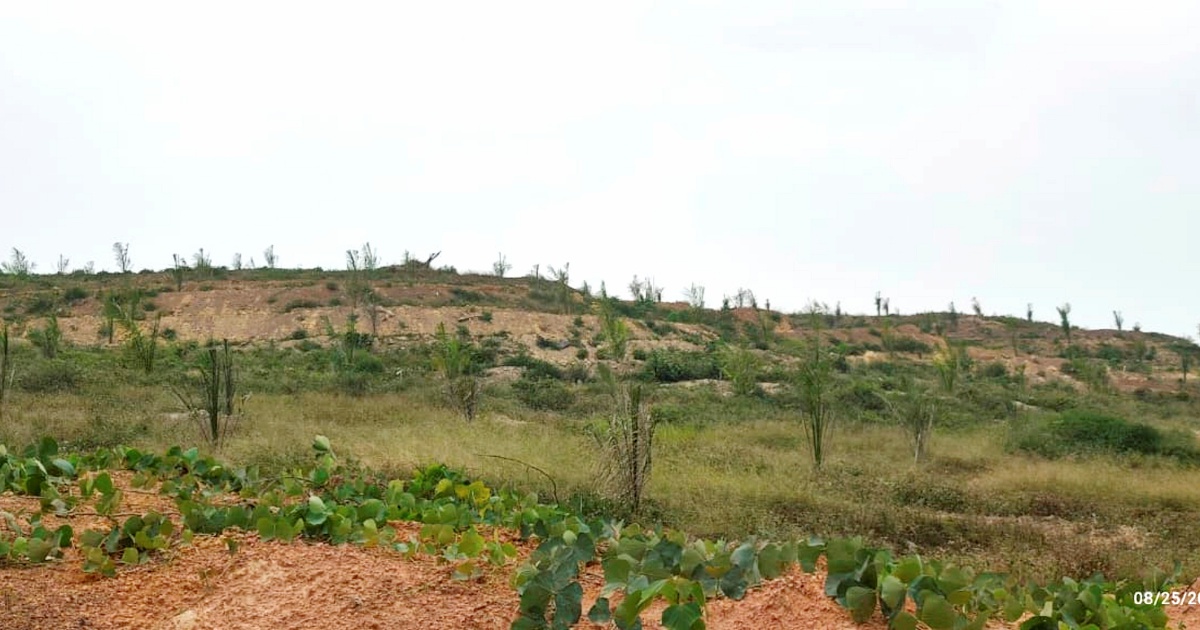
Residents at Felda Palong 7 in Jempol have escalated their grievances about deficient oil palm seedling supplies to the Malaysian Anti-Corruption Commission, marking a significant move to address what they contend are systematic quality failures in a critical agricultural input. The settlers' decision to formally lodge a report signals mounting frustration with the consistency and viability of seedlings delivered to their holdings, a matter that directly impacts productivity and long-term yield projections across the scheme.
The complaint centres on what residents characterise as an ongoing pattern of receiving seedlings that fall short of acceptable horticultural standards. Uniformity in seedling development is fundamental to efficient plantation management, as inconsistent growth rates complicate harvesting schedules, create operational inefficiencies, and ultimately suppress overall production. When seedlings arrive at varying stages of maturity or exhibit poor health profiles, smallholders face immediate challenges in establishing viable stands and struggle to achieve the synchronized production cycles necessary for commercial viability.
For Felda settlers, whose livelihoods depend on oil palm cultivation, the stakes attached to input quality are particularly acute. Unlike larger commercial operators with resources to absorb losses or implement corrective measures, smallholders operating within the Federal Land Development Authority framework typically work with tighter margins. Poor seedling stock directly translates into higher failure rates, extended establishment periods, delayed revenue generation, and increased management costs—burdens that individual settlers must bear.
The involvement of Malaysia's anti-corruption apparatus reflects an underlying suspicion that quality degradation may not be merely technical or agricultural in nature. Settlers appear to be suggesting that procurement irregularities, supplier collusion, or inadequate quality control oversight might be circumventing proper standards. Should procurement processes be compromised, costs might be inflated while quality is compromised, effectively siphoning value from schemes that ought to prioritize smallholder welfare.
Felda schemes have historically served as engines of rural development and pathways to agrarian prosperity for Malaysian smallholders. However, they operate within complex administrative and commercial ecosystems where competing interests—supplier profitability, scheme management efficiency, and settler returns—must be balanced. When settlers perceive that their interests are being subordinated to cost-cutting or corruption, confidence in the institution erodes.
The oil palm sector remains foundational to Malaysia's agricultural economy and rural employment structure. Maintaining robust input quality across all production tiers, including Felda holdings, is essential for sustaining competitiveness and farmer incomes. Any systemic weakness in seedling supply chains therefore carries implications beyond individual settlers, potentially affecting production volumes and sector reputation.
Quality assurance in agricultural inputs requires rigorous standards, transparent procurement, credible supplier vetting, and regular field verification. If these safeguards are degraded, downstream consequences cascade through entire production systems. The Felda Palong 7 complaint thus invites scrutiny of whether existing oversight mechanisms for supplier performance are adequately resourced and enforced.
MACC's involvement introduces independent scrutiny to a matter that might otherwise languish within routine administrative channels. The agency's investigative capacity can examine whether procedural lapses, conflicts of interest, or deliberate malfeasance have allowed substandard materials to reach settlers. Such investigations often reveal systemic vulnerabilities that routine audits might miss.
The complaint also underscores a broader challenge facing agricultural development agencies: ensuring that policy frameworks and procurement mechanisms genuinely protect intended beneficiaries. Felda settlers represent a constituency whose economic security hinges on policy implementation fidelity. When they perceive that mechanisms designed to support them are malfunctioning, they have limited recourse beyond formal complaints to anti-corruption authorities.
This case may catalyse broader reviews of seedling quality standards across Felda schemes nationwide. If quality failures at Palong 7 are systemic rather than isolated, similar problems likely manifest elsewhere. A comprehensive audit could identify whether standards require tightening, whether supplier accountability mechanisms are inadequate, or whether certification procedures need strengthening.
Moving forward, resolution will require not only investigation of potential corruption but also operational improvements in supply chain management. Settlers deserve assurance that seedling procurement processes incorporate rigorous pre-delivery inspection, that suppliers face meaningful penalties for non-compliance, and that quality disputes can be resolved promptly without prejudicing settlers' planting seasons.
The Felda Palong 7 complaint reflects a determined effort by settlers to invoke institutional mechanisms to protect their agricultural interests. Whether the MACC investigation yields corrective reforms or merely documents procedural irregularities, it serves the valuable function of placing scrutiny on supply systems that directly affect rural livelihoods and sectoral productivity.

