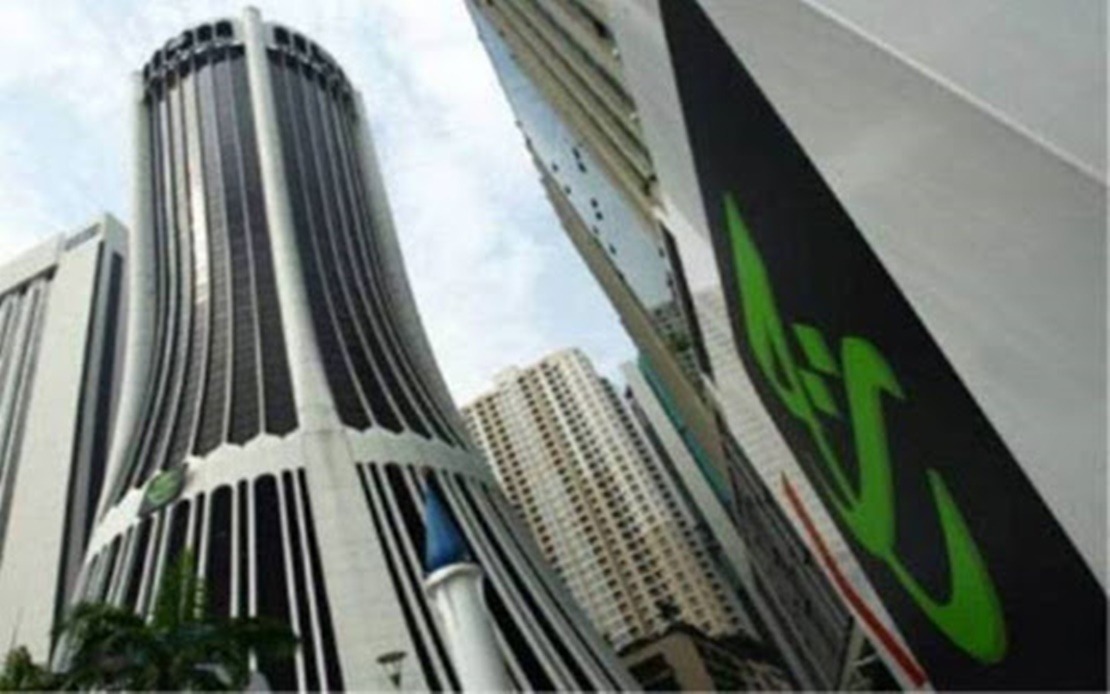
The Royal Commission of Inquiry's recent disclosure that Tabung Haji relied overwhelmingly on management estimates rather than professional valuations for a substantial portion of its asset base has triggered fresh warnings from Malaysia's economic and governance experts about systemic weaknesses in the institution's financial oversight. According to the RCI report on TH's management and operations spanning 2014 to 2020, only RM556 million of the RM4.6 billion total property asset valuation was supported by independent professional valuers' reports, meaning RM4.044 billion rested entirely on internal estimates.
Professor Barjoyai Bardai of Malaysia University of Science and Technology articulated the core problem that underpins this arrangement: when management estimates form the basis of valuations, the institution becomes vulnerable to what he termed "overly optimistic" asset assessments. The academic stressed that this structural weakness does not necessarily indicate deliberate manipulation has already occurred, but rather that the absence of independent professional verification creates an environment where inflated valuations become possible. The distinction matters significantly because it points toward systemic governance failures rather than individual criminal conduct, a finding that carries implications for how the institution should be reformed going forward.
The practical consequence of relying on management estimates becomes especially acute when those valuations directly influence hibah distributions to depositors. If assets are valued at levels higher than what can realistically be realised in actual market transactions, the Realisable Asset Value appears artificially inflated, painting a rosier picture of TH's financial health than circumstances warrant. This matters deeply because depositors have entrusted their funds to the institution with the understanding that distributions are calculated conservatively and based on genuine asset values. When estimates replace market reality, the mathematical capacity to pay hibah may be overstated, potentially allowing the institution to distribute funds at levels that prudence would not support.
Professor Ahmed Razman Abdul Latiff of Putra Business School highlighted a critical governance failure: the board of directors and audit committee bear direct responsibility for scrutinising the assumptions underlying management estimates before those figures are used for material decisions. In the case of Tabung Haji, the implications were substantial because the Realisable Asset Value directly determined compliance with Section 22 of the Tabung Haji Act 1995, the statutory provision governing how much the institution can legitimately distribute to its depositors. Yet the audit trail suggests this level of scrutiny did not occur with adequate rigour during the years in question.
Professor Bardai offered a framework for addressing the deficiency. High-value properties should be subjected to independent valuations using standardised methodologies grounded in clear market evidence rather than internal assumptions. The Realisable Asset Value calculations themselves should be governed by explicit standards, independently audited and verified by a specialised committee comprising investment professionals and qualified accountants. This multi-layered review structure would replace the current arrangement where management estimates pass through to financial statements with insufficient external challenge.
The broader governance principle underlying these expert recommendations emphasises that figures used to determine hibah distributions must satisfy three fundamental criteria. They should be conservative, reflecting realistic assumptions rather than optimistic projections. They should be verifiable, meaning external parties can independently confirm the basis for the valuations. And critically, they should not rely excessively on estimates provided by parties with a direct financial interest in the outcome—a consideration that plainly applies to management estimates used to support management's own financial position.
Academic observers also raised questions about the role of previous auditors and why concerns about Tabung Haji's financial trajectory had not triggered more intensive scrutiny during earlier audit cycles. The RCI report itself cited a PricewaterhouseCoopers audit that documented the use of management estimates and the absence of market prices or professional valuations, yet these findings apparently did not precipitate corrective action or substantial qualification of TH's financial statements. This gap between identified risks and institutional response suggests potential weaknesses in the audit process itself—either in how auditors communicated concerns or in how management and the board received and acted upon audit findings.
A particularly troubling element involves the RM2.294 billion valuation relating to TH Plantations Berhad, which formed part of the larger RM4.6 billion property asset valuation yet itself relied on management estimates rather than market-verified values. This cascading reliance on estimates—estimates used to value subsidiary holdings, which then feed into broader asset calculations—amplifies the potential for compounded estimation error.
The institutional argument that Section 22 of the Tabung Haji Act 1995 lacks sufficiently clear definitions of "assets" and therefore permits management discretion in valuation methodology provides limited comfort. Regulatory ambiguity, if it exists, does not justify accepting governance standards below those mandated by basic financial accountability principles. If the Act's language truly permits multiple interpretations, the appropriate response is legislative clarification, not unrestricted managerial discretion in asset valuation.
These governance weaknesses carry implications extending beyond Tabung Haji's immediate financial management. The institution serves as a vehicle for Islamic savings and investment for millions of Malaysian Muslims, making its financial integrity a matter of public trust and national economic concern. When internal estimates replace professional valuations and auditors do not prevent or adequately question the practice, confidence in institutional financial reporting becomes compromised. For Malaysian retail investors and for the Islamic financial system more broadly, the revelation that such substantial asset values rested on unverified internal estimates raises legitimate questions about how similar institutions manage asset valuations.
The path forward requires structural reform that prevents future reliance on internal estimates for material asset valuations. Expert consensus suggests this should encompass mandatory independent valuations for high-value assets, clear standards for Realisable Asset Value calculations, enhanced audit committee scrutiny and reporting, and possibly legislative amendment to provide clearer guidance on valuation methodologies. The RCI's findings have exposed not merely a past problem but a systemic vulnerability that must be addressed through governance mechanisms, not individual accountability alone.

